

What You Need to Know
During a national symposium, Tanzanian youth were urged to uphold the ideals of unity and equality as the nation reflects on Sheikh Abeid Amani Karume’s legacy. The event, organized by the Ministry of State, emphasized the importance of understanding and preserving the founding values of the Union between Tanganyika and Zanzibar, highlighting Karume’s pivotal role in shaping the nation.
Africa-Press – Tanzania. Young people have been urged to safeguard the ideals of unity, equality and Pan-Africanism as Tanzania reflects on the legacy of Sheikh Abeid Amani Karume, a key architect of the Union.
The call was made during a national symposium that brought together university students, with a broader aim of engaging youth in understanding and preserving the country’s founding values.
The forum was organised by the Ministry of State in the Vice President’s Office (Union and Environment) in collaboration with the National Records and Archives Department.
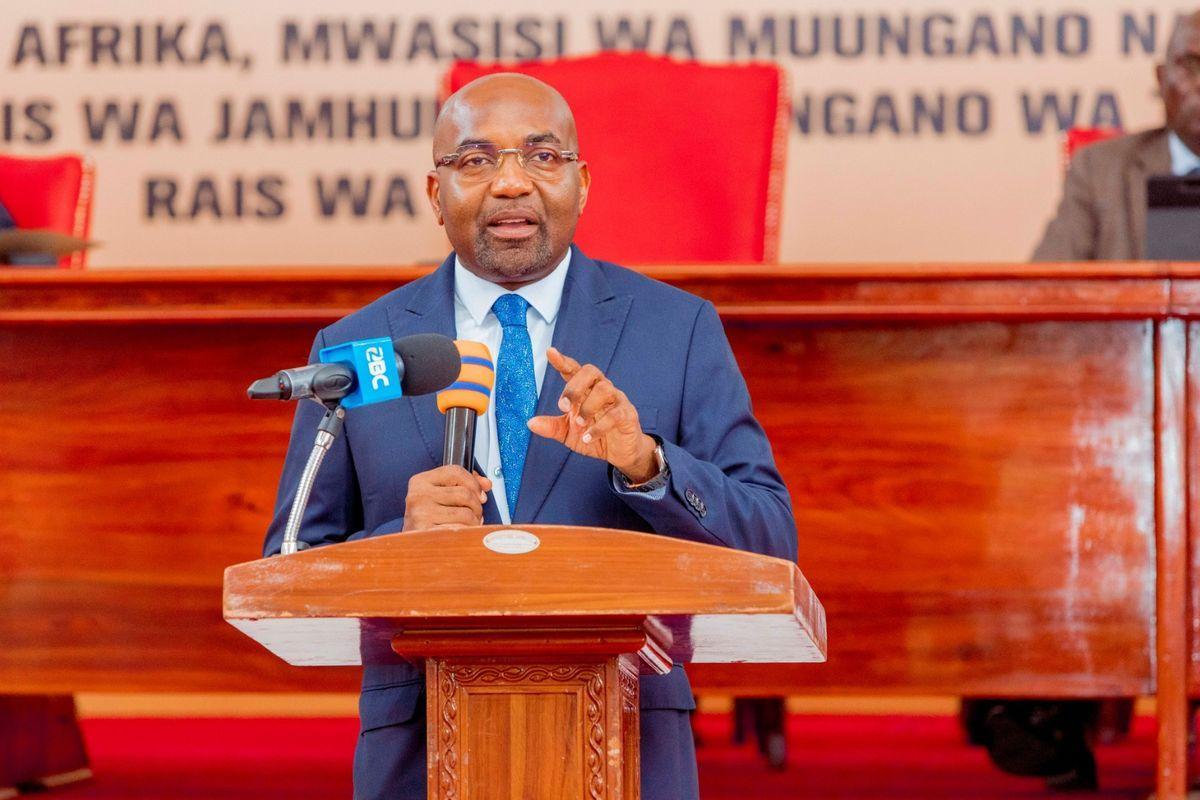
Speaking at the event, Minister of State in the Vice President’s Office (Union and Environment), Mr Hamad Masauni, said Tanzania’s future depends on how well the younger generation internalises the principles that shaped the Union between Tanganyika and Zanzibar.
He described Karume’s leadership between 1964 and 1972, alongside Mwalimu Julius Nyerere, as pivotal in stabilising the country during a sensitive post-revolution period.
“His tenure required decisive leadership to counter misinformation and build trust among citizens on both sides of the Union,” said Mr Masauni.
He highlighted key policies introduced under Karume, including free education, expanded healthcare services and land redistribution, saying they played an important role in addressing inequalities inherited from the colonial era.
Within two years of the revolution, secondary school enrolment among Africans rose significantly, reflecting expanded access to education. Healthcare services were also broadened, while social protection measures, including support for the elderly, were introduced.
“These policies helped citizens experience the tangible benefits of self-rule,” he said.
Karume’s administration also outlawed discriminatory practices and invested in housing and social services across Unguja and Pemba.
Mr Masauni further noted that the establishment of institutions such as the People’s Bank of Zanzibar and the Zanzibar Insurance Corporation expanded economic opportunities and supported national development.
He described Karume as a leader who prioritised unity over personal power, citing his decision to accept a lower position in the Union government to facilitate its formation.
Permanent Secretary in the ministry, Dr Richard Muyungi, said commemorating Karume and other Union leaders is important in strengthening national identity and cohesion.
“The objective is to ensure that the legacy of our leaders is understood and carried forward by future generations,” he said.
One of the participants, Mr Yohana Isaac, said the discussions provided lessons on leadership and nation-building, particularly the importance of prioritising humanity and dignity.
He also reflected on the partnership between Karume and Nyerere, saying their decision to form the Union remains a powerful symbol of unity and cooperation.
Karume, who served as Zanzibar’s president and First Vice President of the United Republic until his assassination in 1972, remains a central figure in Tanzania’s post-independence history.
Sheikh Abeid Amani Karume was a key figure in Tanzania’s history, serving as Zanzibar’s president and the First Vice President of the United Republic until his assassination in 1972. His leadership was crucial during the post-revolution period, where he implemented significant policies aimed at promoting equality and social welfare. These initiatives included free education and expanded healthcare, which were vital in addressing the inequalities left by colonial rule. Karume’s partnership with Mwalimu Julius Nyerere in forming the Union remains a cornerstone of Tanzania’s national identity.