

Africa-Press – Tanzania. TANZANIA’S progress has always been anchored in the collective resolve of its people to safeguard peace. At a time when the nation is moving steadily forward, it is vital to remember that stability is not just a government priority but a national asset built through generations of sacrifice and unity.
This is why every Tanzanian, especially the youth who represent the country’s future, must think carefully about the choices they make and the voices they follow. Tanzanian youths stand at a pivotal moment that will not only define their future but significantly determined where the country heads after the recent uncalled-for incidents.
With expanding opportunities in education, innovation and the growing economy, they have more to gain from stability than from any path that leads to unrest.
Tanzania needs their creativity, their energy and their commitment, not to fuel conflict, but to build stronger communities and a more prosperous nation. They should not allow themselves to be pulled into actions that undermine the very peace that gives them room to dream and succeed.
The events of recent days have certainly shown how quickly misinformation and agitation can escalate. Yet they have also served as a wake-up call for Tanzanians to always choose dialogue over division. It is a wake-up call that we need a shared understanding that protecting peace is everyone’s responsibility.
Saying no to those who seek to disrupt harmony should not be merely a political statement, but an act of patriotism. In the aftermath of the October incidents that shook public confidence and disrupted the country’s longstanding tradition of peace, national leaders and the country’s elders have rightly intensified calls for reconciliation, vigilance and renewed commitment to unity.
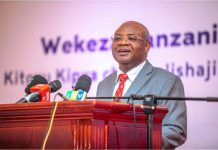
Among the recent voices is that of the Chairman of the Mwalimu Nyerere Foundation, Mr Joseph Butiku, who has urged elders and youth alike to reaffirm the values upon which the nation was built: Peace, justice, humanity and mutual trust.
Speaking to reporters this week, Mr Butiku stressed that elders hold a special responsibility in nurturing the young generation as guardians of peace. His message, anchored in Mwalimu Julius Nyerere’s philosophy of unity and social harmony, serves as both a warning and a guidepost.
Tanzania, he said, must protect the moral foundation that has kept it stable since independence. Mr Butiku’s words carry historical weight. As he put it, elders are the first institution of socialisation: “We give birth, take care of children and hand them over to the nation. We inherit the youth the meaning of being Tanzanians.” This intergenerational transmission of values has long been understood in peace studies as a critical determinant of national stability.
The Conflict Transformation Theory by John Paul Lederach, for instance, highlights the role of community elders and leaders as anchors who preserve moral order, resolve tensions and model responsible citizenship.
According to Mr Butiku, elders impart the values of love, joy, patience and peaceful coexistence, qualities essential for a stable society. He insisted that Tanzanians have not lost their ability to reason through dialogue, nor have they lost the tolerance required to overcome political friction.
“We do not want chaos,” he stressed, adding; “We request for trust among one another. We request our youth to trust us.” His message is as timely as it is necessary.
The unrest in October left a deep mark, lives were lost, property was destroyed and public infrastructure was damaged. More profoundly, the incidents left many citizens unsettled, raising questions about the vulnerabilities of the youth and the growing influence of misinformation, manipulation and dangerous mobilisation through digital spaces.
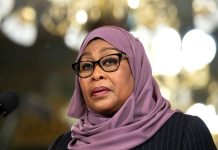
Mr Butiku’s appeal reinforces President Samia Suluhu Hassan’s recent remarks during a meeting with elders in Dar es Salaam. The President underscored the importance of guiding young people, particularly at a time when the nation is recovering from trauma.
“This is the right time for us Tanzanians to stand firmly united. Now is not the time to point fingers,” she said.
President Samia observed that the incidents in Dar es Salaam revealed just how easily the youth can be misled when they lack mentorship and civic education.
Many young people, she noted, were drawn into violence without understanding the underlying motives, some influenced by external actors, others manipulated by frustrations within political circles.
This concern echoes the Social Learning Theory, which explains that youth often model behaviour, positive or negative, based on the examples set around them. Without guidance, the youth become vulnerable to misinformation, populist agitation or manipulation by groups whose interest run contrary to national peace. Recognising this, the President stressed that the government has taken the October events as a lesson.
“We realised that many youths have been left to navigate life on their own,” she said.
“They lack mentorship and a clear understanding of civic responsibility.” Her remarks reaffirm the government’s commitment to strengthening youth engagement, safeguarding peace and expanding constructive opportunities for young people.
Tanzania’s youth make up the majority of the population. This demographic reality presents both a challenge and an unprecedented opportunity.
The Developmental Peace Theory argues that sustainable peace cannot be achieved without addressing development gaps, particularly those affecting young people.
Economic exclusion, unemployment and lack of access to opportunities make youth more susceptible to tension and political manipulation. Conversely, when empowered, the youth become engines of innovation, productivity and nationbuilding.
Tanzania’s Vision 2050 and strategic development frameworks emphasise youth empowerment through education, entrepreneurship, vocational training and digital inclusion. The post-October environment demands an acceleration of these efforts.
The more youth are involved in productive activities, the less they become a target for groups seeking to exploit their frustrations.
The October incidents served as a stark reminder that peace is not guaranteed; it must be nurtured. For youth to benefit from the economic opportunities emerging across the country, in mining, agriculture, creative industries, logistics, manufacturing and digital innovation, peace must prevail.
This is why Mr Butiku’s warning is so critical. A single episode of chaos can reverse years of development progress. Investors retreat. Jobs disappear. Tourism declines. Social cohesion weakens. And those most affected are the youth themselves.
Tanzania’s contemporary development landscape offers countless opportunities. From major infrastructure projects such as the Standard Gauge Railway (SGR), to the expansion of ports, oil and gas prospects, renewable energy initiatives and the booming creative economy, the future is full of possibilities.
But these opportunities can only be realised in an environment defined by stability, not fear. Peace is not merely the absence of fighting; it is a form of national capital. Countries that enjoy stability attract foreign investment, grow tourism, provide jobs and accelerate economic transformation.
Tanzania’s long-standing reputation as one of Africa’s most peaceful nations has been a powerful asset for decades. It has drawn businesses, students, refugees, diplomats and international organisations.
The youth, who stand to gain the most from a growing economy, have the highest stake in protecting peace. The Human Needs Theory, developed by John Burton, suggests that when basic needs such as identity, safety and recognition are fulfilled, individuals are less likely to engage in violent behaviour.
Tanzania’s young people must therefore see themselves as stakeholders in a peaceful future, one that offers them dignity, opportunity and economic independence. To secure long-lasting peace and development, Tanzanian youth must reject violence and manipulation.
No development can thrive where young people are mobilised for chaos. The youth must be critical of misinformation and reject those who use them for political gain. Our young people must prioritise education and skills development instead of embracing distractions.
The global economy is changing rapidly. Whether in ICT, agribusiness, science, construction, tourism or mining, skills are the currency of prosperity. Importantly, youth should engage in dialogue and civic participation. Constructive civic engagement through youth councils, community groups, NGOs and local structures helps channel frustrations into solutions.
Tanzania’s cultural and ethnic harmony is a national treasure. Youth must rise above divisions and embody the spirit of peace and national unity. Peace is the foundation upon which Tanzania’s aspirations, from industrialisation to digital economy transformation, rest. Without it, the nation risks stagnation.
With it, the youth can unlock their full potential and lead the country into the next chapter of progress. As the nation continues to heal from recent events, the youth must affirm their role as peacebuilders, innovators and nation-shapers.
The future of Tanzania will not be written by those who destroy, but by those who build. And it is the youth—guided, mentored and empowered—who must carry this responsibility forward.
Source: Daily News – Tanzania Standard Newspapers