

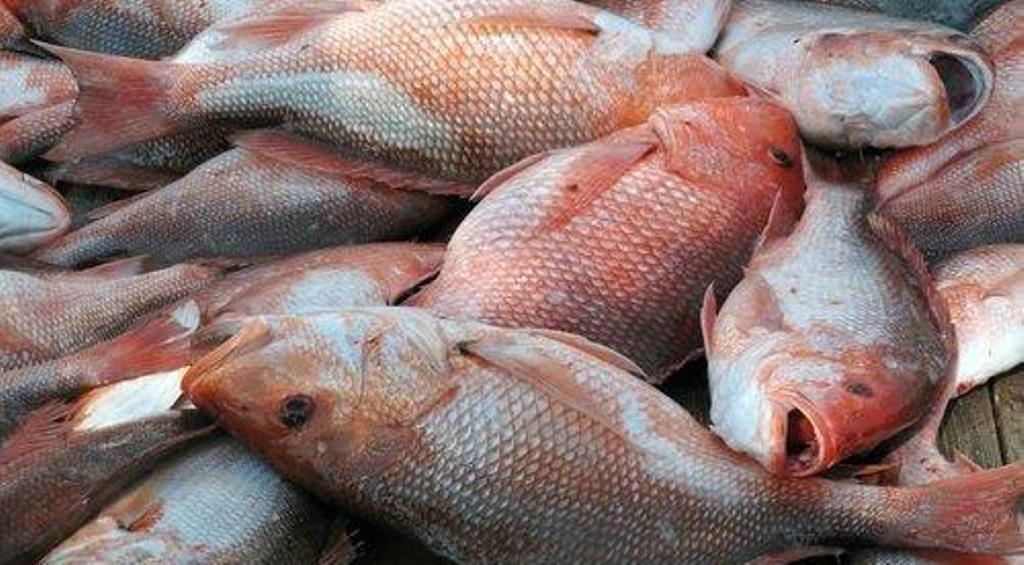
AfricaPress-Tanzania: THE price of red snapper fish has more than doubled at Dar es Salaam’s Ferry International Market as a result of moonlight periods.
The ‘africa-press’ spot survey established that larger red snapper fish price rose from 30,000/- to 55,000/- with the current moonlight attributing to its scarcity. Ferry International Market Chairman Mr Mbaraka Kilima said the business was good, although the moon period has been affecting fish output, unlike times when it’s sheer dark.
“We can’t complain much, business is good despite fish price going up. Businesses are coming from individuals and mostly hotels—for red snappers,” Mr Kilima said.
The chairman said the supply of the red snappers and other species have gone down with the onset of the moonlight forcing them to venture deep into the sea, though with poor fish gears.
A fisherman, Mr Yahya Issa, attributed fish prices raise to climate change which changes the wind patent, thus limited their dhows and boats to sail to further distance.
“Our boats cannot sail to far from shore thus limiting our fishing. We fish near the shore not at the deep sea. This limits catchment during moonlights,” Mr Issa said.
A fishmonger Mr James Peter said they always face a challenging business in Februaries, when prices do climb. The mackerel fish are now bought at 7,000/- per kilogramme from 5,000/ – per kg of previous month. Also the wholesale for a bucket of 20litre doubled from 30,000/- in the previous month to 60,000/- of yesterday.
Over the last decade and a half, according to the Ministry of Livestock and Fisheries 2016 study, the country’s fisheries production has been in the range of 325,000 to 380,000 tonnes per annum. About 85per cent is from inland fisheries, 14per cent from marine fisheries and just 1.0 per cent from aquaculture.
Fish consumption is estimated to be about 7-8 kg/year and contributes to about 30per cent of the total animal protein intake.
This level of per capita consumption is low, compared to the global per capita consumption of about 20 kg in 2014.