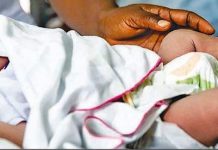


THE government has revealed that plans are in place to counter the runaway birthrate in refugee camps in Kigoma Region that result in 600 babies being born in every month.
In an exclusive interview with the ‘africa-press’ yesterday, the Permanent Secretary (PS) in the Ministry of Home Affairs, Major General Jacob Kingu, observed that the government has been aware of the problem for some time and embarked on voluntary repatriation of the refugees in question.
The repatriation came following reports that the refugees’ countries of origin had already stabilised and were free from political instability and civil wars.
The process started in 2017 after the Tripartite Commission involving Tanzania, Burundi and UNHCR agreed to implement a work plan from September 2017 entailing the voluntary repatriation plan of Burundian refugees who wished to return to the decades-long conflict hit tiny East African nation.
Reports indicate that the global refugees’ agency has facilitated the voluntary return of almost 75,000 refugees since September 2017, under a deal with Burundi and Tanzania.
According to the PS, on several occasions during the previous year in the company of the responsible minister, they visited the camps in Kigoma Region and witnessed the severity of the problem.
Besides the territorial dispute noted recently by members of the CCM’s Regional Executive Committee (NEC), Maj-Gen Kingu cited among other problems as including security threats, economic impacts such as infrastructure capacity and social challenges.
“Our main concern is to ensure that these people return to their home countries safely and ensure that they do not return into the country illegally,” he said.
Clearing the air on whether the children could claim birth rights in Tanzania, the Attorney General, Prof Adelardus Kilangi, pointed out that being a refugee is a status regulated by national, regional and international law.
He said that what a refugee can claim is the status of being a refugee and the same applies to the children.
“So children born in such status cannot get any other status or claim other rights than that. There are other legal and policy issues that are dealt with by the ministry and when the government decides to give citizenship to their parents by naturalisation,” the AG said.
However, he said, problem emerges for children under 18, as they are still dependent. But for children aged above 18, the AG said, the procedure is the same as that of their parents.
Furthermore, he said, such children cannot claim rights other than refugee status.
The alarming data on the high birthrate has been recorded in each camp in Kigoma Region which hosts refugees from Burundi and the Democratic Republic of Congo.
Members of the CCM regional executive committee recently expressed their worries over the high birth rate and called for the government’s swift intervention.
They raised their concern during a one-day ordinary meeting which resolved that continuing with that trend would create major problems in the future, including some of the refugees to lay claim to land within Tanzania.
Lawmaker for Kasulu Urban, Mr Daniel Nsanzugwako, said he had visited some of the camps in the region and learnt that the number of newborns stood at 600 per month, which was too high.
“If only one camp records 600 newborns per month how, suppose you take account of the total number of babies born in all camps in one year ? This is a high number that will create problems in future unless strategies are put in place to stem that eventuality,” Mr Nsanzugwako argued.
He speculated that one of effects might be having many children being absorbed into the mainstream and passing off as Tanzanian citizens, which is not healthy to national security.
He advised the government to ensure that the refugees are repatriated to their countries immediately or given citizenship under special conditions.
On his part, Kigoma Regional CCM Chairman Amandus Nzamba stated that members of the NEC in Kigoma had resolved that the government should address the citizenship puzzle in the region and high birth rate in refugee camps.
According to the United Nations High Commissioner for Refugees, by October 31, 2018, Tanzania was host to 330,755 refugees and asylum seekers.
They were mainly from Burundi (245,964) and the Democratic Republic of the Congo (DRC) (84,170) from 15 different nationalities (621) and a small population of refugees of mixed nationalities (270) was hosted in urban centres, mainly in Dar es Salaam.
The majority of refugees and asylum-seekers live in three refugee camps in north western Tanzania — Nyarugusu, Nduta and Mtendeli.