Africa-Press – Uganda. Before the establishment of the Gulu Food Safety Laboratory, producers in northern Uganda faced long, costly, and exhausting trips to access critical testing and certification services.
For small business owners in Lira, this often meant an eight-hour journey covering more than 350 kilometers to Kampala to submit samples at the Uganda National Bureau of Standards (UNBS) central laboratory.
Long queues and delayed processing often required multiple trips, significantly increasing transport, meal, and accommodation costs while reducing valuable time for business operations.
This burden eased dramatically in July 2022, when UNBS opened the Northern Uganda Food Safety Laboratory in Gulu.
Today, the same Lira-based producer only needs a two-hour trip to Gulu, submit samples, and return home the same day. A journey starting at 6 a.m. could see samples submitted by 8:30 a.m., with the producer back home before midday, ready to continue operations.
For micro, small, and medium-sized enterprises (MSMEs) in Lira, this represents up to 12 hours saved per trip and substantial cost reductions. Beyond convenience, the time saved translates directly into higher productivity and revenue, allowing businesses to expand operations and meet market demands.
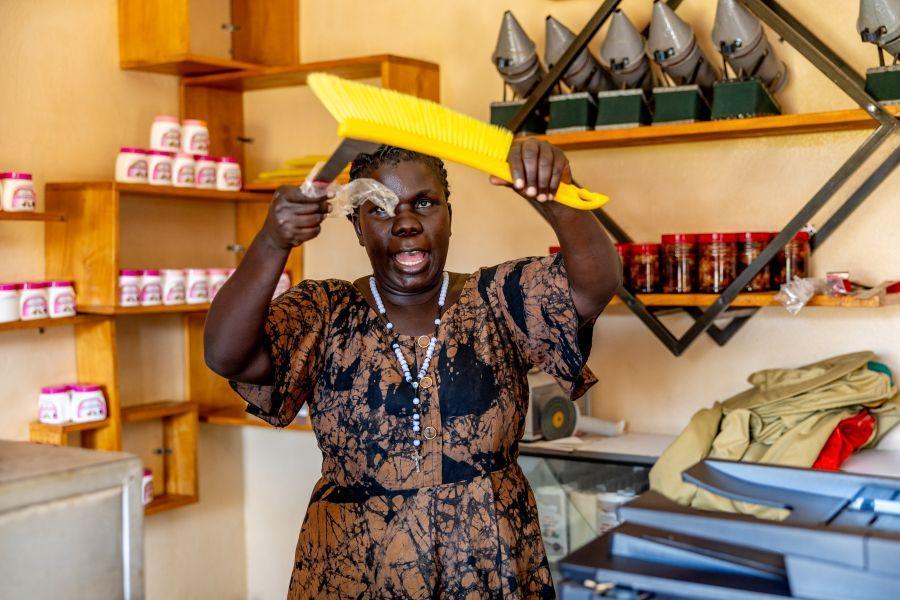
Immaculate Akullo, Co-Director and General Manager of Lira-based Archways Agrofarm Limited, highlighted the emotional and practical benefits of having the laboratory nearby.
“Gulu is closer to home, and most people have visited it, unlike Kampala. Since its opening, we have been re-certifying our products from Gulu. The cost of transport is only Shs20,000 one way, compared to at least Shs100,000 for Kampala. The laboratory has made more people in Lira certify their products,” she said.
Official UNBS statistics confirm the positive impact of the regional laboratories. Mrs. Patricia Bageine Ejalu, UNBS Deputy Executive Director in charge of Standards, noted that sample testing in Northern Uganda has steadily increased since the Gulu Laboratory opened.
In the 2021/22 financial year, the Northern Region submitted about 160 samples. By 2024/25, that number had risen to 250, with the Gulu Laboratory handling over 750 samples in three years. Across all three regional laboratories, UNBS tested more than 3,000 samples over the same period.
The regional laboratories have also significantly improved turnaround times. Before their establishment, test results from Kampala took an average of 21 to 25 days.
By the first quarter of 2025, results were delivered in 15-16 days, surpassing the initial target of 21 days. UNBS is now aiming to further reduce turnaround times to 7 days.
The Gulu Laboratory is more than a testing facility—it is a catalyst for efficiency, cost savings, and business growth in northern Uganda, particularly for MSMEs, which account for 90% of Uganda’s private sector, contribute 75% to GDP, and employ over three million people, according to the 2024 State of Entrepreneurship in Uganda report by the Ministry of Trade, Industry, and Cooperatives and the Mastercard Foundation.
Despite these gains, challenges remain. Akullo noted that her enterprise is yet to export honey beyond East Africa.
“We need more training and sensitization on quality standards, financial literacy, and support. UNBS and partner organizations can play a critical role in this,” she said.
The Gulu Laboratory, launched in July 2022, was one of three regional food safety laboratories established by UNBS to decentralize services and expand access.
It tests a wide range of food and non-food items, including cereals, grains, edible oils, milk, fruits, vegetables, animal products, and water. Additional laboratories opened in Mbale (October 2022) and Mbarara (May 2023), with mobile labs and border laboratories planned to support cross-border trade.
The three regional laboratories represent a total investment of USD 4.45 million, fully funded by the Government of Denmark through Trademark Africa (TMA) and equipment support from the Vegetable Oil Development Project under the Ministry of Agriculture, Animal Industry and Fisheries (MAAIF).
“Mobile labs will soon move across the northern region to support producers wherever needed, and border labs will strengthen certification for cross-border trade,” Mrs. Ejalu revealed.
With faster testing, lower costs, and improved access, the Gulu Food Safety Laboratory is proving to be a game-changer for northern Uganda’s entrepreneurs and a critical driver of regional economic growth.
For More News And Analysis About Uganda Follow Africa-Press