Africa-Press – Uganda. After 39 days on the open road and more than 13,600 kilometres traversed across Africa, the Grand Electric Trans-African Expedition concluded on Sunday as the team returned to Kampala aboard Kiira Motors Corporation’s flagship 13-metre Kayoola EV Model 2025.
Enabled by MTN’s cross-border connectivity and digital solutions, the historic journey has positioned Uganda at the forefront of Africa’s electric mobility transition.
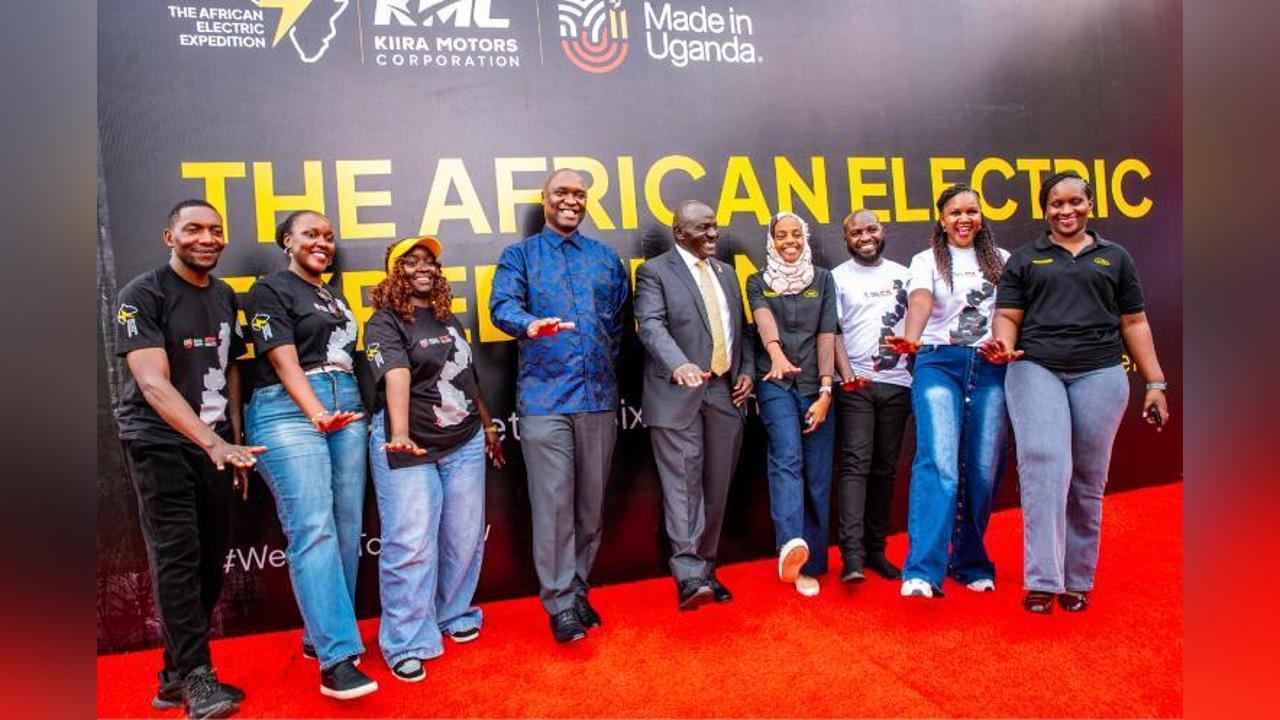
The 48-member expedition team arrived to a warm reception at Metroplex Mall in Naalya, marking not only the end of an ambitious continental journey but also a milestone for Africa’s sustainable transport ambitions, where electric mobility and digital technology converge.
Spearheaded by the Secretariat of Science, Technology and Innovation – Office of the President (STI-OP), the expedition departed Kampala on November 20, charting a route from Uganda to Cape Town and back.
Using a Uganda-manufactured electric bus and supported by MTN’s regional network, the mission set out to demonstrate that long-distance electric travel in Africa is practical, scalable and commercially viable.
The homecoming was presided over by the Minister of Works and Transport, Gen. Edward Katumba Wamala, who described the expedition as a clear demonstration of how science, technology and innovation can address Africa’s development challenges.
“This journey affirms that Africa’s solutions can be designed, built and deployed right here at home,” Katumba said. “Electric mobility is no longer a future concept. It is a present opportunity, and Uganda has shown leadership in turning vision into action.”
Also present was Prof. Sandy Stevens Tickodri-Togboa of Makerere University, whose early academic work laid the foundation for Uganda’s electric vehicle ambitions.
From classroom concepts to a continent-wide proof of concept, the expedition highlighted the impact of sustained investment in local innovation.
Connectivity played a central role throughout the journey. MTN Uganda’s General Manager for Enterprise Business, Ibrahim Senyonga, said digital solutions were critical to ensuring safety, performance monitoring and seamless operations across borders.
“For 39 days, MTN’s digital solutions ensured the safety of the people on board, enabled real-time vehicle monitoring, and kept the bus connected across borders through partnerships with MTN Zambia, Eswatini and South Africa,” Senyonga said.
“E-mobility cannot scale without data, connectivity and intelligent systems, and this expedition proved that Africa is ready for smart, connected transport.”
Using MTN’s infrastructure, the team continuously tracked energy consumption, vehicle performance, safety systems and route efficiency across diverse terrains and climates.
By the end of the expedition, the Kayoola electric coach had consumed 5,189.66 kilowatt-hours of energy, substituted 5,941.76 kilograms of carbon dioxide emissions and replaced 5,189 litres of fossil fuel.
This translated into estimated cost savings of Shs14.4 million. The bus recorded an average energy consumption of 0.79 kilowatt-hours per kilometre and covered an average of 390 kilometres per day.
The entire journey registered only one safety incident, reinforcing confidence in both the vehicle and the connected monitoring systems.
“When you travel over 13,000 kilometres across borders, climates and terrain and return with just one incident, you know something worked exceptionally well,” said Elias Bwambale, Kiira Motors Corporation’s Head of Legal and the expedition’s project lead.
“This was about trust in African innovation, trust in technology and trust in our people.”
Beyond the distance covered, the expedition sent a strong industrial signal. Uganda is currently the only country on the continent manufacturing electric buses at scale, with Kiira Motors’ locally designed and assembled buses serving as mobile showcases of Africa’s industrial capability.
Along the route, the team received more than 400 expressions of interest and preliminary orders from cities, institutions and transport operators, signalling growing demand for cleaner and smarter public transport solutions.
Welcoming the team back, STI-OP Support Superintendent Catherine Muwumuza described the expedition as a milestone for Uganda’s science, technology and innovation agenda.
“This journey proves that when policy, innovation and partnerships align, Africa can lead the global sustainability conversation,” she said.
As celebrations concluded, the expedition’s broader significance remained clear. What began as an ambitious experiment evolved into a continental statement on Africa’s ability to power its future sustainably through homegrown innovation, digital infrastructure and strategic partnerships.
From Kampala to Cape Town and back, the MTN-enabled journey challenged assumptions, built confidence and accelerated momentum for electric mobility across the continent.
For More News And Analysis About Uganda Follow Africa-Press