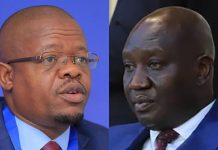
Africa-Press – Uganda. The Forum for Democratic Change (FDC) chairperson for Nakawa Division, Okwera Mugisha, has urged health workers to prepare for a possible rise in patients struggling to cope with election losses, warning that political competition often leaves candidates and supporters emotionally distressed.
Speaking during a press conference in Kampala, Mugisha said medical professionals should be ready to handle post-election trauma, stressing that elections should not be treated as life-or-death contests.
“I think when some people lose elections, they lose balance and sense of how things ought to be. People should know that elections are not do-or-die — you can either win or lose,” he said.
Mugisha added that the party is considering establishing a structure to help address post-election social and psychological challenges, noting that losing an election is part of the democratic process and should not destabilise individuals or communities.
His remarks come amid ongoing political debate following a recent State House meeting between President Yoweri Museveni and a delegation of opposition politicians led by FDC’s Yusuf Nsibambi.
The meeting, held after the January 15, 2026 general elections, reportedly focused on easing political tensions, national reconciliation, and the fate of political prisoners.
Nsibambi, who recently lost the Mawokota South parliamentary seat to the NRM candidate, said the engagement was intended to help de-escalate tensions and promote stability following a highly charged electoral period.
According to reports, the delegation also raised concerns about detainees linked to political activity and appealed for pardons and independent investigations into politically sensitive cases.
Despite the stated objectives of reconciliation and dialogue, the meeting has generated mixed reactions across the political spectrum and online platforms.
Some critics have accused participating opposition figures of political compromise or personal gain.
Nsibambi has rejected claims that the engagement was financially motivated, insisting that dialogue with the President is aimed at securing humanitarian and national stability outcomes rather than personal benefit.
Political analysts say the broader debate reflects divisions within the opposition on whether engagement with the ruling establishment strengthens democratic space or weakens collective bargaining power.
Across the opposition landscape, some leaders have defended dialogue as necessary for national stability, arguing that post-election periods require engagement to maintain cohesion and reduce tensions. Others, however, warn that dialogue must be grounded in truth, justice, and meaningful reforms if it is to build public confidence.
The January 2026 elections have left Uganda politically polarised, with debates continuing over electoral outcomes, detention of political actors, and the future of inter-party engagement.
Against this backdrop, Mugisha’s comments draw attention to another emerging concern — the social and psychological toll of competitive politics on candidates, supporters, and communities.