Africa-Press – Uganda. Commercial banks in Uganda have expressed readiness to finance both large- and small-scale mining ventures, provided projects are well-structured and comply with regulatory and environmental standards.
The move signals a shift toward formalizing and financing a sector increasingly seen as a pillar of Uganda’s economy, with the potential to drive industrialization, create jobs, and boost exports.
Minerals have overtaken coffee as the country’s top export, generating over $4 billion annually, even though mining still contributes only about 1% to GDP.
Under the National Development Plan IV (2023–2029), the government aims to raise that contribution to 10%.
Mark Muyobo, CEO of NCBA Bank Uganda Limited, said the bank has introduced a dedicated mining sector financing cap aligned with Uganda’s national development priorities.
“We have successfully financed over $400 million worth of mining projects in Kenya, and we are now replicating that model in Uganda through asset and equipment financing, working capital, and structured trade solutions,” Muyobo said.
“Mining finance is feasible and sustainable when done correctly. What is needed is a structured ecosystem, clear regulations, formalized operations, and strong financial partnerships to make the sector truly investable.”
Muyobo added that NCBA’s regional presence in Kenya, Tanzania, Rwanda, and Uganda positions it to offer cross-border financial solutions such as trade finance, foreign exchange, and risk management for companies importing mining equipment or exporting refined minerals.
He noted that the bank can also support miners against existing contracts without requiring collateral.
Engineer Irene Batebe, Permanent Secretary at the Ministry of Energy and Mineral Development, said Uganda is rich in deposits of gold, lithium, cobalt, copper, and nickel.
“Gold has overtaken coffee as our top export, generating $3.8 billion, yet mining contributes only about 1% to GDP. Our goal is to raise that to 10% and make the sector a true pillar of economic development,” Batebe said.
She highlighted recent reforms including a digital licensing system to improve efficiency and accountability, zero-rated import duties on mining and exploration equipment, and traceability systems aligned with international mineral trade standards, all aimed at attracting investment and enhancing transparency.
Uganda currently hosts nine operational gold refineries, and flagship projects such as the $300 million Wagagai Gold Mine reflect growing investor confidence in the country’s mining potential.
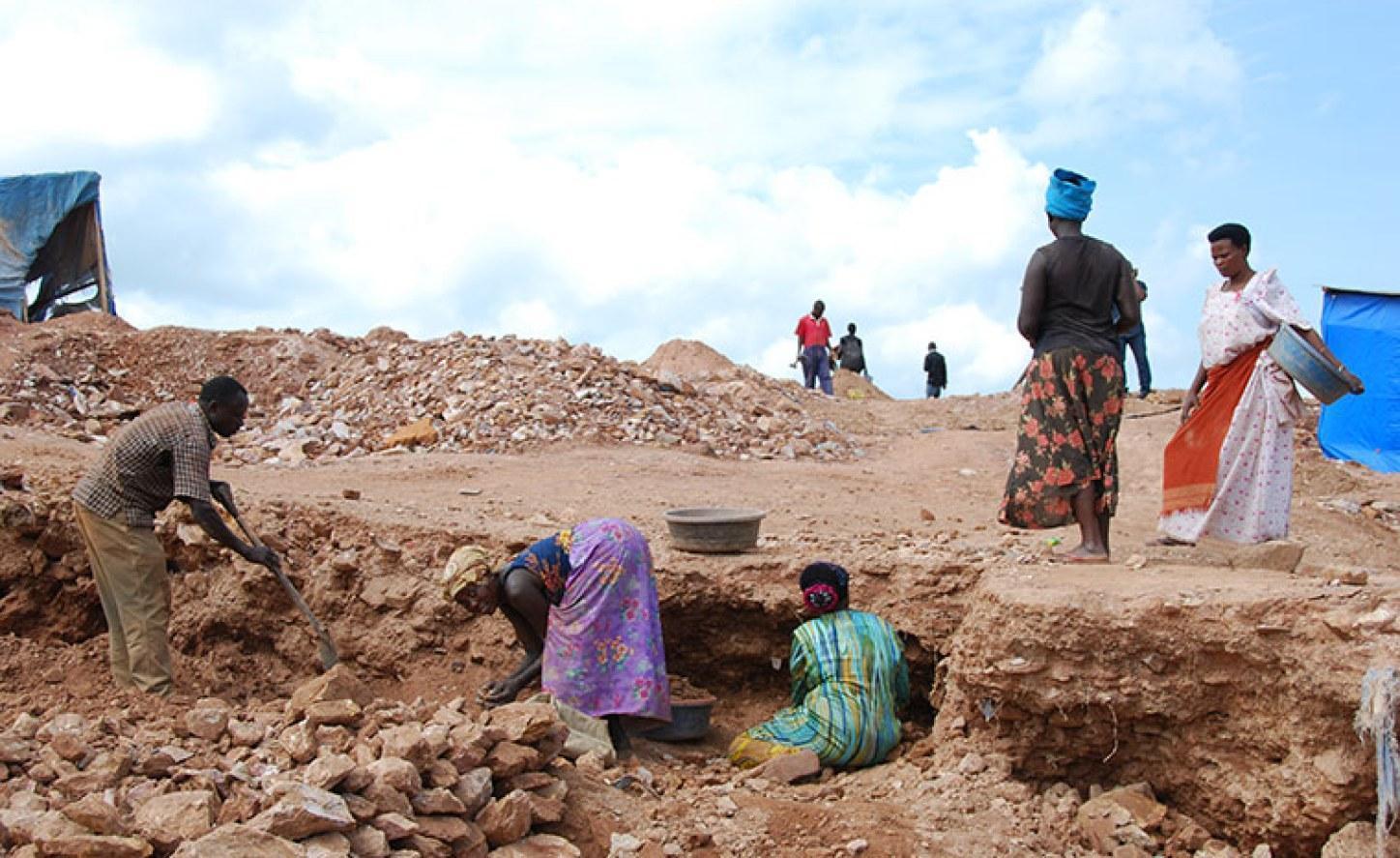
Despite the growth, the mining ecosystem remains tilted toward large corporations, leaving artisanal and small-scale miners (ASM) with limited access to formal financing.
Kenneth Asiimwe, CEO of the Uganda Association of Small-Scale Miners (UGAASM), said many miners rely on informal lenders charging exorbitant rates.
“Many miners borrow at rates equivalent to 60% per month from informal lenders. The system is designed for big players, not small miners,” Asiimwe said.
He urged the government and financiers to simplify licensing, establish seed capital funds, and promote joint venture models between artisanal cooperatives and investors to enhance technology transfer and formalization.
Charles Siman from UNDP Uganda emphasized the need for innovative financial products tailored to small-scale miners.
“Most artisanal miners need between $5,000 and $15,000 to buy equipment or expand production but lack conventional collateral. Their mineral reserves are their true assets, yet financial products don’t recognize that,” Siman said.
He called on banks to introduce inventory-backed loans, mineral-backed credit, and flexible repayment structures aligned with mining cycles, measures that could unlock livelihoods and support inclusive economic growth.