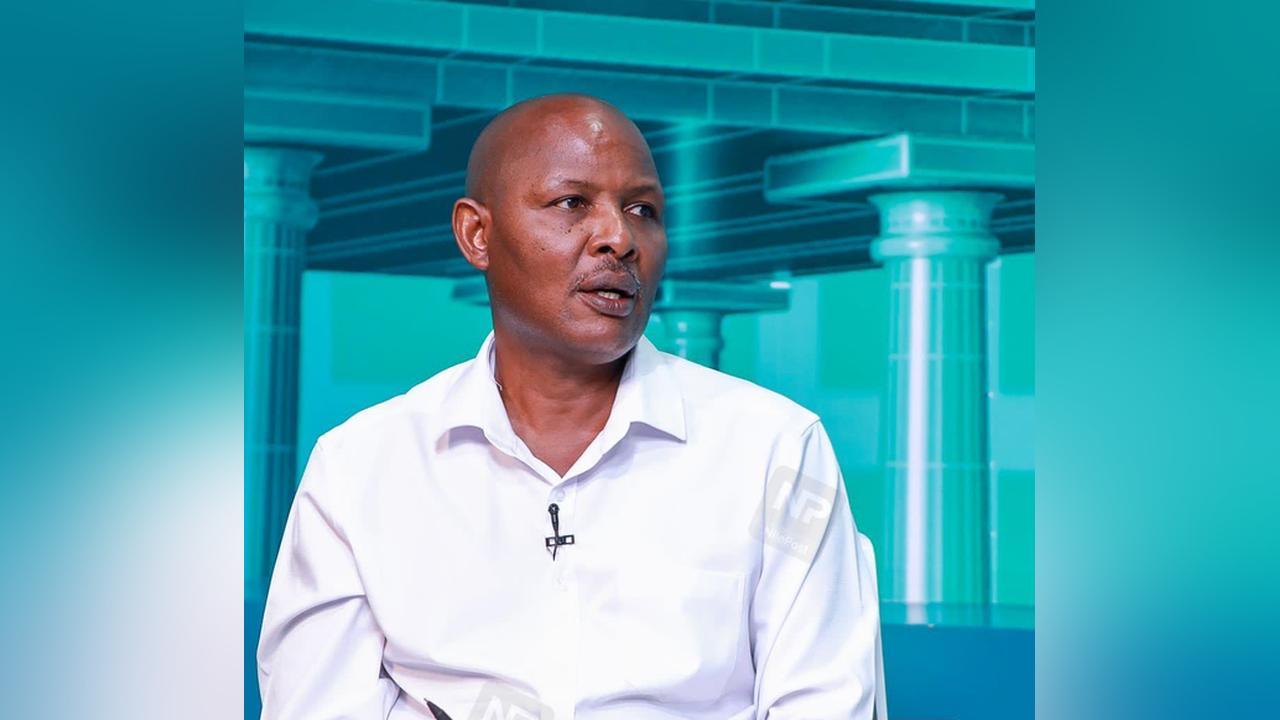
Africa-Press – Uganda. Former intelligence operative and political analyst Charles Rwomushana has cautioned that Uganda stands at a delicate political moment, likening the country to “someone on a mat, sleeping on a highway” if misconceptions about electoral support are allowed to persist.
Speaking during NBS Television’s Barometer programme on Tuesday, Rwomushana took issue with President Museveni’s interpretation of voter turnout in his February 12 post-election letter to the nation.
In that address, Museveni argued that a significant portion of registered voters identify with the ruling National Resistance Movement (NRM). Citing figures as of May 6, 2025, he stated that 18.5 million of Uganda’s 21 million registered voters are NRM supporters.
He suggested that if all those supporters had turned up to vote, the NRM’s tally would have reached 18.5 million votes, leaving the opposition with about 2.5 million — translating to roughly 88 percent support.
Rwomushana warned that such assumptions risk misreading the country’s political mood.
“If Museveni genuinely believes that what he wrote in the letter is the truth — when he states that everyone who didn’t vote is his supporter, and would have voted for him had they voted — and he would have registered those votes plus the votes he got, then the country is in trouble. The country is like someone on a mat, sleeping on a highway,” he said.
He argued that equating non-voters with automatic support undermines the complexity of voter behaviour and could obscure underlying grievances or political shifts.
Rwomushana’s remarks come as the country continues to reflect on the recently concluded general elections, which covered presidential, parliamentary and local government contests, culminating in the election of Local Council I leaders earlier this month.
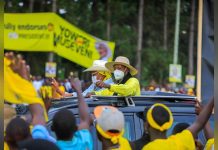
In his February 12 address — directed to “fellow Ugandans and especially the Bazzukulu” — Museveni recounted holding 143 rallies across 153 districts, describing what he termed massive and enthusiastic crowds.
He likened the atmosphere to the 1996 elections, which he has often characterised as a moment when voters rejected sectarian divisions.
Addressing concerns over voter turnout, Museveni attributed lower participation among NRM supporters to dissatisfaction with local party processes and alleged intimidation by opposition elements.
He claimed that threats of violence and efforts to disrupt voting discouraged some of the party’s base from casting ballots.
The President also acknowledged internal challenges within the NRM, urging party structures to strengthen grassroots mobilisation and improve internal democratic practices to rebuild trust and energise supporters.
Beyond electoral issues, Museveni used the letter to restate the NRM’s historical achievements, including restoring national stability, curbing identity-based politics and implementing socioeconomic reforms.
He highlighted initiatives such as Universal Primary Education (UPE), Entandikwa — the interest-free capital scheme — and the Parish Development Model, crediting them with expanding access to education, boosting agricultural production and supporting household incomes.
While acknowledging persistent challenges such as corruption, youth unemployment and infrastructure gaps, Museveni maintained that the NRM’s legacy in securing peace and driving development remains central to Uganda’s progress.
However, Rwomushana insists that the country’s future stability depends on an honest reading of political realities.
“When leaders misread the road ahead, the entire nation is at risk,” he suggested, reinforcing his warning that complacency in assessing public sentiment could carry serious consequences.