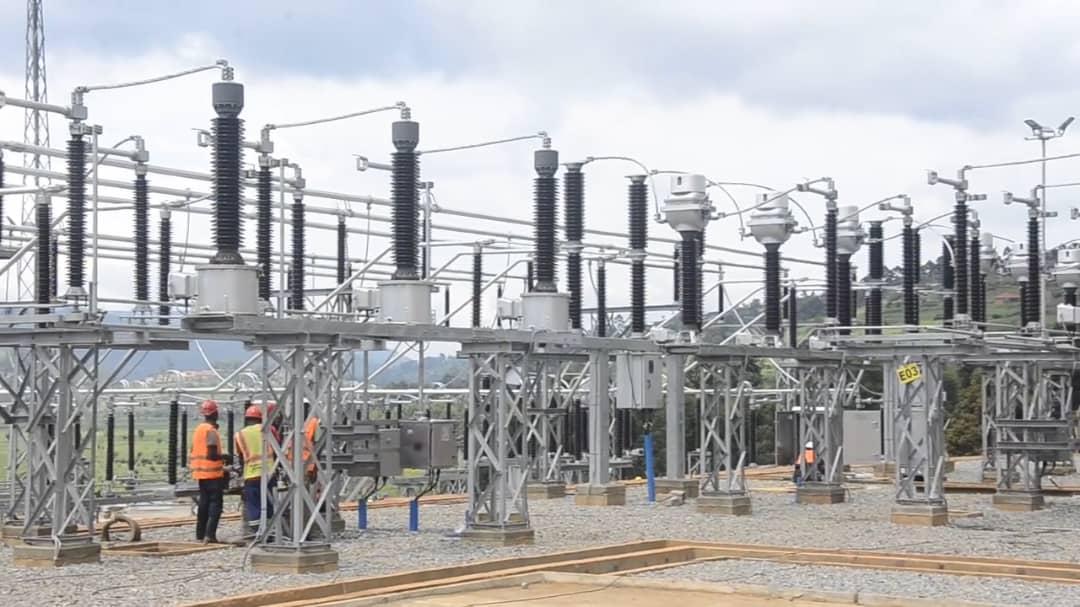
Africa-Press – Uganda. Residents and leaders in Kigezi sub-region report a notable improvement in electricity supply and service delivery following the commissioning of the 132kV Mirama–Kabale High Voltage Power Line by President Yoweri Museveni.
The multimillion-shilling project was officially commissioned on February 12, 2024, at the Hamuko Kabale Substation in Rubanda District, forming part of the President’s three-day Parish Development Model (PDM) tour of the region.
The 85-kilometre transmission line, constructed at a cost of approximately 340 billion shillings with funding from the Islamic Development Bank, replaces the old 33kV line that had long proved inadequate for the region’s growing electricity demands.
Construction began in December 2020, and the line was commercially switched on in December 2024 before its official commissioning earlier this year under the oversight of the Uganda Electricity Transmission Company Limited (UETCL).
The transmission line passes through Ntungamo, Rukiga, Kabale, and Rubanda districts. Most project-affected persons (PAPs) have been compensated, with 2,467 of 2,529 individuals receiving payments.
For years, residents in districts such as Kabale and Rubanda grappled with frequent blackouts, low voltage, and erratic power supply, which hampered business operations and disrupted social services.
One year later, many local leaders say the situation has improved significantly.
Rubanda District Health Officer, Dr Abdon Birungi, noted that stabilized electricity has strengthened service delivery in health facilities, enabling consistent operation of laboratory equipment, safe vaccine storage, and uninterrupted emergency response.
“The improved power supply has reduced operational costs in public institutions that previously relied heavily on fuel-powered generators. The savings are being redirected to other critical service areas,” Dr. Birungi said.
The education sector has also benefited. Allen Asiimwe, Deputy Headteacher of Kakore Secondary School, highlighted that reliable electricity allows students to conduct practical lessons effectively and enables teachers to deliver lessons using electronic devices without fear of abrupt blackouts.
Local artisans, such as welder Junior Ayamba, have seen productivity gains, citing fewer interruptions, reduced delays, and less equipment damage due to consistent voltage.
Community members report broader economic benefits. Patrick Neema, a resident, says stable electricity has boosted small businesses, improved household livelihoods, and contributed to the upgrade of Kakore Health Centre from Health Centre II to Health Centre III.
However, some challenges remain. Junior Twesigye, an administrator at SINO Mines, said the electricity supply is not yet fully stable for heavy industrial operations, forcing the company to rely on generators, which increases costs and limits output.
The 132kV line was designed to support heavy industries, including iron ore smelting and steel production. While residents recognize the project as transformative, leaders call for continued monitoring and further investment to ensure fully reliable power.
Despite these lingering concerns, the Mirama–Kabale transmission line stands as one of Kigezi’s most significant infrastructure developments in recent years, offering renewed hope for sustained economic growth and improved social services across the region.