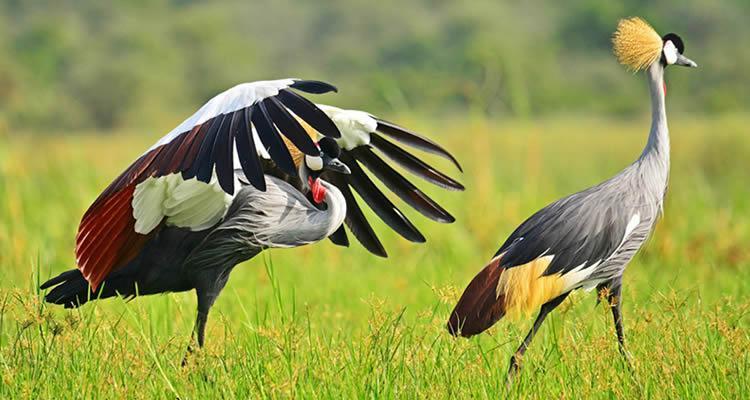
Africa-Press – Uganda. Uganda’s national bird, the Grey Crowned Crane, commonly known as the Crested Crane or Ngaali, is facing an alarming population decline, raising fears that the iconic species could disappear from large swathes of the country if urgent conservation measures are not taken.
The bird, prominently featured on Uganda’s coat of arms and revered as a clan totem in the Buganda Kingdom, has reportedly vanished from more than 80 percent of its traditional habitats nationwide.
According to the latest national crane census conducted last year, the population has dropped sharply from approximately 35,000 birds to just 13,700 — representing a decline of more than half over the past years.
The worrying statistics were highlighted during National Crested Crane Day commemorations held in Masaka City, where officials from the International Crane Foundation expressed deep concern over the trend.
Dr Adalbert Aine, a researcher and head at the International Crane Foundation, described the declining numbers as a stark warning sign.
“Our findings show a drastic reduction in the Crested Crane population. If urgent conservation measures are not strengthened, we risk losing this iconic species,” Dr Aine said.
He attributed the decline primarily to habitat destruction, especially widespread wetland encroachment, as well as illegal captivity and disturbance of breeding grounds.
Wetlands provide critical breeding and feeding grounds for the cranes, and conservationists warn that continued degradation of these ecosystems directly threatens the bird’s survival.
Deus Mawesano Kyeyune, head of the Crested Crane clan in Buganda, described the situation as both a cultural and national tragedy.
“It is painful to see a bird that represents our identity as a nation and as a clan disappearing before our eyes. If nothing is done, the Crested Crane will remain only in stories,” Kyeyune said.
Jude Muleke, Buddu County Chief, called on the government to intensify enforcement against wetland encroachers and individuals illegally keeping the birds.
“We must take firm action against those destroying wetlands and capturing these birds. Protecting the Crested Crane is a responsibility for all of us,” Muleke said.
Vanesa Mirembe, Assistant Commissioner in charge of Conservation Education and Awareness at the Uganda Wildlife Authority, reminded the public that the law provides stiff penalties for anyone found killing, capturing or disturbing Crested Cranes.
“The penalties are severe for anyone who kills, captures, or disturbs the Crested Crane. We urge Ugandans to protect our national heritage,” she said.
Dr. Baziri Ajer, Commissioner in the Ministry of Tourism, Wildlife and Antiquities and chief guest at the event, reaffirmed government’s commitment to safeguarding the species.
“The government will continue to enforce tough punishments against individuals who interfere with the Crested Crane. Conservation of this bird is a matter of national pride and environmental protection,” Dr. Ajer said.
Conservationists warn that without stronger enforcement of wetland protection laws, increased community awareness, and coordinated conservation efforts, Uganda risks losing not only a key ecological species but also a powerful symbol of its national identity.