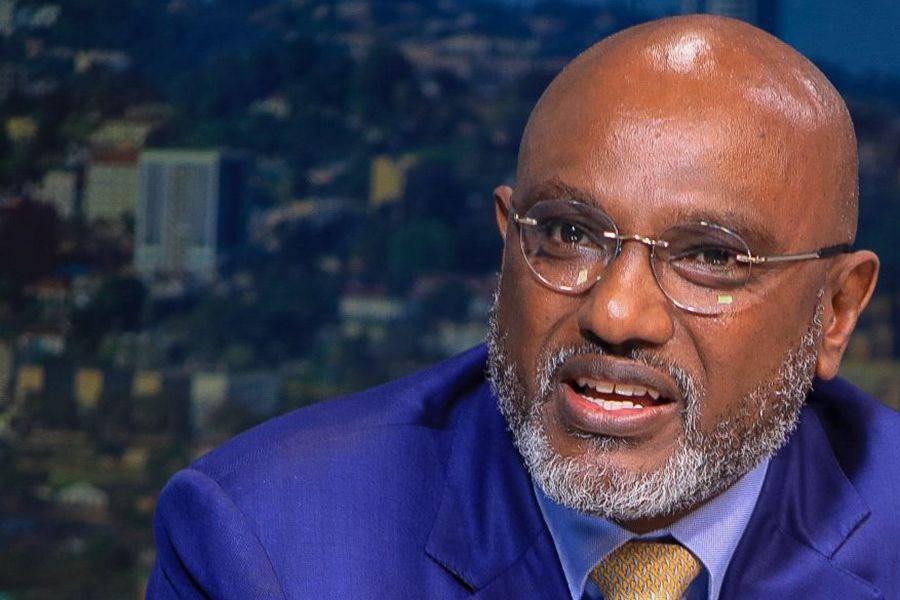
Africa-Press – Uganda. Uganda’s Permanent Representative to the United Nations, Ambassador Adonia Ayebare, has urged Ugandans to prioritize national dialogue and internal solutions in the aftermath of recent elections, emphasizing that external actors should only play a supportive role.
Speaking to Canary Mugume during Next Big Talk, hosted by Next Radio on Saturday, Ambassador Ayebare stressed the importance of dialogue as a constitutional and parliamentary principle.
“There’s a tendency in this country to make the word dialogue seem dirty. Our own Constitution encourages dialogue, and Parliament is a platform for dialogue,” he said.
“I think Uganda Police Force; compared to UN standards, we have fewer policemen than most countries in the world; the ratio.”
Ambassador Ayebare was also critical of relying on foreign figures to mediate domestic political issues.
“I’ve never been a fan of foreign messiahs coming in to save us. It’s outdated,” he said, pointing to the recent international travels of former presidential candidate Robert Kyagulanyi Ssentamu, popularly known as Bobi Wine.
“You’ve been seeing with the trip of Bobi Wine; it’s not by coincidence that he has no photo opportunities with senators and state departments. They don’t want to be seen with him. It’s politically risky for them,” he said.
Ambassador Ayebare underscored that genuine solutions must come from Ugandans themselves, with foreigners providing support only once agreements are reached internally.
“We need to put our act together on negotiations, dialogue, and solving our problems. Foreigners can only support what we’ve agreed on,” he said.
Uganda is navigating a tense post-election period. Calls for national dialogue have intensified as opposition leaders maintain that the electoral process was flawed, demanding reforms, accountability, and guarantees of political freedom.
These concerns have been amplified by the absence of Bobi Wine, who has been abroad on international engagements since the day after the polls. His absence has sparked debates on the balance between political engagement and national stability.
The government maintains that the National Unity Platform (NUP) is not under attack.
However, questions linger over whether this reflects the political reality. Religious leaders and elder statespersons have stepped in, urging both sides to prioritize national interests over partisan positions, but these efforts have yet to yield significant progress.
Skepticism remains high among sections of the public, with critics questioning whether dialogue will produce tangible reforms or merely serve as a symbolic exercise. Previous political talks in Uganda have delivered mixed results, leaving many doubtful about the prospects for genuine compromise.
Quiet but intensive negotiations reportedly have been underway for weeks between the NUP and the government to facilitate the safe return of Bobi Wine. NUP, however, has denied that any talks are taking place.
As the nation watches, the central question remains: Are both sides willing to create the conditions necessary for a sustainable resolution? For now, dialogue stands as both a hopeful possibility and an uncertain path out of Uganda’s post-election deadlock.