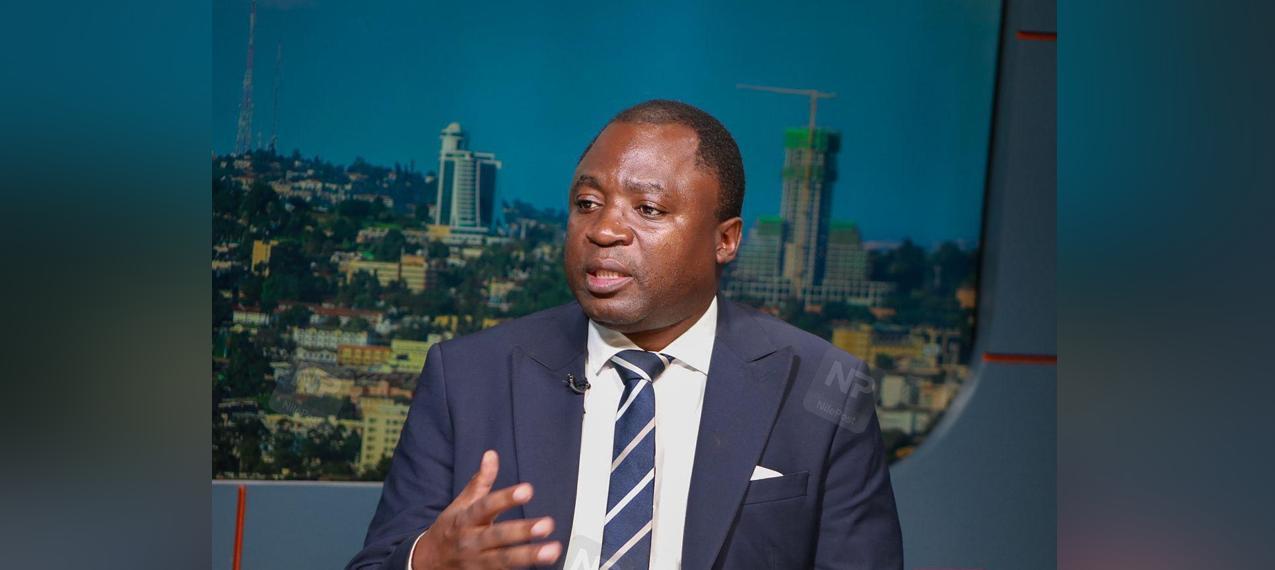
Africa-Press – Uganda. The Executive Director of the Federation of Small and Medium Enterprises, John Walugembe, has called for urgent reforms to Uganda’s proposed tax measures, warning that the current direction risks slowing digital inclusion, increasing the cost of living, and constraining small business growth.
Speaking to Canary Mugume during Next Big Talk on Next Radio on Thursday, Walugembe said Uganda’s fiscal strategy must align with global economic shifts driven by digital transformation and innovation.
“The digital economy is driving jobs, innovation, and economic growth globally. Over 1.2 billion smartphones were shipped in 2023 alone; proof of the scale of the digital revolution,” he said.
“Globally, there are about 39 billion connected devices; the Internet of Things is reshaping economies. E-commerce transactions exceeded $27 trillion globally, a clear sign of digital economic power.”
Walugembe stressed that Africa’s demographic advantage must be matched with enabling policy frameworks.
“Africa’s young population stands to benefit immensely from the digital economy. It could create up to 625 million jobs globally if fully leveraged. For countries like Uganda, the digital economy is not optional, it’s an opportunity we must harness,” he said.
“Uganda cannot afford to ignore the opportunities in the digital economy. Digital trade is unlocking new markets and revenue streams across Africa.”
His remarks come as the government considers proposals to raise an additional Shs 2.3 trillion in the Financial Year 2026/27 through tax adjustments and compliance measures.
Civil society and private sector groups, including the Civil Society Budget Advocacy Group, have warned that the plan could disproportionately impact low-income households despite an increase in the PAYE tax-free threshold from Shs235,000 to Shs335,000.
Proposed indirect tax increases include sugar excise duty rising from Shs100 to Shs300 per kilogram, fuel excise duty increasing by Shs200 per litre, and cement duty doubling from Shs500 to Shs1,000 per 50kg bag.
Stakeholders argue that these increases will raise production costs and consumer prices across essential goods.
Walugembe also criticised the structure of financial taxation, saying it should be used not only to raise revenue but also to shape economic behaviour.
“The 0.5 percent tax on financial transactions is regressive and undermines the digital economy,” he said.
“Overtaxing digital financial services discourages usage and slows financial inclusion. If users reduce transactions due to high taxes, government also loses revenue in the long run.”
He proposed reducing the transaction tax from 0.5 percent to 0.25 percent to unlock growth in digital finance.
On financial access disparities, he noted that mobile money charges remain significantly higher than bank fees for large transactions.
“For a withdrawal of Shs 2 million, mobile money fees are roughly three times higher than bank charges—about Shs 28,000 compared to Shs 9,000. This pushes people back to cash, which is bad for transparency, bad for compliance, and bad for the digital economy,” he said.
Walugembe also highlighted smartphone affordability as a major barrier to digital inclusion.
“The cost of smartphones remains the biggest barrier. We’re not calling for zero tax, but for targeted relief on entry-level smartphones. Remove the 10 percent import duty on smartphones below Shs 150,000 to boost access,” he said, adding that stakeholders are also proposing zero-rating VAT on smartphones under Shs 500,000.
Additional proposals under debate include increasing land stamp duty from 1.5 percent to 3 percent, introducing new vehicle and motorcycle registration fees, and extending the Bujagali tax holiday, which auditors estimate has already cost Shs1.417 trillion.
Uganda’s tax-to-GDP ratio remains at 13 to 14 percent, below the Sub-Saharan average of 18.6 percent and the global average of 23 percent.
FSME and civil society organisations argue that the focus should shift from raising rates on essential goods to widening the tax base, improving compliance, and reducing reliance on indirect taxation as Parliament continues budget deliberations ahead of June.
Source: Nilepost News
For More News And Analysis About Uganda Follow Africa-Press