Africa-Press – Uganda. The Intergovernmental Authority on Development (IGAD) has called for increased investment in women’s leadership, mentorship, and participation in decision-making processes, arguing that sustainable peace, development, and regional integration cannot be achieved without the meaningful inclusion of women.
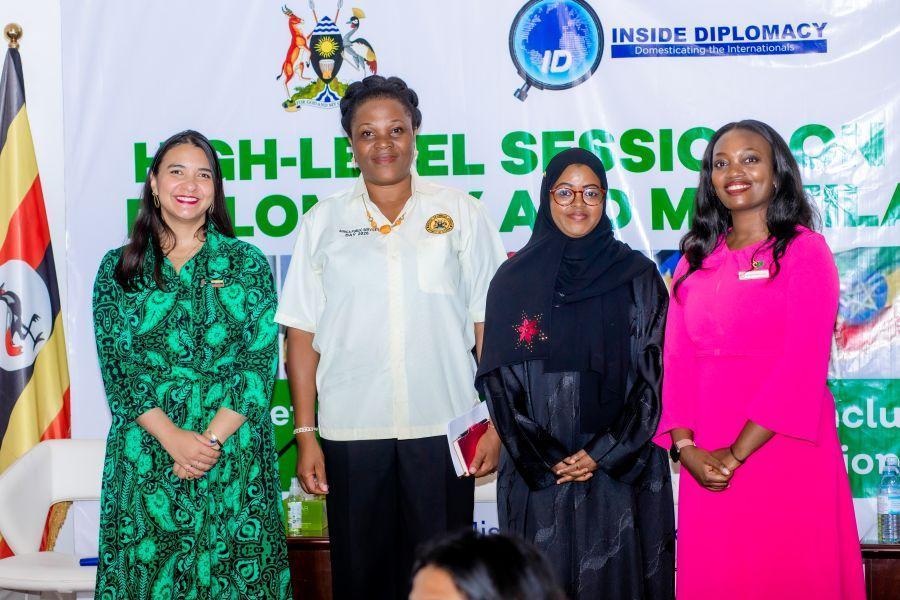
The call was made during a high-level dialogue on “Women in Diplomacy: Advancing Inclusive Leadership and Global Cooperation” held in Kampala ahead of the International Day for Women in Diplomacy, commemorated annually on June 24.
Speaking at the event, Jocelyn Bichirwa, the Head of the IGAD Mission in Uganda, said women and young people remain at the heart of the regional bloc’s development agenda, despite continuing barriers that limit their participation in leadership and governance.
“Women and youth make up the majority of our population across the IGAD region, yet decision-making spaces remain largely dominated by men. We must intentionally create opportunities for women and girls to participate in leadership and decision-making processes,” Bichirwa said.
IGAD, a regional economic community under the African Union comprising Djibouti, Ethiopia, Kenya, Somalia, South Sudan, Sudan, and Uganda, is currently implementing a five-year strategy aligned with its Vision 2050, with peace and security, regional integration, and inclusive development among its key priorities.
According to Bichirwa, gender inclusion and youth empowerment are cross-cutting priorities across all IGAD programmes, including peacebuilding, agriculture, climate resilience, health, and economic development.
She noted that the Kampala dialogue was designed as a mentorship platform to connect aspiring female leaders with experienced diplomats and policymakers, helping young women understand pathways into leadership and international affairs.
“Many young women do not have access to mentorship opportunities. Through engagements like this, they can learn from those who have successfully navigated leadership spaces and gain the confidence to pursue similar paths,” she said.
Bichirwa argued that one of the biggest obstacles facing women is not a lack of competence, but limited access to opportunities.
“Women have the skills, knowledge, and qualifications. The challenge is often whether institutions and leaders are willing to open doors and create space for them to participate,” she said.
She also highlighted the importance of supportive family and workplace environments, noting that many women continue to face challenges balancing professional responsibilities with family obligations.
“Women can thrive in leadership while fulfilling family responsibilities, but they need support systems. Society must move away from the perception that motherhood and leadership are mutually exclusive,” she added.
Bichirwa further urged governments, development partners, and private sector institutions to invest in leadership training, mentorship programmes, and family-friendly workplace policies that enable women to excel.
She also underscored the role of the media in shaping public attitudes toward women’s leadership and promoting positive narratives around female participation in governance and diplomacy.
Participants emphasized that while many African countries have adopted policies promoting gender equality, greater effort is needed to translate these commitments into practical opportunities that empower more women to take up leadership roles.
Robel Admasu, the Chargé d’Affaires at the Ethiopian Embassy in Uganda, highlighted Ethiopia’s historical and contemporary contributions to promoting women in diplomacy and leadership.
Admasu said women have played a central role in Ethiopia’s diplomatic history, peacebuilding efforts and national development.
He cited the Queen of Sheba as one of the earliest examples of female leadership in Ethiopian history, describing her as a symbol of wisdom and diplomacy.
He also praised Empress Taytu Betul for her role as a negotiator and military leader who helped defend Ethiopia against colonial invasion, as well as Ambassador Konjit Sinegiorgis, whose diplomatic career spanned the transition from the Organisation of African Unity (OAU) to the African Union (AU).
Admasu further highlighted the achievements of Ethiopia’s former President, Sahle-Work Zewde, who served as a distinguished diplomat before becoming the country’s first female president.
“She remains an inspiring example of women’s leadership in diplomacy and public service,” he said.
The diplomat also commended Ethiopia’s Ambassador to Uganda for her role in strengthening bilateral relations with Uganda and other countries accredited to the mission, including Burundi, Seychelles, Comoros and the Central African Republic.
According to Admasu, Ethiopia’s Ministry of Foreign Affairs has adopted policies aimed at recruiting, mentoring and training young women diplomats from grassroots communities to strengthen female representation within the country’s foreign service.
“The ministry has deliberately created opportunities for women through recruitment, training and leadership development programmes to ensure they can effectively contribute to diplomacy and international relations,” he said.
He added that broader government reforms under Ethiopia’s leadership have also increased women’s representation in senior government positions and decision-making structures.
For More News And Analysis About Uganda Follow Africa-Press