Africa-Press – Uganda. The President on June 18 imposed a 42-day nationwide Covid-19 lockdown as a key measure to break the chain of Covid-19 transmission in the country.
The lockdown followed weeks of non-adherence to Covid-19 measures and increase in cases of community infections, deaths and hospitalisation in the second wave of the pandemic.
The government said the lockdown, which has greatly affected livelihoods and social wellbeing of Ugandans, was aimed at minimising the disastrous effects of the second wave on the health system and the economy.
The lockdown
While justifying the lockdown, Dr Jane Ruth Aceng, the Health minister, said it was aimed at interrupting Covid-19 transmission among health workers and the population.Dr Aceng said the other objectives of the lockdown were to give time to increase the capacity of health facilities to manage Covid-19 cases, strengthen home-based care and vaccinate more people, among others.
Today marks exactly 21 days since the government announced the lockdown. Daily Monitor assessed the government response to the pandemic, detailing what has been done, partially done and undone halfway into the lockdown. The mini-audit also assesses the objectives of the lockdown and offers insights into what experts have called a complex battle.
Halfway into the lockdown, the country remains in the midst of a challenging battle that has strained the health system, claimed thousands of lives, brought the economy to its knees and wiped out livelihoods.
When he announced the lockdown on June 18, President Museveni said the major goal of the second lockdown was to break the transmission cycle of the virus that had reached every corner of the country.
“Government will aim at reducing the speed and the intensity of transmission to within the next 42 days. The movement of individuals fuels virus transmission,” President Museveni said.
To achieve this, the President banned public gatherings in various places identified as hotspots for transmission including public transport, businesses in down town Kampala, learning institutions and extended the ban on entertainment places including bars, and cinemas and instituted a 9pm to 5.30am curfew.
The Minister of Health, Dr Jane Ruth Aceng, however, said the results of the lockdown on the spread of the virus would be seen in a month’s time due to the long incubation period.
Projections by the ministry indicate that the country will reach the peak of the second wave between July and August before cases start to drop. The current lockdown will expire on July 30. As of July 5, Uganda has registered 84,979 cases and 2,012 deaths. However, Science and Technology minister, Dr Monica Musenero, who is also President Museveni’s senior adviser on epidemics, yesterday said: “The lockdown has achieved its objectives. Many people are putting on masks.
However, the ability of the population to voluntarily social distance is still low but the lockdown has helped in this regard because of enforcement.”She added: “The objectives of the lockdown was to push the cases down so that we can release pressure on the health facilities. After 21 days [of lockdown], we expected the curve to go down. The testing rate is not the same, but we compare the numbers by positivity rate. We expect the rates to consistently go down. We don’t expect the deaths to immediately start going down because most of the people who got infected before lockdown would still be in hospital and critically ill…”
LoP speaks out
However, the Leader of Opposition (LoP) in Parliament, Mr Mathias Mpuuga, questioned government’s failure to provide relief food to citizens affected by the lockdown and accused government of mishandling of the Covid-19 response.
On delayed Covid-19 cash, Mr Mpuuga said: “At this rate, the people in government need to be honest and seek help…we cannot be lethargic like they are. We know where the poor are, we know where those who need food are. You do not need a PhD in commonsense to find people who need food.”
The objectives of the lockdown, according to Ministry of Health officials, were to continue with vaccination exercise, solve the oxygen crisis by installing more plants and increase the capacity of health facilities to handle Covid-19, while sustaining the continuity of essential health services. The other pledges were to ensure enhanced risk communication, streamline home based care.
Dr Aceng speaks out
While appearing before the Parliament Taskforce Committee on Covid-19 yesterday, Dr Aceng said: “Some progress has been made in meeting the objectives of the lockdown.”
The committee members, however, faulted the ministry for delayed vaccination exercise on which the return to normalcy is hinged. Mr Abdu Katuntu, the committee chairperson, tasked the ministry to present the costs required regardless of the amount.
To date, a total of 20.8 million Ugandans have not been vaccinated even as the pandemic continues to kill people on a daily basis. Dr Aceng, however, acknowledged persisting challenges in the government response to the pandemic citing limited bed capacity and number of staff, high costs of logistics and the long process of procuring vaccines.
Dr Mukuzi Muhereza, the general sectary of Uganda Medical Association (UMA) said: “As a clinician, there are some positives. The numbers are reducing, ICU beds are becoming more available, increased oxygen capacity. But there is a reduction in numbers of other diseases and we are asking where are they (patients). By history, I don’t think next wave will find us any better.”
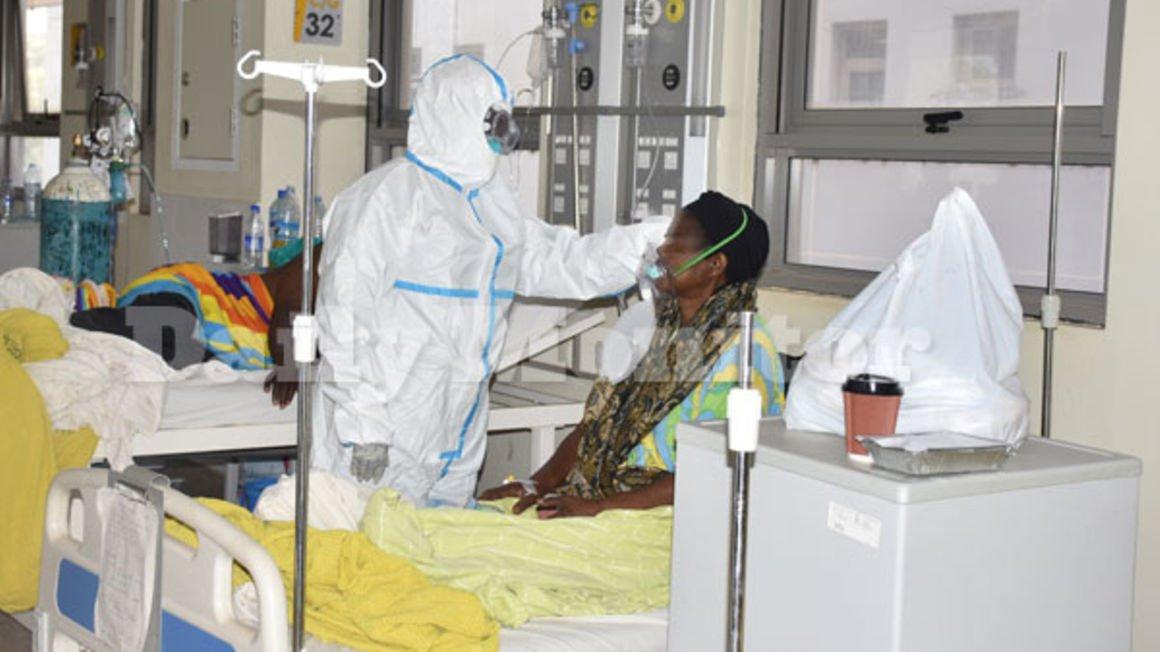
Dr Aceng said her ministry provided testing kits to government facilities that offer free testing, and that plans are underway to procure a total of 10,000 beds for public health facilities. The minister acknowledged that an increasing number of critical and severe patients has put a strain on bed availability in all facilities, with public facilities full.
Breaking the chain of Covid-19 transmission
A total 22,867 cases were recorded out of the 138,062 tests conducted between June 1 and June 18, where 296 people succumbed to the virus. Two weeks and one day post the lockdown, 13,436 cases were recorded out of 110,087 tests. 590 people died. Security agencies, including the police, army and Local Defence Unit personnel have been patrolling the country to ensure compliance to the preventive measures. Mr Fred Enanga, the police spokesperson, said they will conduct a comprehensive review with all institutions involved in enforcement. Health minister Jane Ruth Aceng issued a statutory instrument creating a two-month jail sentence for persons who flout standard Operating Procedures and prevention measures to further prevent transmission.
Plans for Schools
The future for the reopening of schools remains bleak. By press time yesterday, the taskforce on education was meeting to deliberate on a way forward. Last week, Uganda National Examination Board (Uneb) said they were stuck with candidates’ final results due to the disruption in the school calendar. There has been no clear communication for the continuation of learning in the second lockdown. Some of the programmes birthed in the first lockdown in 2020, including media lessons, procurement of radios and television sets were not fulfilled, while the provision of educational material was only partially fulfilled.
Recruitment of health workers
The Health Service Commission on July 1 called for the recruitment of 766 health workers for an emergency response to fight the Covid-19 pandemic. These include 20 oxygen operators, 100 medical officers, 40 enrolled nurses, 45 nursing officers, 243 assistant nursing officers and 60 ambulance drivers. Others are 38 medical officer special grade (Anesthesia), 30 laboratory technologists, and 40 physician intern – medicine. Dr Aceng, however, admitted to inadequacy in staff, especially critical care staff.
Fixing oxygen crisis
The country has the capacity to generate about 37 million litres of medical oxygen per day, against the estimated demand of 62 million, according to an assessment by this newspaper last month. The demand is expected to go even higher as scientists project the second wave to peak in August.Private manufacturers of oxygen in Uganda can only make up to 27.7 million litres of oxygen per day, and public health facilities, which have oxygen plants, can produce about 9.3 million litres of the life-saving gas per day. Health minister Jane Ruth Aceng says they are aware of the need to scale up access to medical oxygen across the country and actions are underway to address.The Finance ministry revealed on Tuesday that Shs94.9 billion from the Shs206 billion emergency response money has been earmarked for addressing problems in oxygen supply.
Budget alignment for Covid-19 response
Even before the 2021/2022 budget was read on June 10, many activists, economists and business leaders cautioned the government that the budget was not well suited to respond to the health and economic effects of Covid-19. Mr Amos Lugoloobi, the Minister of State Planning at the Finance ministry, while reading the Budget, said they had planned for the containment of the Covid-19 pandemic. However, the Finance ministry has moved ahead to cut budgets of other ministries by up to 41 per cent to avail the Shs600 billion the country needs to mitigate the health and economic effects of the pandemic.
Covid-19 relief
During the June 18 presidential address to the nation on Covid-19, President Museveni directed the Prime minister, Ms Robinah Nabbanja, and Gender minister Betty Amongi to identify the vulnerable groups who will be affected by the lockdown for relief support.And on June 20, Ms Nabbanja said the Covid-19 taskforce agreed that they would send money to vulnerable people and not food items as it was during the first wave. Each beneficiary household will receive Shs100,000. By press time, distribution had not yet started.
Reactivating district taskforces
The Covid-19 taskforces at district and village levels are essential in sensitising the communities about Covid-19 and helping in disease surveillance, according to scientists. The taskforces have largely been dormant due to the shortage of funds to run planned activities, according to recent studies by Civil Society Organisations such as Advocates Coalition for Development and Environment (Acode).Prof Francis Omaswa, the chairperson of Community Engagement Strategy for Covid-19 National Taskforce, said the community taskforces have been reactivated.But he said some taskforces are yet to get money this week to facilitate their activities. The Finance Ministry said it has earmarked Shs27.8 billion for paying Village Health Teams, which are the pillars in the village Covid-19 taskforces. A total of Shs53.7 billion was given to districts as emergency financing for the Covid-19 response.
Fixing oxygen crisis
The country has the capacity to generate about 37 million litres of medical oxygen per day, against the estimated demand of 62 million, according to an assessment by this newspaper last month. The demand is expected to go even higher as scientists project the second wave to peak in August.Private manufacturers of oxygen in Uganda can only make up to 27.7 million litres of oxygen per day, and public health facilities, which have oxygen plants, can produce about 9.3 million litres of the life-saving gas per day. Health minister Jane Ruth Aceng says they are aware of the need to scale up access to medical oxygen across the country and actions are underway to address.The Finance ministry revealed on Tuesday that Shs94.9 billion from the Shs206 billion emergency response money has been earmarked for addressing problems in oxygen supply.
Accelerating vaccination
During the presidential address on June 18, of the targeted 21.9 million people, only 869, 915 people had been vaccinated. Of these 57,797 had received both the first and second dose. Since then, as of July 5, which is the latest data released by the Ministry of Health, 158,733 had received both the first and second doses, whereas 868,303 had received the first dose.This means since June 18, at least 100,936 people have received their second jab of AstraZeneca vaccine and 56,185 had received the first dose.Going by the Ministry of Health statistics, 1,027,036 people of the targeted of 21.9 million people have been vaccinated since launching nationwide mass vaccination on March 10, official figures show.About 20.8 million people remain unvaccinated, however, this figure could have changed given that the vaccination process is ongoing.
Strengthening home-based care
Up to 26,353 patients with mild disease are being managed from home due to the limited capacity of hospitals. But there have been concerns that many patients are violating the guidelines and blending with family and other members of their communities, the actions that increase transmission of the deadly virus.But Prof Francis Omaswa, the chairperson of Community Engagement Strategy for Covid-19 National Taskforce, said the reactivation of village Covid-19 taskforces will be important in improving adherence to home-based care.The taskforces help the districts monitor adherence to Covid-19 guidelines, disease surveillance and community engagement, according to Prof Omaswa.
Expanding capacity of health facilities
The directors of regional referral hospitals such as Masaka, Gulu and Mbale said earlier they didn’t have enough space to install the Intensive Care Unit equipment which the government supplied to them. Majority of Covid-19 patients are being managed from home, partly because the hospitals lack enough space for isolation. But there are other issues such as the shortage of medical workers.Dr Nathan Onyachi, the director of Masaka hospital, says they had to find a way to install the beds in some parts of the hospital even as construction works for the right building that will house the ICU continues.Dr Diana Atwine, the Permanent Secretary in the Ministry of Health, says they will establish temporary facilities such as tents to manage cases in regional referral hospitals.
Travel permits
The medical sector has decried inhumane nature of the traffic and security personnel manning various roadblocks to check travel permits. They want all medical officers exempted from this.Dr Richard Lukandwa, the managing director of Medipal Hospital in Kampala, says the travel restrictions are denying the few staff from reaching the health facilities on time or preventing them from reaching at all. This is straining the already thin human resource in the private sector, especially the specialists required to man the Intensive Care Units.The Ministry of Works and Transport spokesperson, Ms Suzan Kataike, indicated that government would further scale down on those cleared for the permits on the road in the second round of clearance.Out of the 50,000 applications received, only 24,909 had been approved, 404 rejected and 5,834 were still pending as of Monday this week.
How is the lockdown treating you so far?
Dr Abdul Byakatonda, Workers’ MP
Government needs to build silos in every constituency so that when we have bumper harvests, food is stored in these silos so that during tough times like now, people can still access food.
Dr Rudrigo Nyinoburyo, Public health specialist
I may be among the few Ugandans whose salary was not cut. Many people are not as lucky, especially those living hand-to-mouth. You can imagine what is happening to them.
Dr Aggrey Sanya, Clinical officer
As a health worker, I was preoccupied treating the cases in this second wave, as well with other diseases. It has mainly been about dealing with [Covid-19] case management.
Esau Nanabyenda, Telecom engineer
I am not complaining because much as I am currently not employed, I have a retail shop, from which I am earning some money daily. I also rear pigs, some of which I am selling during this period.
Zowena Khatueni, Banana vendor
These days I get my stock on credit because I have ‘eaten’ part of my capital. However, bananas are often rotting away because there are few buyers. Sometimes I don’t make any money.
Loyce Shamin, Ground nuts vendor
I have one child, but I am failing to look after him because the groundnuts I vend are getting spoilt for luck of clients. I have also used part of my capital to buy food. On some days we go to bed on empty bellies.
Sylvia Nabossa, Spare parts dealer
Everything is practically locked down because even garages which remained open do not have customers. I used to make about Shs80,000 a day but these days, I can even return home without making any sale.
Godfrey Bitaberaho, Samosa vendor
I have been vending samosas in different parts of the city for the last 25 years. Before the lockdown, I used to make a daily profit of about Shs25,000 but this has now dropped to between Shs7,000 and Shs10,000.
Immaculate Nakiwala, Tailor
I walk from Najeera to Ntinda in Kampala (about 5kms) to work and back everyday but sometimes I don’t get any clients. People do not have money. It seems many are depending on their savings to survive. If the trend continues this way, I may stop working completely.
Sandra Nanyonjo, Food vendor
It has been through the grace of God that I have survived thus far without a formal job. I decided to send my three children to the village to stay with their grandmother. I cannot even afford to send them any financial support because I do not have anything to offer.
By Nobert Atukunda, Tony Abbet, Arthur Arnold Wadero and Elizabeth Kamurungi