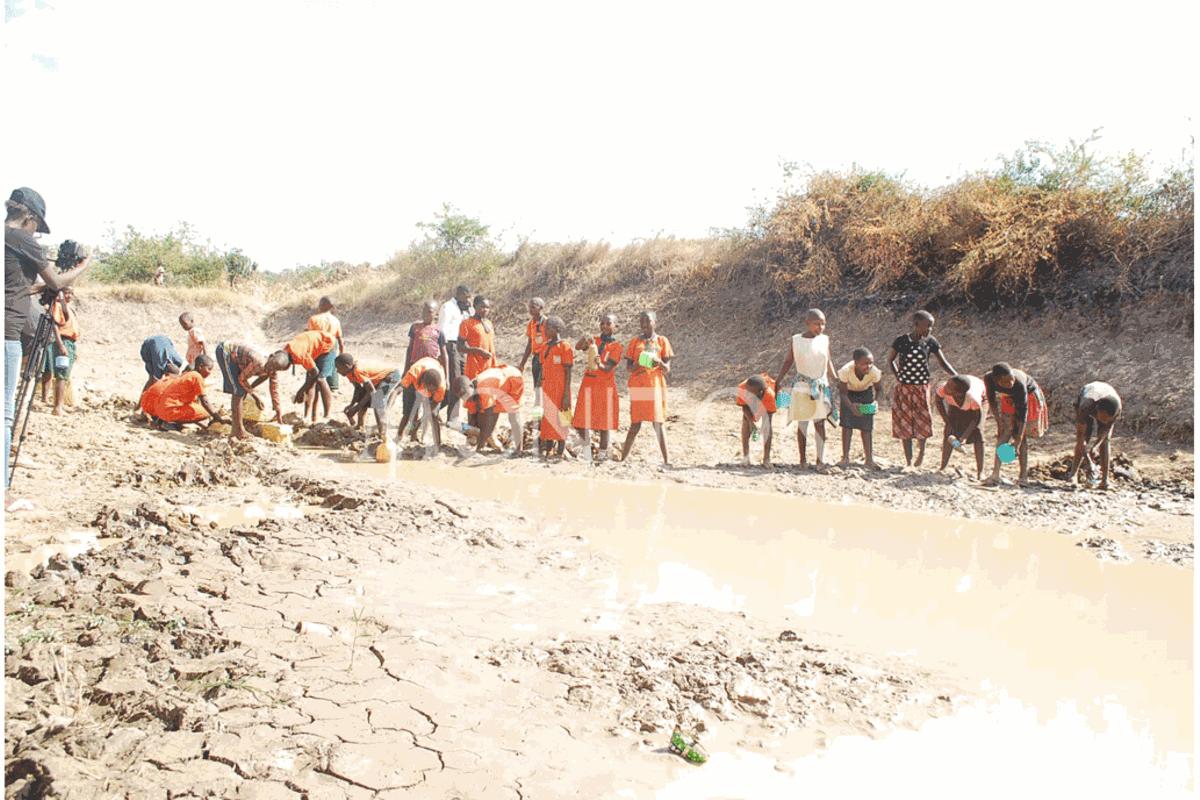
Africa-Press – Uganda. The cattle corridor is experiencing the longest dry spell this year, rendering many farmers helpless as they watch their crops wither and animals yearn for water.
The cattle corridor stretches from Isingiro District in southwestern Uganda to Karamoja in northeastern part of the country, dominated by pastoral rangelands. They include Kiruhura, Nakasongola, Luweero, Nakaseke, Kiboga, Mubende, Sembabule, and districts in Teso Sub-region.
As a result, a section of boda boda riders in Lwengo District have resorted to vending water for families and farmers.
The water crisis in the district and the cattle corridor has worsened in the past weeks due to prolonged dry spell that has left many water sources dry across the country, forcing residents to trek long distances in search for water.
Many residents are now depending on Kibulooka spring for water.
According to Mr Alex Mugisha, a boda boda cyclist at Kyasenya boda boda stage in Lwengo Rural Sub-county: “When fuel prices went up, we slightly increased the fares and this forced many people to shun our services. So, when water scarcity hit the area , we saw an opportunity in fetching water for those who need it, and we are making some good money.”
He said a 20-litre jerrycan in many sub-counties goes for between Shs1,000 and Shs1,500, depending on location.
On a good day, Mr Mugisha says he earns Shs30,000, unlike before when he could hardly make Shs15,000 .
“The good thing with vending water is that I make three trips where I fetch 10 jerrycans on each trip. This new business is fairly good, I fetch 30 jerrycans, which I sell at Shs1,000 each, sometimes Shs1,500 using one litre of petrol which I buy at Shs7,000,’’ he said.
Ms Nusurah Nantume , a resident of Kyabagu Village, says despite trekking long distances to get water, it is also expensive.
According to Mr Fred Lugalambi, the district water engineer, each village must have at least one dam or borehole to solve the problem.
He, however, added that they are constrained by lack of funds.
“We have made some inroads into providing clean water, there is still a rural-urban divide due to lack of funds . Some Shs560m was recently earmarked for provision of water in rural areas, but we will only be able to dig three wells and a few boreholes yet the demand for permanent water sources in the district is very high ,” Mr Lugalambi said.
Lwengo has 340 villages with a few water springs. It currently has only 15 functioning valley dams and 149 bore holes.
The other districts have often depended on valley dams for domestic use and agriculture.
This publication yesterday reported that leaders in Karamoja had attributed the deaths of about 900 people since January to starvation.
The government and other bodies have now sent relief food to the sub-region pounded by hunger.
For More News And Analysis About Uganda Follow Africa-Press