Africa-Press – Uganda. As early childhood development advocates push the government to introduce universal pre-primary education, the move intended to improve the quality of education remains a pipe dream across Buvuma District’s 52 islands.
Such are the educational deficits that many of the islands don’t have schools dedicated to early childhood education. After taking about 2.5 hours navigating the waters to reach Lyabana— Buvuma’s main island—the area’s LC1 chairman told Sunday Monitor that the island has no single school.
“At the moment, according to those registered in my village book, we have 1,017 residents, but as you know, there are those who may not have registered with me yet, the number could be slightly more,” Mr Sulaiman Sadiki Kitamirike revealed before adding that Lyabana Town Council does not have a pre-primary, primary or secondary school.
This state of affairs forced local leaders to pass a by-law that compels parents with children aged four years and above to take them elsewhere to get an education.
Same script
Miles away on Liibu island, which sits on nearly 10 acres of land, the situation is markedly similar. The island with a 2,000-strong population also has a by-law in place. The single private pre-primary school that opened its doors this year, however, serves as a distinguishing feature.
“It is called Good Samaritan,” Mr Badru Kiyimba, the village chairman, beamed, adding that it has taken in close to 85 learners.
Liibu in fact followed the lead of Nkata Island where local leaders opened up a nursery school when Covid-19 pandemic curbs were loosened.
Ms Elizabeth Nabukalu, the village chairperson, says—back in 2014—a pastor only identified as Nanyonjo started a nursery school in Nkata.
It collapsed due to non-payment of school fees by the parents. The school authorities tried to get it back on its feet, but it took another headlong fall.
In Buvuma, it’s hard for parents to save money for a rainy day. At Lyabana Island, the vast bulk of the women are in the business of catching and drying silver fish (mukene). Or at least used to be. When the government intensified operations against illegal fishing, many watched in dismay as their boats were destroyed for not meeting the set standards.
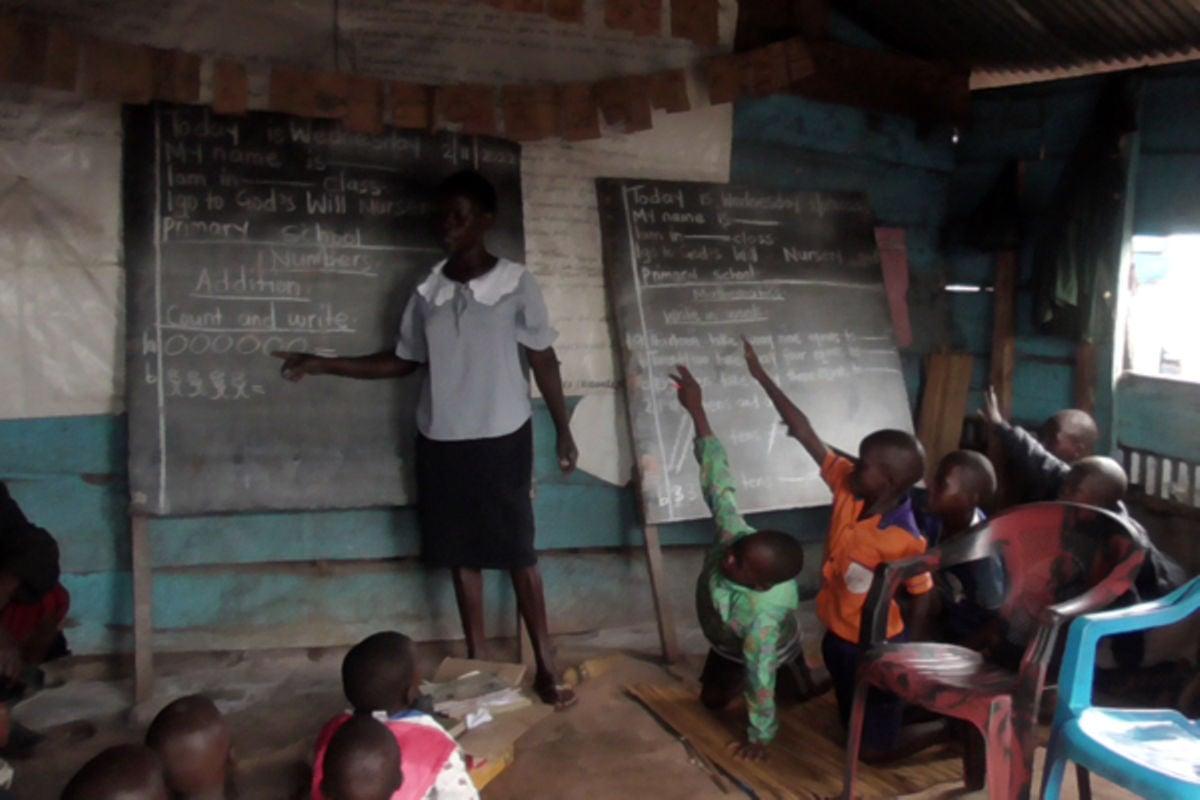
If the children on the islands are not to suffer the same fate of their parents, they will need to get a decent education. At Nkata, Grace Adongo started God’s Will Nursery and Primary School. Ms Adongo wears many hats—she is the founder, headmistress and sole teacher of the three-in-one class school (it has pupils in baby class, top class and Primary One).
Resilient
The school started under a tree, but it soon became apparent that the strong winds on the island wouldn’t provide a conducive learning environment. The local leaders then decided to give up their village office to accommodate the pupils.
“We convene our village court sessions every Monday and Friday and were using this office,” Ms Nabulaku told Sunday Monitor, adding: “Initially, we always asked the teacher to take the children out on those days until we decided to shift to my home.”
Ms Adongo admits that they face “many challenges” such as lack of classrooms and “no seats.” She, however, remains as passionate as ever to give the pupils a head start.
“In education, we are still below,” Mr Adrian Ddungu, the Buvuma District chairperson, confesses, adding: “We have 38 parishes which don’t have any government school and two sub-counties (Lyabana and Lwaje) without a secondary school.”
Mr Ddungu believes a partnership the district local government entered into with the NGO Cloud Over Nations offers a glimmer of hope. He adds that “land and space and old infrastructure” was extended to the NGO “to start the teaching.”
The NGO’s Chief Executive, Mr Joseph Kitagenda, says they sought a collaboration with the district because “we thought it was important to effect the establishment of learning centres and build capacity of teachers who teach early childhood learners.”
“We intend … to build internal capacity from within Buvuma District,” he says, adding, “We project that within … five years we shall have created almost 100 learning centres for children. We also project that we shall have created 2,800 employment opportunities.”
Mr Hussein Bugembe, the Buvuma District Education Officer, says the government’s role for now is “to supervise and inspect” the private sector interventions.
Mr Filbert Baguma, the secretary general of the Uganda National Teachers Union, however, warns that relying on the private sector has its pitfalls.
“They (private sector) have a framework which they have to follow, but they are not following it,” he noted, adding: “They are only in competition and have now rendered these young ones into academics which is not the essence of early childhood education.”
Mr Baguma says the pupil should instead “learn how to socialise, how to share and how to live with others.” He labels as “unfortunate” episodes that see pupils in baby class return “home with scripts and homework.”
Evidently, Buvuma still has a long road ahead.
For More News And Analysis About Uganda Follow Africa-Press