Africa-Press – Uganda. The Food and Agricultural Organisation (FAO) has embarked on plans to restore about 100 hectares of the degraded land in Bidibidi refugee settlement in Yumbe District.
Before the influx of the refugees in 2016, the area was covered with vegetation, providing a habitat for wild animals.
However, the land is now bare due to human activities such as charcoal burning, construction and poaching.
The FAO in partnership with other organisations has since 2019 been carrying out assessment and developing forest landscape management plan (FLMP) for Bidibidi refugee settlement to establish the magnitude of the degraded environment.
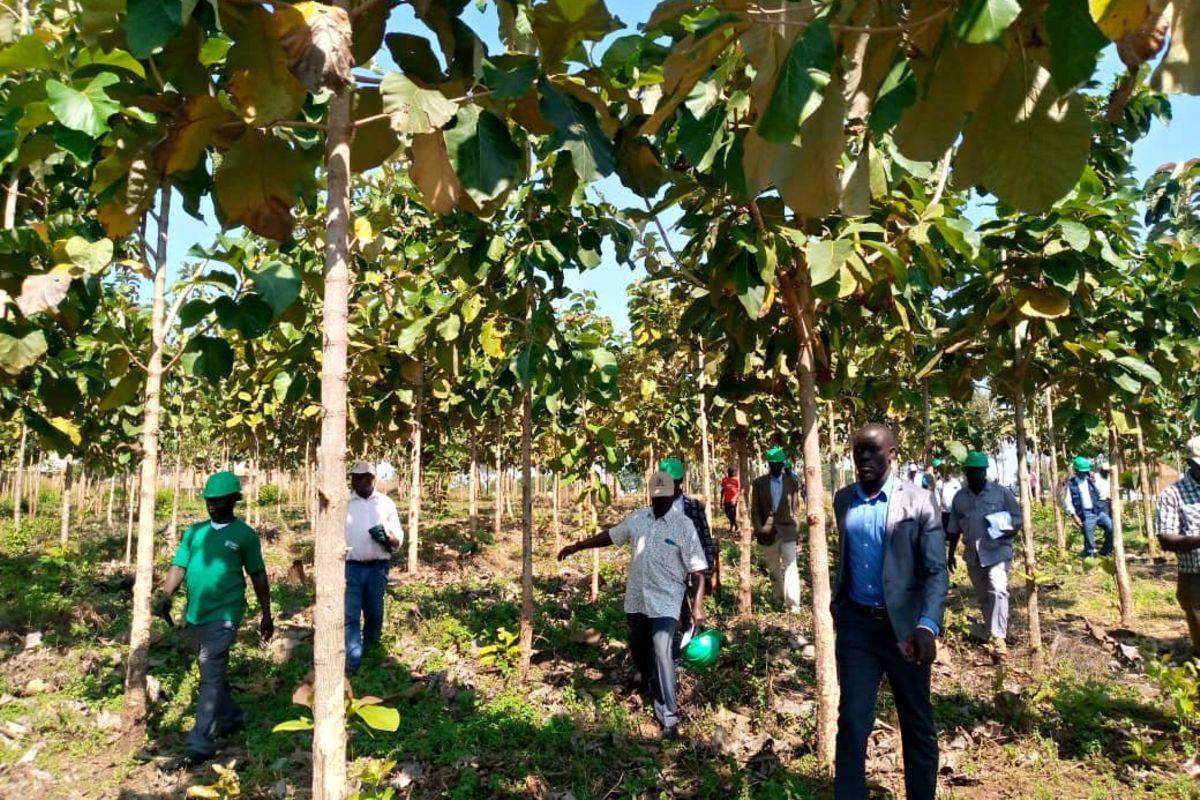
Speaking during the launch of the plan in Yumbe District at the weekend, Ms Nelly Bedijo, the FAO programme associate, said they plan to restore the forest landscape through woodlot establishment for energy purposes, restoration of the degraded areas and protection of the ecosystems.
She said if the 4,000 hectares of land identified for woodlot establishment are planted, it can give an excess of 36,000 tonnes of wood fuel.
“When you look at the wood energy demand, a refugee on average per person uses 1.6 kilogrammes of firewood and a host community uses 2 kilogrammes daily. So when you put all these and factoring in their numbers, they already have a deficit of 25,000 tonnes,” she said.
Ms Bedijo said: “We need to plant a minimum of 2,800 hectares of woodlots in Bidibidi refugee settlement so that way we would be able to relieve our natural forest, the indigenous trees of the negative pressure the community is placing on them for energy needs,” she added.
She said they need about Shs40 billion to implement the environmental restoration plan from 2023-2028 where Bidibidi has a population of more than 230,000 refugees.
Mr Muhammad Anule, an elder in Romogi Sub-county, said a lot of trees, including endangered tree species such as the Afzelia Africana, Mahagony have since disappeared.
Mr Charles Geriga, a refugee in Zone II settlement, said some refugees resorted to dealing in firewood, charcoal, poles, and grass due to poverty. He, however, called for promotion of afforestation to restore the environment.
Mr Antonio Querido, the FAO country representative, said refugees and the host community rely heavily on the environment for food, energy, shelter and income earning opportunities.
“This has exacerbated existing pressures on natural resources and in some cases may lead to misunderstanding or conflicts between refugees and host communities,” he said.
The Minister for Relief, Disaster Preparedness and Refugees, Mr Hillary Onek, called for investing in sustainable natural resource management and rural livelihoods so as to promote coexistence of refugees and the host community.
He attributed the influx of refugees in the country to protracted crises that cause vulnerable people to lose access to a range of resources necessary for food and agricultural production thus increasing pressure on the environment.
He said the limited forest resources may lead to competition between the refugees and the host community resulting in conflict.
For More News And Analysis About Uganda Follow Africa-Press