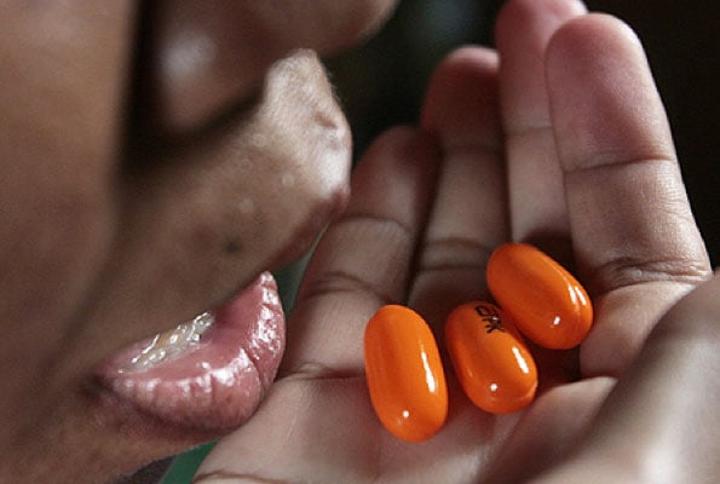
Africa-Press – Uganda. Health authorities in Jinja District have said at least 800 patients have developed resistance to Antiretroviral Therapy (ART), which treatment is rendered to people infected with the human immunodeficiency virus (HIV) which causes Aids.
Dr Dyogo Nantamu, the Jinja District health officer, said the patients have been identified from a pool of 5,245 HIV patients on ART living in the city and district.
Dr Dyogo said HIV drug resistance results from failure to adhere to treatment as prescribed by the health workers, while some people fail to use the drugs because of fear of disclosing their serostatus to the people they live with.
“In some cases, a husband or wife fears taking the drugs in the open because they have not disclosed their HIV status to their partner; in such circumstances, you find that person misses taking the drugs as required, which results in drug resistance,” Dr Nantamu said at the weekend.
Dr Dyogo said a patient facing drug resistance will always develop tuberculosis, have a low CD4 count, and have sores in the mouth, especially men.
“This new HIV drug resistance is a threat because the government will need to put in a lot of resources and more health workers will be needed to take care of the increasing number of patients amid the reduced funding,” Dr Dyogo added.
On a positive note, he revealed that if one persists on ART, the viral load lowers and there are chances that the person stops transmitting HIV even if they engage in sexual intercourse with an HIV-negative person.
Dr Dyogo said: “I advise people to always go for HIV testing to know their status so that they are put on ARVs early before their immunity is weakened.”
Dr Gladys Among, the medical services technical lead of the Aids Support Organisation (Taso) Jinja Branch, said for children living with HIV, drug resistance always comes as a result of multiple caretakers.
TASO is a non-governmental organisation (NGO) set up in 1987 to offer HIV counselling and medical services to people infected and affected by HIV/AidS.
Dr Among said most children registered are orphans who live with relatives at different times; so, administering drugs as required becomes hard.
“You find that one relative keeps this child for six months and is careful with drug administration, but when this child goes to another relative, the administration may either fail or not be done as required,”Dr Among said.
“School-going children, especially those in the boarding section, also don’t adhere to drugs due to stigma, thus bringing about drug resistance,” she said.
Dr Among said the government is about to launch the administration of an HIV-injectable drug.
Once launched, she said, the problem of drug resistance will be reduced since the injection will cover a much longer period.
According to Dr Among, Taso receives 7,100 clients from the 11 districts of Busoga Sub-region and Buikwe District. Out of these, 300 are children, with 35 of them having a higher viral load, implying that the infection is progressing.
Medics say the ideal situation is where patients have an undetectable viral load, which means they cannot pass the disease on to other people. This can only be achieved if patients are well-managed, take their medication on time, and have a balanced diet, among others.
Ms Edith Namukose (not her real name), a resident of Jinja City who is living positively with her four-year-old child, said they are facing drug resistance because her husband does not believe that they are HIV-positive.
For that reason,Ms Namukose said he stops her from picking ARVs because “they look healthy’’.
“I have since declined to tell him that I developed drug-resistant HIV after I went to Taso and doctors told me that I had developed tuberculosis, which is a sign of having drug-resistant HIV,” she said.
For More News And Analysis About Uganda Follow Africa-Press