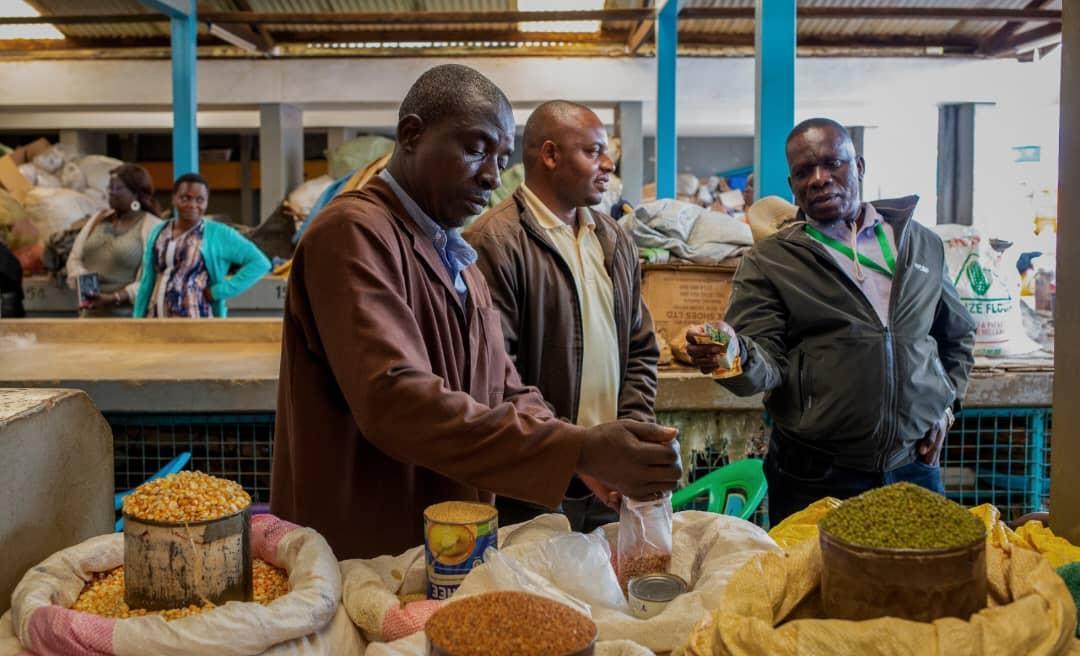
Africa-Press – Uganda. As families across East Africa head to markets to stock up on food for the festive season, nutritionists and agroecology advocates are urging consumers to reflect not just on quantity, but on the quality and safety of what they bring home.
Experts say food grown through agroecological methods—without heavy reliance on synthetic chemicals—offers healthier nourishment, promotes longevity and supports environmentally sustainable farming systems that protect soil health and biodiversity.
Across the region, a growing number of households are deliberately choosing agroecologically grown produce cultivated using natural methods that preserve traditional farming practices.
This shift is being driven by rising public awareness of the health risks associated with highly processed or chemically grown foods, increased nutrition education campaigns, and sustained advocacy by small-scale farmers promoting sustainable agriculture.
“Consumers today are redefining what healthy food really means,” said an agroecology campaigner. “People want food that protects both their health and the environment.”
Despite the growing demand, experts say regional trade systems have not adapted fast enough to support the movement of agroecological products across borders.
The East African Community (EAC), the region’s main trade bloc, has committed under the EAC Treaty and the Customs Union Protocol to harmonise trade standards and ease the movement of goods.
Articles 108(c) and 38(1C) require partner states to streamline sanitary and phytosanitary measures and align technical regulations.
In practice, however, agroecological traders continue to face inconsistent rules and unpredictable inspection procedures.
Laboratory accreditation differs from country to country, phytosanitary thresholds are unevenly applied, and border officials often interpret regulations inconsistently.
As a result, shipments accepted in one country may be delayed or rejected at neighbouring borders.
“For smallholder farmers who operate on very thin margins, this kind of uncertainty is a major structural barrier,” said a regional trade analyst.
Non-tariff barriers remain a significant challenge despite the elimination of tariffs under the EAC Customs Union.
A June 2025 report by the EAC Sectoral Council of Ministers shows that registered non-tariff barriers increased sharply from 10 in November 2024 to 48 by May 2025, including discriminatory taxes, procedural delays and inconsistent documentation requirements.
A recent study by the Alliance for Food Sovereignty in Africa warns that unless smallholder farmers and agroecological traders are fully integrated into regional markets, both EAC and African Continental Free Trade Area trade will continue to be dominated by large industrial producers.
The report notes that this imbalance threatens environmental sustainability and social equity.
Speaking at a regional conference on advancing agroecological trade held in Jinja City last month, Kenya’s Assistant Director for Trade Policy and Strategies, Beatrice Pamela Onyango, reaffirmed her government’s commitment to supporting small traders.
“We shall continue building the capacity of traders and ensuring that market actors understand the importance of trading agroecological products,” she said.
“We are also supporting the aggregation of market-specific interests to promote agroecological zoning across the region.”
There have been notable improvements in trade facilitation. More than 15 One-Stop Border Posts across East Africa have reduced average border crossing times by up to 70 percent, saving regional economies an estimated Shs 226.8 billion annually.
However, experts caution that without harmonised standards, predictable inspection procedures and stronger institutional support for small-scale producers, the benefits will remain uneven.
As festive season shopping peaks, agroecology advocates are encouraging consumers to make deliberate choices that safeguard both personal health and environmental sustainability.
“Food grown without synthetic chemicals is not just a lifestyle choice; it is a pathway to a healthier generation and a more sustainable region,” said a nutrition specialist.
For now, consumers are driving the shift towards agroecological food systems, but experts say lasting progress will depend on stronger policy alignment and regional commitment to inclusive trade frameworks.
For More News And Analysis About Uganda Follow Africa-Press