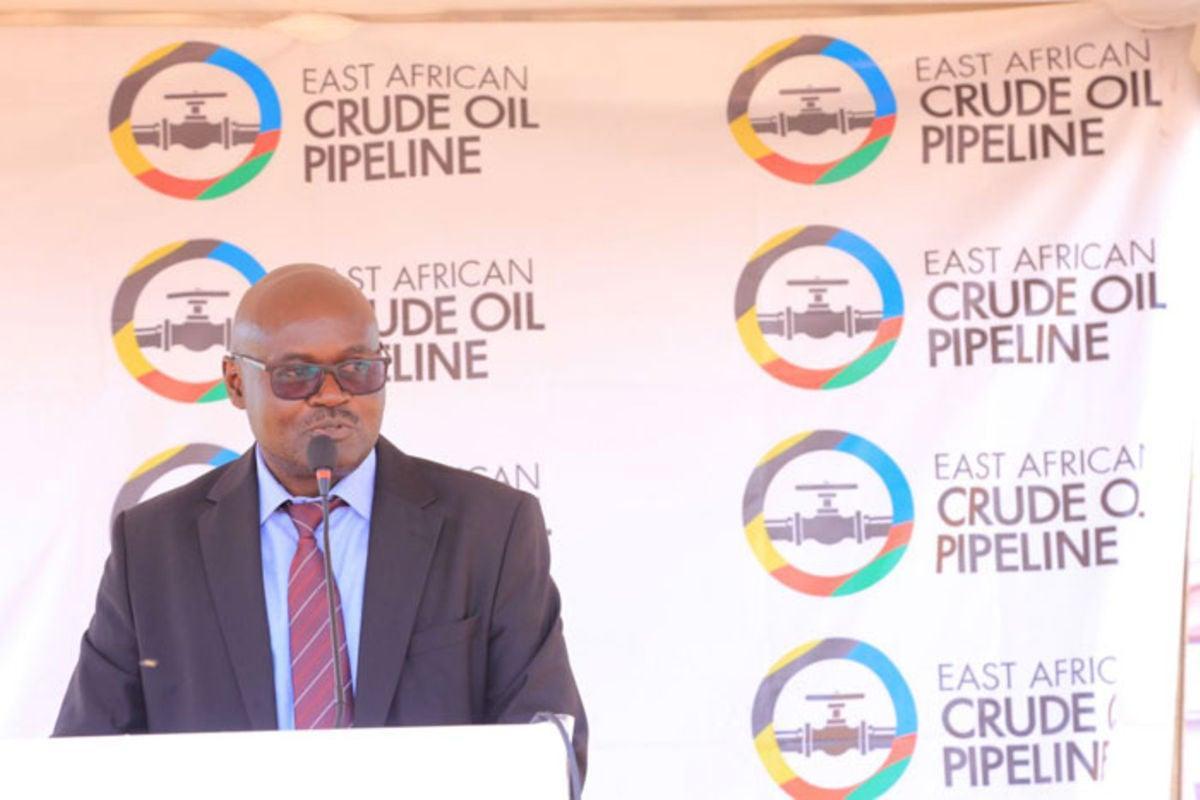
Africa-Press – Uganda. KAMPALA. The East African Crude Oil Pipeline (EACOP) deputy managing director John Bosco Habumugisha has said equipping projected affected persons with skills will provide them with new opportunities and increase their capacity to start their own enterprises.
Speaking at the handover of start-up kits for 163 project affected persons in Sembabule District, Mr Habumugisha said in a statement it is important to identify the right skill sets for project affected persons that have the ability to restore or enhance their incomes.
“We believe that equipping [project affected persons] with appropriate skills and start up kits provides them an opportunity to increase their capacity to start their own enterprises or engage in productive activities that can enhance their incomes,” he said, noting that kits handed over under the Resettlement Action Plan seek to enhance the livelihoods of project affected persons in the pipeline corridor.
The handover follows completion of various vocational skills training programmes by project affected persons in the districts of Sembabule, Kyotera and Kikuube, through which EACOP is seeking to empower, restore and help project affected persons transition.
The beneficiaries were trained in a number of vocational programmes, among which included driving, hairdressing, tailoring and garment designing , welding, building and plumbing. Other included catering, motor vehicle and motorcycle mechanics, secretarial studies, brick layering , carpentry and electrical works.
EACOP is a 1,443 kilometre infrastructure project that will transport crude oil from Kabaale – Hoima to the Chongoleani peninsula near Tanga in Tanzania.
The export system includes 1,443 kilometre of insulated and buried 24 inch pipeline, six pumping stations, two pressure reduction stations and a marine export terminal.
Project-related land acquisition is expected to leads to loss or access of assets, resulting into loss of income sources or other means of livelihood. The Livelihood Restoration Programme seeks to provide project affected persons an opportunity to improve, or at least restore, their means of income capacity and standards of living.
The programme is being implemented under a phased approach, during which the first phase will provide transitional support to households as a short-term measure to support their food security while the second and third phase will provide households with opportunities and support to improve their livelihoods back to pre-project levels through agricultural improvement and skills enhancement.
For More News And Analysis About Uganda Follow Africa-Press