Africa-Press – Uganda. Private Universities should shift from the comfort of operating as glorified high schools that mainly focus on teaching, to undertaking research needed to inform policy and address societal problems, a senior official from the National Council for Higher Education(NCHE) has said.
Speaking at the Science Granting Councils Initiative(SGCI) regional meeting and launch of the 2023 National Research Outlook Report for Uganda held in Kampala from June 19 to 23, Dr Vincent Ssembatya, Director Quality Assurance and Accreditation at NCHE said universities must be in position to fully implement their mandate of training, undertaking research and community engagement.
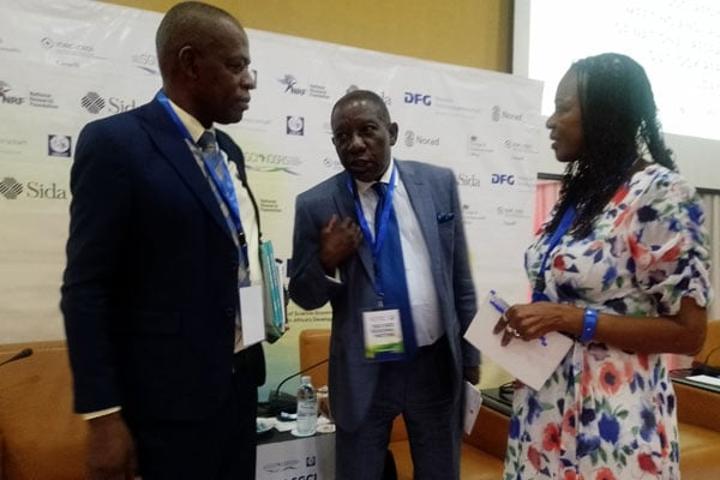
The meeting organised by Uganda National Council for Science and Technology in partnership with Granting Councils Initiative in sub-Saharan Africa was held under the theme: ‘The role of Science Granting Councils in Africa’s development.’
Dr Ssembatya cited enhancing human resource capacity, soliciting for external funding, ensuring that their institutions are chattered as a requirement for offering graduate programmes and poaching experienced researchers from public universities and pay them well, as some of the measures that private universities must undertake to improve their research presence in the global knowledge systems.
He revealed that although universities are required to acquire charters within three years of operation, only 11 out of over 40 private universities, including those that have been in existence for 10 years, have met this requirement.
“Most of the start-up private universities are glorified high schools. They do nothing different from teaching. That is what the high schools do; they are not chartered, have no curriculum for graduate programmes and lack capacity to undertake research,” he said.
“Sometimes, people who set up these universities are entrepreneurs who think that higher education is a lucrative business only to learn in a hard way that it is not easy to run them. They must invest in professionals and infrastructure to stimulate knowledge production as opposed to being training institutions,” Dr Ssembatya added.
Responding to the concerns raised by NCHE, Mr Hasadu Kirabira, the chairperson of the National Private Education Institutions Association (NPEIA) said government should be in position to support and guide universities that are limping so that they can be able to deliver.
“The level of research in these universities may be wanting but they have their own challenge and must be supported because they envision the objective of higher education and they represent our country,” Mr Kirabira said.
Erostus Nsubuga , the chief executive officer of Agro-genetic technology limited(AGT laboratories) said research funds from both the government and donors must be shared with the private sector, including private universities to help them undertake research needed to ignite development.
Mr Nsubuga said that currently, 99 percent of research in Africa is driven by the public sector.
Dr Dorothy Ngila, director Strategic Partnership at National Research Foundation in South Africa called for clear national research development policy that clearly states the purpose of research and the problems it intends to address.
Steven Sebbale, head of policy and strategy at National Council for Science and Technology noted that the council had conceptualized a platform where both the public and private sectors can share ideas in the areas of science, technology and innovation.
Teboho Moja, a professor of education at the University of New York said heavy reliance on donor funds to finance research must be avoided as donor usually have their own priorities.
According to the National Research Outlook report of 2023, the proportion of national expenditure on research and development stands at 0.23percent.
For More News And Analysis About Uganda Follow Africa-Press