Africa-Press – Uganda. A presidential directive to ring-fence government advertising to state-owned media houses should be scrapped and alternative funding mechanisms sought, MPs on the ICT Committee said on Tuesday.
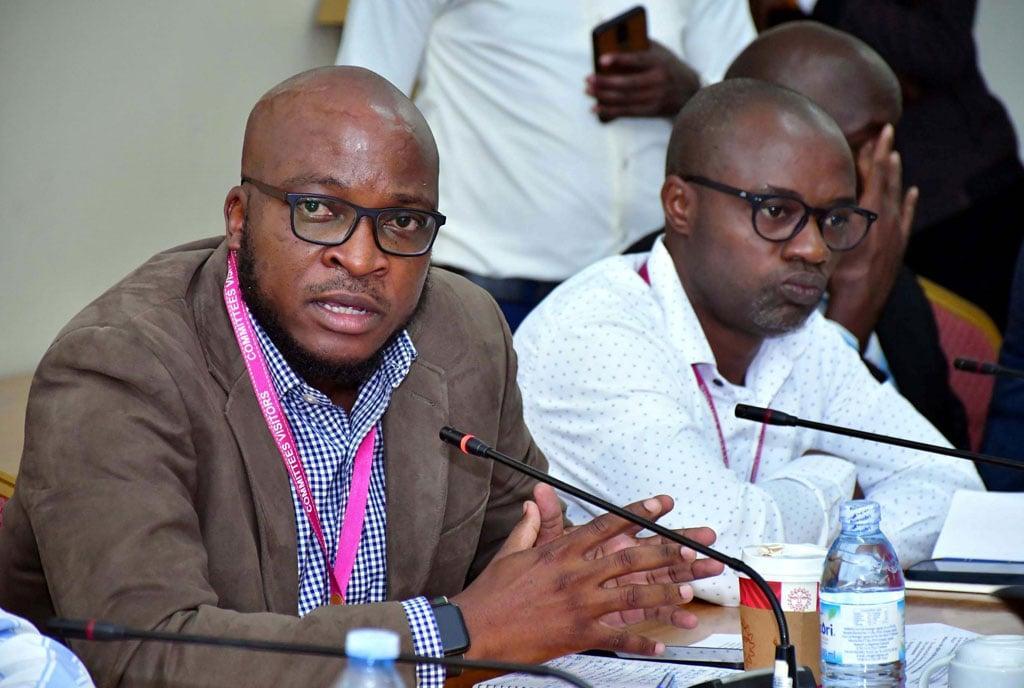
In a meeting with media industry executives from the National Association of Broadcasters (NAB) and the Uganda Editors’ Guild (UEG), MPs heard that the proposal would bankrupt many media houses and render many journalists unemployed.
“Many jobs are at stake,” NAB chairman Kin Kariisa warned. “Should the directive be enforced, many media houses shall close or, as a means of survival, they shall be left with no option but to let go of 70 percent of their staff for them to survive.”
The meeting followed a petition by the media industry to Parliament to protest a move by the Executive to channel all government advertising to state broadcaster Uganda Broadcasting Corporation (UBC), and Vision Group, which is 53 percent state-owned, with the rest of the shares listed on the Uganda Securities Exchange. President Museveni’s directive was contained in a March 6 letter to Prime Minister Robinah Nabbanja.
Treasury PS Ramathan Ggoobi later firmed up the directive in a circular to government accounting officers, which prompted protests and a week-long ban on coverage of some government activities by private media houses. The advertising ban matter was referred to the ICT committee last month by Speaker Anita Among following a petition by NAB to Parliament.
The ban on coverage was temporarily lifted after the government said it was open to discussing the directive.
Committee chairperson Moses Magogo (Budiope East – NRM) welcomed the opportunity to engage with the media executives and promised to bring the concerns to the attention of the House in order to find a compromise. He urged media houses to ensure good ethical practices and to ensure unity of purpose in industry associations.
“How much are you in control of your members such that we don’t want to fight an invisible war whereby probably the decision makers or advisors to the President are getting back to specific media houses and until we get to the bottom of some of these details, we might be diagnosing and prescribing wrong medicine for something different,” he said.
Mr Lolem Micah Akasile (Upe County – NRM) added: “We cannot allow UBC to do government work alone. But what has driven the government that they should only do advertisements with UBC. I think there must be a problem.”
MPs heard that UBC has only 11 out of more than 300 radio stations in the country, and that many citizens would be left without access to important government information if it was the only outlet.
Responding to concerns raised by the MPs about ethical conduct and professionalism in the media industry, Daniel Kalinaki, Nation Media Group Uganda’s editorial head and president of the Editors’ Guild, said journalists were not above the law but were only seeking to be regulated and treated within the law.
“I think the recommendation there is that the framers of the law, in most cases, have put in place institutions that serve as arbiters so if we do something that someone is not happy with, they must have recourse to justice,” he said.
Mr Kalinaki, who also currently chairs the Eastern Africa Editors’ Society, which represents editors’ guilds in Uganda, Kenya, Tanzania and Ethiopia, urged MPs to consider funding options to ensure independent media houses remain alive to ensure diversity and plurality.
“I would like to invite the committee to expand its line of inquiry, when the time is right, to explore the question of media viability because you have very many media houses, especially the smaller media houses, that are heavily dependent, some of them on government advertising, but others are really not viable media entities and that lack of viability lends itself to unethical practices like blackmail, extortion.”
He called for a media viability fund appropriated by Parliament that could be transparently accessed by qualifying media houses. “It can be helpful in supporting even the small media houses to survive and treat their journalists better.”
The industry has recommended that earlier reforms recommended at UBC be implemented to allow the state media house to play its public broadcasting role, and that its current direct funding from the budget should thereafter be increased. Relying on advertising, MPs heard, would undermine UBC’s mandate to provide programming that is important but not commercially viable for private media houses.
The media executives also asked recommended that Signet, the public digital signal distribution arm, should be spun off from UBC and run as a purely commercial outfit.
Mr Magogo said the committee would present its recommendations from the interaction on the floor of Parliament at a later date.
Speaking to the Monitor on Tuesday evening, ICT and National Guidance minister Dr Chris Baryomunsi said they will be doing more consultations on the matter this Thursday during a scheduled meeting with the President.
“The directive is an effort to mobilise resources to support UBC. We are doing internal consultations and examining their concerns and are scheduled to meet the President on Thursday together with those people of NAB,” Mr Baryomunsi said, adding, “In my view, it was unnecessary for them to start petitioning Parliament when the author of the directive has given them an opportunity to make their case on Thursday.”
For More News And Analysis About Uganda Follow Africa-Press