Faridah N Kulumba
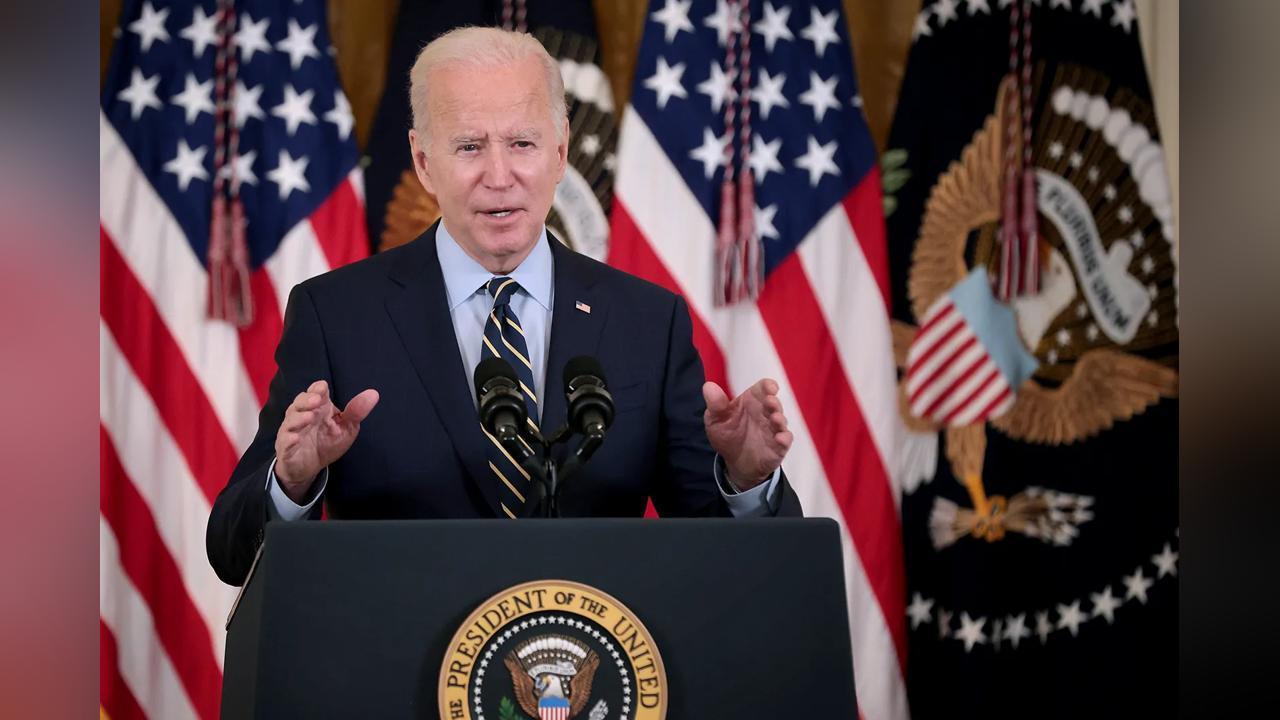
Africa-Press – Uganda. United States President Joe Biden announced last week he is planning to evict Gabon, Niger, Uganda, and the Central African Republic (CAR) from the African Growth and Opportunity Act (AGOA) trade program. According to President Biden, the expulsion of these African countries is due to their records on human rights and the rule of law.
Rationality
Biden’s letter to the Speaker of the House of Representatives, outlined his reasons for the decision, stating that the countries did not meet the eligibility requirements of section 104 of the AGOA. In the letter, Biden also outlined that the governments of the CAR and Uganda had engaged in “gross violations of internationally recognized human rights”. He also cited Niger and the government of Gabon’s failure to establish or make continual progress toward the protection of political pluralism and the rule of law.
Nigar and Gabon case
Niger and Gabon both experienced military coups in the last few months, leading the US State Department to halt all non-humanitarian assistance to both countries under section 7008 of the State Department’s annual appropriations act. Section 7008 becomes applicable when a democratically elected leader is overthrown in a military coup or where the military plays a decisive role in the overthrow. On 26 July 2023, the president of Niger Mohamed Bazoum, and his family were detained at the Presidential Palace in Niamey, and Interior Minister Hamadou Souley was also arrested. The coup was led by General Abdourahamane Tchiani, whom Bazoum had planned to relieve from his position. There are around 1,100 U.S. personnel in Niger who have been sidelined by the military takeover in Niamey. On 30 August 2023, the president of Gabon Ali Bongo Ondimba’s government was overthrown by a coup d’état that occurred shortly after the announcement that incumbent president Ondimba had won the general election held on 26 August. Gabon’s Brigadier General Brice Oligui, commander of the Republican Guard, was later installed as interim president by the military junta.
Uganda’s case
President Biden condemned Uganda’s recent Anti-Homosexuality Act, calling it a “tragic violation of universal human rights” and stating that he would “incorporate the impacts of the law into our review of Uganda’s eligibility for the African Growth and Opportunity Act. Following overwhelmingly public support the president of Uganda Yoweri Kaguta Museveni ascended the anti-homosexual bill in May this year. The law among others criminalizes same-sex marriages which resulted in Western nations including the World Bank cutting off Aid.
CAR’s case
The Central African Republic held a constitutional referendum on [30 July] which, if passed, could allow President Faustin-Archange Touadera to run for a third term in 2025. Touadera was first elected in 2016 for a five-year term and won reelection in 2020 for what was supposed to be his final term in office. In August, the government of CAR removed presidential term limits. This led the US State Department to issue a press release expressing concern. The State Department called on the government of the CAR to “announce a date for local elections in which all Central Africans can express their views at the ballot box.
About AGOA
AGOA is a trade preference program that offers eligible countries duty-free access to a U.S. market for over 1,800 products, as well as other benefits. It was approved by the U.S. Congress in 2000. However, there are stringent eligibility criteria, outlined in section 104 of the Act, including the requirement that countries establish or make progress towards establishing the rule of law, political pluralism, and the rights to due process, a fair trial, and equal protection under the law. America intends to end the designation of these countries as beneficiary sub-Saharan African countries under the AGOA on January 1, 2024, but will “continue to assess whether the Central African Republic, Gabon, Niger, and Uganda meet the AGOA eligibility requirements. Uganda exported goods worth USD 174 million in 2012 and USD 82 million in 2021.
The EAC Stand
The leadership of the East African Community Secretariat in Arusha Tanzania says the U.S. has to respect the decisions and cultural values of Ugandans. They praised Museveni for being brave fighting for African culture not to perish and for the spirit of Pan Africanist when he signed the LGBTQ bill into law. Dr Peter Mathuki, Secretary General of the East African Community (EAC) is calling on Washington to respect the decision and cultural values of Uganda. He says that whatever the parliament of Uganda’s decision was on behalf of Ugandans. And that Uganda’s decision showed the sovereignty of the nation. He added that Uganda is a sovereign state, it is an independent country that is able to make its own decisions. The moment the country becomes independent from the colonial masters it means that they are able to govern their own affairs. Mathuki highlighted that the government of Uganda through their institutions like parliament in this case and in their wisdom decided that there are things they cannot compromise such as respect for democracy. George Odongo Uganda Representative on the East African Legislative Assembly (EALA) said of late America is leading from a Cold War template. Their foreign policy is the issue of late and it is highly temperamental. He added that Uganda is no longer an isolated country, The U.S. to invade Uganda by weaponizing the AGOA act is an exercise in due diligence.
This is very positive progress in the direction of harmonizing positions between Uganda and America is not a question about who is right and who is wrong but it is a question of understanding the values of where each comes from. Johnbosco Kalisa Executive Director of East Africa Business Council says leaders need to respect the country’s values and norms within the society. These are the discussions the government of Uganda will be able to undertake with the US government. Kalisa also revealed that the US decision came at the right time when African countries are also pushing the African Continental Trade Area (ACTA) which is a wider market of around 1.3 billion population but with a combined GDP that’s growing to around 3.4trillion USD and this exciting for the region as well as the continent. “That’s why we’ve been pushing at the continental level, as well as the regional level to have AGOA extended to 2025,” Kalisa said. Uganda will not be the first country to be suspended from the AGOA program. Rwanda was suspended in 2018 for imposing high taxes on second-hand clothes from America, and Ethiopia was also suspended last year for human rights violations in the region.
For More News And Analysis About Uganda Follow Africa-Press