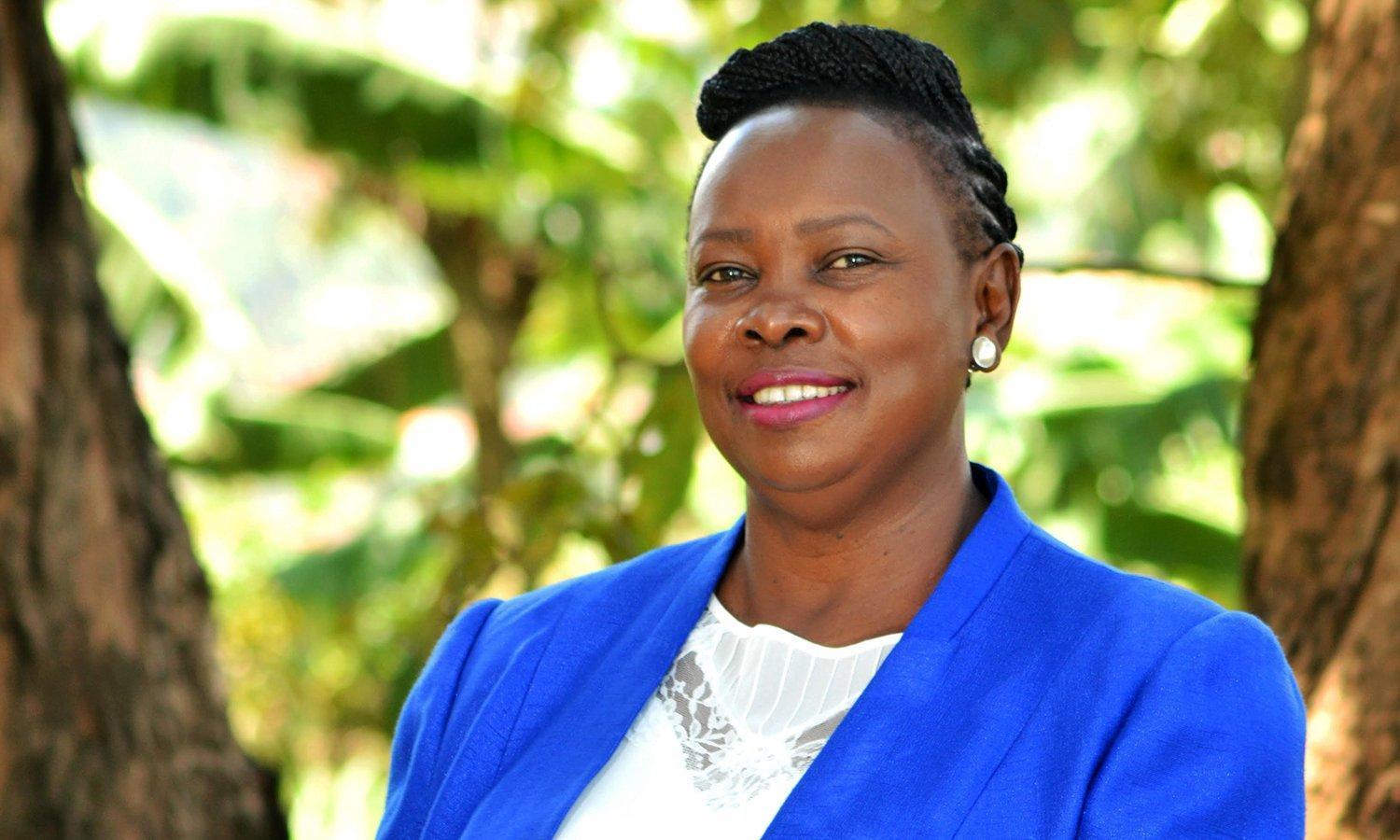
Africa-Press – Uganda. One of Uganda’s leading novelists has singled out lack of a proper eco-system to support publishing, a poor reading culture, and preference for the lucrative educational books by publishing firms as reasons why the book industry in the country is struggling.
Goretti Kyomuhendo, who is also the founder and director of the African Writers Trust (AWT), says a palpable lack of skills, limited finances, and a poor distribution network have all not helped matters.
“Publishing is a business, and for the sector to develop, it would require adequate resourcing in terms of financing and skilling the personnel behind the publishing businesses,” Kyomuhendo tells Monitor. She adds: “Distribution is a vital component of the book sector to ensure published books get into the hands of readers and their intended audiences. It would require that book distribution channels, both physical and online outlets, are fully functional.”
Kyomuhendo also attributes Uganda’s poor reading culture to a school system that “emphasises reading for exams rather than for pleasure.” She nevertheless thinks fiction books can still gain traction in the country if they are published in different formats.
“Currently, the majority of fiction books are produced in only one format—the printed version. But they can be published in other formats such as audio and electronic, which would cater for, especially the younger readers,” she reckons, adding, “We can also think of translating such books in local languages for the benefit of non-English users.”
Since readers are, per Kyomuhendo, “the most important component of the publishing ecosystem, [a] thriving reading culture” is of the essence. The AWT founder is alive to the fact that Uganda is “an oral and highly sociable society.” She notes: “We enjoy doing things together, and yet reading is an isolating activity. But we can also focus on promoting performance poetry, for example, which can boost the book sector in several ways, including book sales.”
Fiction books
Kyomuhendo is the author of four novels: The First Daughter (Fountain Publishers, 1996); Secrets No More (Femrite Publications, 1999), which won the Uganda National Literary Award for Best Novel in the same year; Waiting: A Novel of Uganda’s Hidden War, published by The Feminist Press in New York, in 2007, and translated into Spanish, in 2022; and Whispers from Vera, republished in August 2023 by AWT Limited.
The 246-page novella, Whispers from Vera, which was first published in 2002 by Monitor Publications Limited, tells the story of 29-year-old Vera, who is desperate to meet Mr Right after several failed relationships.
A high-flyer, Vera is determined to have it all—a husband, family and an illustrious career. When she meets Eric, a hunky, corporate executive, Vera is elated. Eric is 31, single and searching. Then a secret of unimaginable magnitude that Eric has kept from Vera surfaces, with the possibility of grave implications.
Set against the vibrancy of Kampala metropolis in the 2000s, Whispers from Vera is a light-hearted, tongue-in-cheek read, enriched with Uglish and local languages. Free-spirited and audacious, Vera documents the whole gamut of her life’s experiences as she navigates through the lows and highs of motherhood and wifehood of a middle-class, modern-day, Ugandan career woman.
“I think the reaction that cuts across the board is that they all want more of Vera’s whispers,” Kyomuhendo says of the success of the novella, adding, “I’m now working on a sequel.”
Asked why she had Whispers from Vera republished in August 2023, Kyomuhendo responds: “The novel went out of print a few years after its first publication in 2002 after the publisher discontinued the publishing business. I was prompted to reissue the novel because I wanted to make it available for a new audience of readers, who had come of age since the novel was first published 20 years back.”
Reworking Vera
Kyomuhendo promises readers “a reworked and updated version” of her critically acclaimed novella, with “a few additions and subtractions.” The portrayal of Vera as a feminist “was to create an all-round, woman character, whom many readers would relate and identify with.”
Kyomuhendo adds: “To achieve her life goals, Vera has to push back against several tenets of patriarchy systems and cultural expectations that characterise many African societies, and which threaten to hold her back.”
Ultimately, the message Kyomuhendo wants to put across is “representative of many women’s lived experiences as they chart their lives as spouses, mothers, daughters, career-oriented, modern-day individuals.”
She intends to offer “a nuanced exploration of society, with all its complexities through Vera’s eyes.”
Humble beginnings
Whispers from Vera was first written in the epistolary form in 1996, and published as a weekly newspaper column in The Crusader. The column was very popular among readers, per Kyomuhendo, never mind that she only intended “to write a light read piece, as an addition to the mainstream news, politics, and other articles that were being published in The Crusader.”
“When the newspaper closed in 1999, I was approached by Monitor Publications Limited to turn the column into a novel,” she tells Monitor, adding that the novel was born in 2002.
The “letter form” of the column “created intimacy between the readers and Vera, the story’s protagonist.” The humour and “comprehensible language to an average reader” also aided in its critical reception.
Other works
Kyomuhendo also authored The First Daughter. It is about a girl called Kasemiire, who grows up in poverty. But her father is able to send her and her siblings to school. This, he does amid scorn from other men who think all a woman has to do is to work in the kitchen. Kasemiire gets pregnant in school and is abandoned by the father of her child. She would later meet the father of her child at university, sparking off emotions that had been concealed.
Secrets No More tells the story of Marina, a Rwandan child and her family experience during the war in the 1990s.
Set in the 1970s during the last year of Uganda’s president Idi Amin’s brutal rule, Waiting: A Novel of Uganda’s Hidden War evokes the fear and courage of a small close-knit society. It is uncertain of what the edicts of a madman or the marauding of his disintegrating army will bring with each day.
On which of her four novels has sold the most, Kyomuhendo says: “I would say The First Daughter has sold more copies in Uganda because it is taught at different levels, including at lower secondary, colleges and universities. Waiting: A Novel of Uganda’s Hidden War, has sold more outside Uganda, also because it is taught in several universities in the US, and is more easily accessible in other international markets.”
Kyomuhendo, who splits her time between Uganda and the United Kingdom, says she unwinds after a hard day’s work by walking. She holds an MA degree in Creative Writing from the University of KwaZulu, Natal, South Africa, and taught creative writing in the same university in 2004. She is also the first Ugandan woman to receive the International Writing Programme Fellowship at the University of Iowa.
Educational books
According to the Commonwealth of Nations, private sector publishing has flourished in Uganda since the economic liberalisation of the 1990s. Fountain Publishers Limited is one of the major local publishing houses in the country, producing a variety of products from academic and school textbooks to fiction and tourist-related literature.
Subsidiaries of international publishing firms—Longman Uganda Limited and Macmillan Uganda Limited—operate in the country. Macmillan Uganda Limited trades as Moran (Uganda) Publishers Limited. Undoubtedly, Uganda’s biggest national publisher, it specialises in educational publishing.
Elsewhere, Makerere University also publishes a wide catalogue of journals that cover many disciplines. In fact, the National Book Trust of Uganda—an organisation which promotes authorship, publishing and development of the culture of reading in Uganda—notes that the most growth in publishing has been seen through educational books.
“Some of these books are a requirement for the students when reporting to school, hence, the parents have no choice but to buy them,” Kyomuhendo says of textbooks, adding, “This is not the case for fiction books, which are read for pleasure rather than as a requirement.”
For More News And Analysis About Uganda Follow Africa-Press