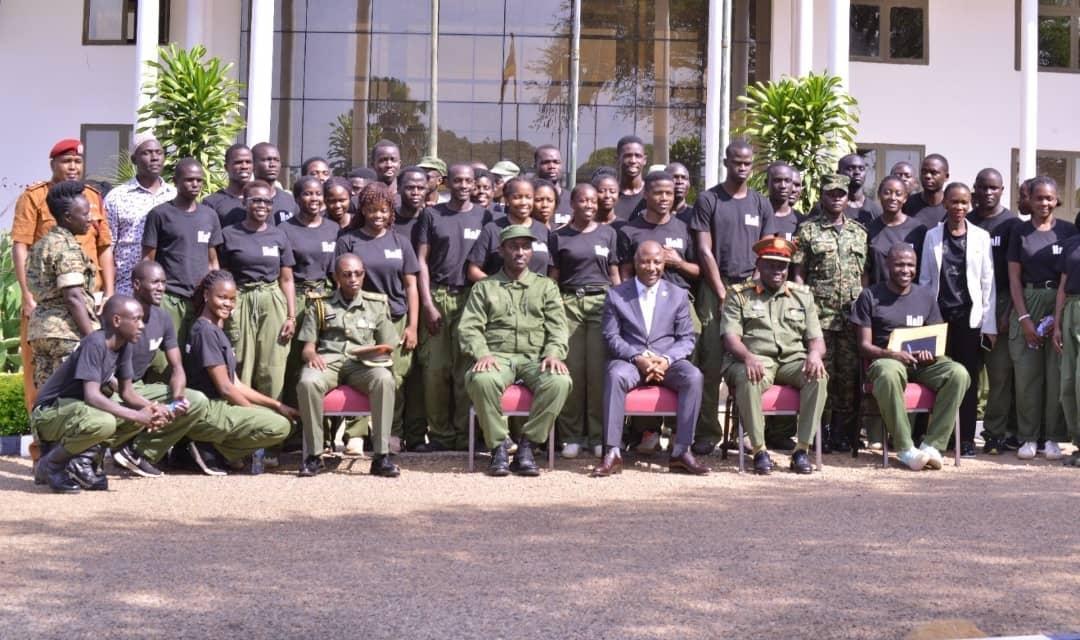
Africa-Press – Uganda. 151 young leaders graduated from the National Leadership Institute (NALI) yesterday, marking the successful completion of an intensive training program aimed at equipping them with the skills, knowledge, and mindset necessary to drive transformative change in their communities and schools.
The ceremony highlighted the government’s commitment to nurturing future leaders, with the NALI program standing as a beacon of hope for Uganda’s development.
The Ministry of ICT and National Guidance, spearheading digital transformation initiatives, emphasised its dedication to creating employment opportunities for youth, further showcasing the alignment between NALI’s mission and national objectives.
Speaking at the ceremony, State Minister for ICT and National Guidance Godfrey Kabyanga expressed optimism about the future contributions of the graduates, urging collective support for the initiative.
“This program symbolises the government’s dedication to fostering leadership and improving education outcomes across Uganda. As these young leaders return to their communities, their work will undoubtedly play a vital role in shaping the nation’s future,” he said.
A heartfelt acknowledgment was extended to the leaders of NALI, particularly outgoing Brigadier Charles Kisembo, for their unwavering commitment to leadership development.
Brigadier Kisembo’s contributions were lauded as instrumental in advancing the core values of the National Resistance Movement (NRM)’s ten-point program, which has shaped Uganda’s progress since 1986.
These principles, centered on popular democracy, socio-economic transformation, and national unity, remain integral to the program’s ethos.
The leadership of Bagambaki Joseph and the broader organisational team behind NALI received commendation for their relentless efforts in preparing Uganda’s next generation of change makers.
Notably, the program has already impacted over 240,000 learners through literacy and numeracy initiatives, facilitated by Building Tomorrow, an NGO complementing government efforts in education and youth employment.
Since 2018, 450 young leaders have graduated from NALI, demonstrating tangible positive outcomes in their respective communities.
The impact of this program is set to expand further, with plans to implement it in rural primary schools to enhance literacy and numeracy, particularly in underperforming institutions.
As Uganda continues its journey toward socio-economic transformation, programs like NALI underscore the importance of investing in youth leadership to ensure sustainable national development.
The government and other stakeholders reaffirmed their commitment to monitoring the graduates’ progress and supporting their efforts to build a better Uganda.
For More News And Analysis About Uganda Follow Africa-Press