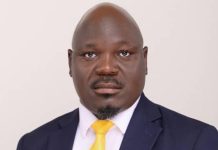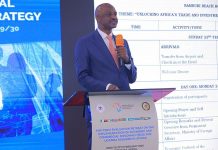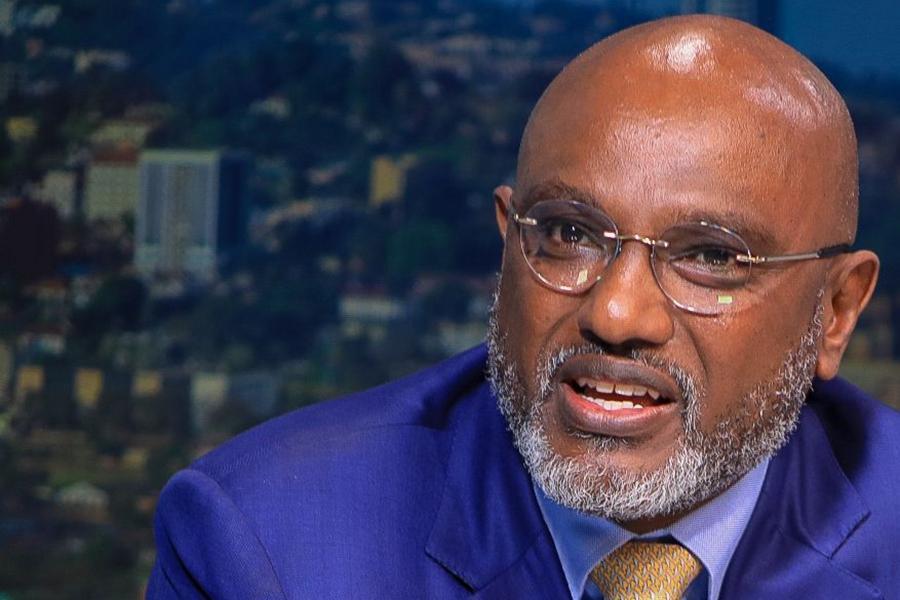
Africa-Press – Uganda. Uganda’s Permanent Representative to the United Nations, Adonia Ayebare, has defended the country’s recently concluded general elections and downplayed discussions at the European Parliament, describing the institution as “irrelevant” to Uganda’s foreign policy engagement with the European Union.
Speaking on Tuesday, Ayebare weighed in on the diplomatic implications of appeals made to European leaders by opposition figure Robert Kyagulanyi Ssentamu, popularly known as Bobi Wine.
Kyagulanyi, who contested the January 15, 2026 presidential election under the National Unity Platform (NUP), recently addressed members of the European Parliament virtually from hiding, alleging widespread human rights violations, election manipulation and state-sponsored violence.
Ayebare rejected assertions that the elections were chaotic, maintaining that Uganda’s polls were peaceful compared to others in the region.
“In the region, we had some ugly elections but the Ugandan elections were peaceful and without incident. Many pundits even referred to it as the most boring election,” he said.
He acknowledged that international observer missions pointed to structural weaknesses but framed them as lessons rather than evidence of systemic failure.
“The world demands a credible and peaceful election. The observers pointed out some structural flaws that need to be fixed. I think every election provides lessons,” Ayebare said.
Drawing a distinction between EU institutions, Ayebare said Uganda’s diplomatic engagement is conducted with the European Commission rather than the European Parliament.
“Our foreign policy isn’t run by the EU Parliament. Them discussing our election is like Uganda’s Parliament discussing elections in the Netherlands,” he said.
“This is an EU Parliament that has nothing to do with foreign policy. Uganda really has nothing to do with that institution. We deal with the EU Commission.”
Ayebare revealed that Uganda had been invited to address the European Parliament but declined.
“Anyone can address the European Parliament. We were invited but we turned the invitation down. We don’t believe that’s the right channel to address foreign policy,” he said.
He added that Uganda continues to engage constructively with the European Commission, which he described as having issued a measured statement regarding the elections.
“EU are not donors, they are partners. We receive support from the EU, not donations. We value their support but we don’t take everything they give us,” Ayebare said.
Placing the debate in a broader geopolitical context, Ayebare referenced his role within the Non-Aligned Movement, arguing that developing countries are increasingly asserting their sovereignty.
“Where I sit, developing countries are asserting themselves. Countries are now relating differently. Condescending relationships are things of the past,” he said.
He stressed that Uganda’s sovereignty must be respected.
“Is Uganda a sovereign country? Sovereignty means you can make mistakes but these mistakes can be corrected. The EU also have internal issues but no one tells them how to address them,” he added.
Ayebare further announced that Uganda and the EU would soon commemorate 50 years of diplomatic cooperation.
Meanwhile, Kyagulanyi has accused President Museveni and Chief of Defence Forces Muhoozi Kainerugaba of orchestrating election-related violence and manipulating results.
During his address to the European Parliament in Brussels, Kyagulanyi alleged arrests, abductions and intimidation of opposition supporters, as well as an internet shutdown days before polling and restrictions on media coverage of vote tallying.
He also called for targeted international sanctions against Uganda’s leadership and urged the EU to take a firmer stance on what he described as democratic backsliding.
Human rights activist Sarah Bireete, executive director of the Centre for Constitutional Governance, similarly addressed European lawmakers, raising concerns about governance and electoral integrity.
According to official results released by the Electoral Commission, Museveni secured re-election for a seventh consecutive term with 7,946,772 votes, representing 71.65 percent of valid votes cast. Kyagulanyi placed second with 2,741,238 votes, accounting for 24.72 percent.
Kyagulanyi rejected the results as fraudulent but declined to challenge them in court, citing lack of confidence in the judiciary. Instead, he called for peaceful protests to express dissatisfaction with the electoral process.
Ayebare dismissed the opposition’s outreach to European lawmakers as a visibility strategy that overestimates the Parliament’s influence within the EU structure.
“The people Robert Kyagulanyi was addressing know more about this country than he does. They know the facts; that’s why they keep engaging us,” Ayebare said.
“I understand NUP; they will hang on to anything that gives them visibility, but unfortunately they are hanging on to an irrelevant institution like the European Union Parliament.”