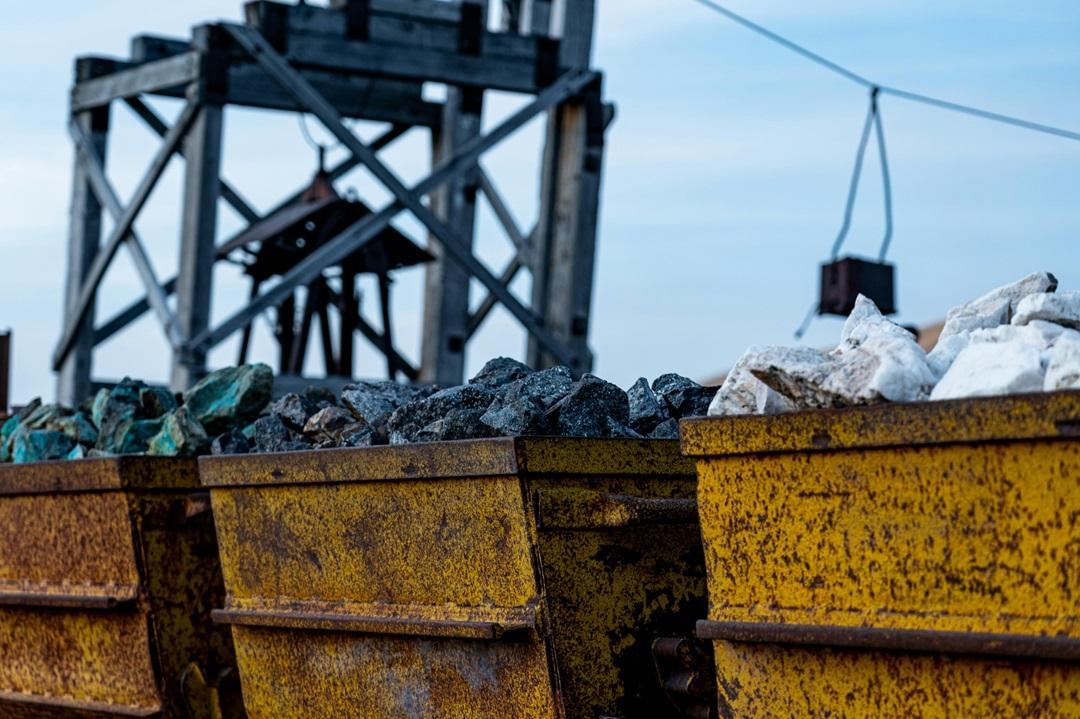
Africa-Press – Uganda. Africa has an abundance of mineral resources that are valuable for reasons far beyond export revenue or fiscal stability.
As the world scrambles for lithium to power electric vehicles and renewable grids, Africa sits on some of the largest untapped deposits, but most of the value is still leaving the continent as raw ore.
From copper and cobalt to graphite and rare earth elements, the continent holds many of the inputs required for the global transition to cleaner energy systems and lower-carbon growth pathways.
These strategic minerals underpin renewable power generation, battery storage, electrification and emerging low-carbon technologies – sectors that are expanding rapidly as countries race to meet climate targets.Africa’s mining and energy future is being reshaped by regional integration, mineral value addition, and industrial growth. At Mining Indaba, experts emphasised that while Africa cannot speak with a one-size-fits-all voice, it can move forward with a unified vision.
Lithium at the centre of energy transition
Among them, lithium has emerged as one of the most strategically contested. Used in electric vehicle batteries, grid-scale storage systems, and portable electronics, lithium is central to the energy transition.
However, studies indicate that although Africa hosts significant untapped lithium deposits, particularly in Zimbabwe, Namibia, and Mali, the continent continues to struggle to develop and process the mineral locally.
The Africa Finance Corporation (AFC) states that the Southern Africa region is exceptionally well positioned to play a leading role in the global industrial, digital, and energy transitions.
According to the 2026 Compendium of Africa’s Strategic Minerals by the AFC, Africa’s key challenge is converting its mineral wealth into infrastructure, industrial capacity and integrated regional value chains rather than simply exporting raw ore.
Lithium, in particular, exemplifies this challenge. Although deposits in Zimbabwe, Namibia, and Mali are substantial, Africa captures only a fraction of the value beyond extraction.
Lithium processing remains the weakest link in Africa’s value chain
Most refining, precursor production and battery manufacturing occur abroad, meaning the continent misses out on jobs, technology transfer and the industrial growth that could accompany a fully integrated supply chain.
Zooming in on constraints and opportunities, AFC states that the continent’s share of global lithium mining rose to approximately 11% in 2024-2025, with nearly 30% of new global supply growth in 2024 originating from Africa.
According to the report, the continent’s lithium potential is concentrated in two new clusters: West Africa (Nigeria, Mali, and Ghana) and Southern Africa (South Africa, Namibia, and Zimbabwe).
“The strategic challenge is to move beyond ore exports by building independent refining and chemical conversion capacity, reducing reliance on external processors and anchoring battery-related value chains on the continent.
AFC warns that despite rapid growth in mining, lithium processing remains the weakest link in Africa’s value chain.
“As of 2023, no African country was refining lithium concentrates into battery-grade carbonate, hydroxide or chloride. Most spodumene and petalite concentrates are exported to China, where vertically integrated producers dominate refining and downstream battery materials manufacturing. This leaves Africa capturing only a fraction of the value embedded in its lithium resources,” the report said.
Turning Africa’s lithium into jobs, industry and development
A 2024 policy analysis by the Africa Policy Research Institute on Lithium mining and national economic development in Zimbabwe highlighted both the promise and the pitfalls of Zimbabwe’s lithium boom.
The paper argued that Zimbabwe and, by extension, other African producers must go beyond mining raw ore if lithium is to fuel broad‐based economic development rather than just exports.
Have you read? Navigating lithium mining investment in Zimbabwe
Looking ahead, the AFC states that regional integration will be critical to scaling lithium refining in Africa.
“Individual national outputs may be insufficient to justify large, capital-intensive refineries, but aggregated production from countries such as Ghana, Mali, and Nigeria could support shared processing infrastructure in West Africa.
“Having moved decisively from marginal supplier to meaningful growth contributor, Africa’s lithium opportunity now hinges on its ability to move downstream, aligning policy, infrastructure and regional coordination to anchor refining and battery materials value chains on the continent.”
ESI