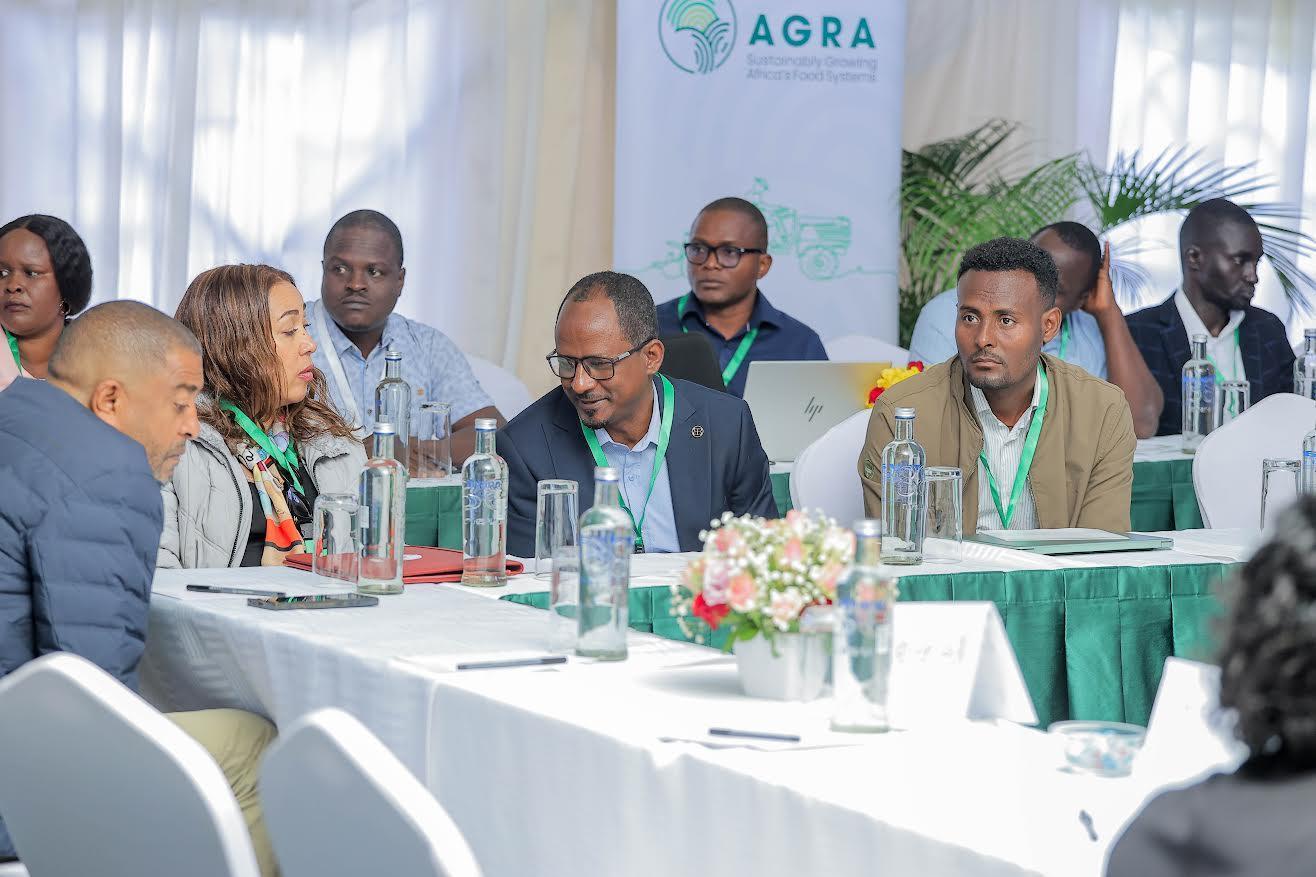
Africa-Press – Uganda. The Alliance for a Green Revolution in Africa (AGRA), through its Centre of Excellence for Seed Systems in Africa (CESSA), convened stakeholders from the seed sector across the continent for a three-day learning event in Uganda.
The forum focused on addressing bottlenecks in the production of early generation seed (EGS) and improving coordination between public and private sector actors to ensure farmers have consistent access to high-quality seed.
It brought together seed companies, national agricultural research organisations, regulatory agencies, development partners, and private sector actors from multiple African countries.
Participants examined practical models, shared experiences, and discussed strategies for scaling up breeder and foundation seed production.
Dr. Jane Ininda, Interim Director of CESSA at AGRA, emphasised that seed is central to agricultural transformation.
“Globally, seed contributes up to 50% of total crop productivity. Yet, in many African countries, demand for quality seed continues to outstrip supply,” she noted.
She outlined AGRA’s eight thematic areas for seed sector strengthening, ranging from breeding and variety release to seed market development and policy reform.
Since inception, AGRA has supported the release of 688 crop varieties, facilitated the growth of 119 seed companies, and helped produce more than 847,000 metric tonnes of seed, benefiting about 33 million farmers.
A key highlight of the event was a field visit to NARO Holdings Limited, the commercial subsidiary of Uganda’s National Agricultural Research Organisation (NARO).
Mr. Chris Muwanika, General Manager of NARO Holdings, explained that the company was established in 2016 to commercialise research outputs, including early generation seed production.
“Our model integrates strict genetic purity controls with a commercial approach to meet market demand,” Muwanika said.
“We license 23 companies to commercialise 86 varieties and have introduced a seasonal booking system where companies place orders in advance and pay 50% upfront. This ensures efficiency and sustainability.”
Policy and Private Sector Perspective
From the private sector perspective, Mr. Dominic Kimara, Production Manager at Equator Seeds, credited AGRA with enabling significant growth.
“AGRA’s support allowed us to establish seed processing infrastructure and train our technical team. We operate across the entire value chain, from sourcing early generation seed to marketing certified quality seed,” he said.
Equator Seeds works closely with NARO and Makerere University to access breeder and foundation seed, multiplying it through company-owned farms and trained contract growers.
“Approximately 80% of our business is certified seed, produced in partnership with skilled outgrowers who receive inputs and technical support from our agronomists,” Kimara explained.
Dr. Paul Mwambu, Commissioner for Crop Protection and Certification at the Ministry of Agriculture, Animal Industry and Fisheries (MAAIF), underscored the importance of seed in addressing food security, climate resilience, and productivity.
“The availability and widespread adoption of improved, climate-smart, and nutrient-dense crop varieties will shape the future of agriculture in our region,” he stated.
He also highlighted Uganda’s adoption of a seed booking system, initially developed with AGRA’s support, to help breeders plan production based on committed orders and pre-payments.
“If a company later fails to collect the seed, it forfeits the fee. This gives breeders the assurance they need to work professionally,” he explained.
AGRA’s Facilitation Role
Opening the event, Dr. Liston Njoroge, Country Program Lead at AGRA Uganda, stressed the need for continuous peer learning and collaboration.
“For Africa to transform its agri-food sector and economy, we must build strong, functional seed systems. We cannot do this alone. Progress demands that we learn from each other and apply successful models,” he said.
Findings from AGRA’s Continental Seed Assessment Tool (SEEDSAT) show the need for more market-responsive business models, improved public–private coordination, and stronger seed production planning tools.
“Building stronger early generation seed systems is essential to improve supply reliability and unlock economic opportunities for seed enterprises and farmers,” Njoroge added.
The forum concluded with commitments from participants to increase the volumes of high-quality seed, strengthen distribution networks, and adopt more robust demand forecasting tools.
The lessons and partnerships from this event are expected to inform similar initiatives in other African countries, contributing to more resilient seed systems, higher crop productivity, and improved farmer incomes.
For More News And Analysis About Uganda Follow Africa-Press