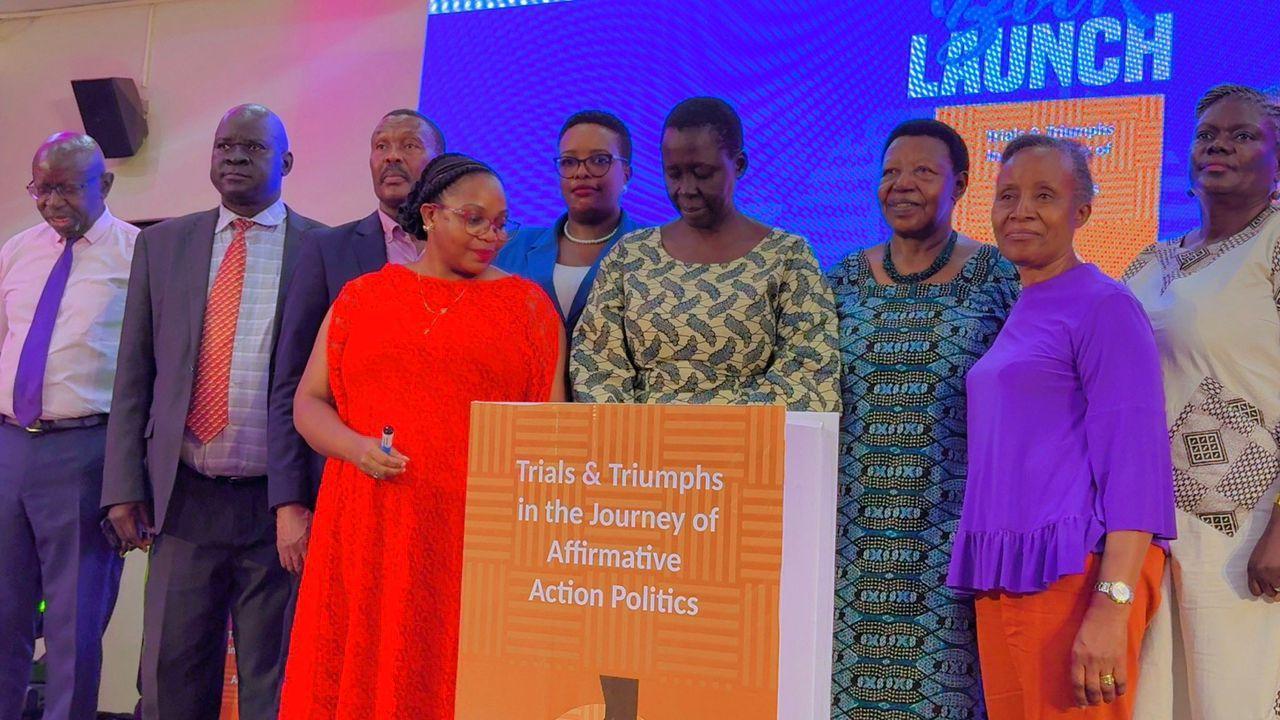
Africa-Press – Uganda. Alice Alaso, National Coordinator of the Alliance for National Transformation, has criticised persistent tokenism in women’s leadership and the growing influence of money in politics, warning both are undermining democratic progress.
Speaking at the launch of her book, “Trials & Triumphs in the Journey for Affirmative Action Politics,” Alaso said affirmative action in Uganda continues to face resistance, stigma and misconceptions, limiting the effectiveness of women in leadership.
“The path of affirmative action is not paved. It is filled with resistance, misconceptions and setbacks,” she said.
Alaso noted that although Uganda has made progress in increasing women’s representation in decision-making spaces, many lack the support, training and capacity to influence policy.
“We need women not just in positions of power, but empowered to make decisions that change lives,” she added.
She also raised concern over the monetisation of politics, linking it to poverty and warning that it is distorting electoral outcomes and weakening issue-based campaigns.
“You can present strong policies, but many voters narrow their choices to small amounts of money,” she said.
Alaso further highlighted emerging social challenges, particularly among young men in rural areas, cautioning that widening inequalities could create new societal pressures if not addressed.
She called for strengthened mentorship, capacity building and support networks for women leaders, alongside broader socio-economic reforms to tackle poverty and improve voter decision-making.
Her remarks come amid ongoing debate on the effectiveness of affirmative action since the 1995 Constitution, with critics arguing that increased representation has not always translated into tangible community benefits.
Meanwhile, Doreen Nyanjura praised the book as a powerful reflection of the struggles faced by women in politics, particularly those from disadvantaged backgrounds.
“While this book is her story, it is also the story of many women born in poor families, struggling through school but eventually making it to decision-making spaces,” Nyanjura said.
“You want to know how affirmative action is, read the book. You want to know how relevant or irrelevant it is, read the book,” she added.
The launch, held during Women’s Month, has renewed focus on gender equality and the role of affirmative action in Uganda’s political and socio-economic development.
The book highlights key issues such as systemic barriers, resilience and integrity in leadership, describing Alaso’s stance against bribery during her time in Parliament as an example of principled politics.
Observers say such narratives could shape future policy discussions on gender inclusion and political reform.