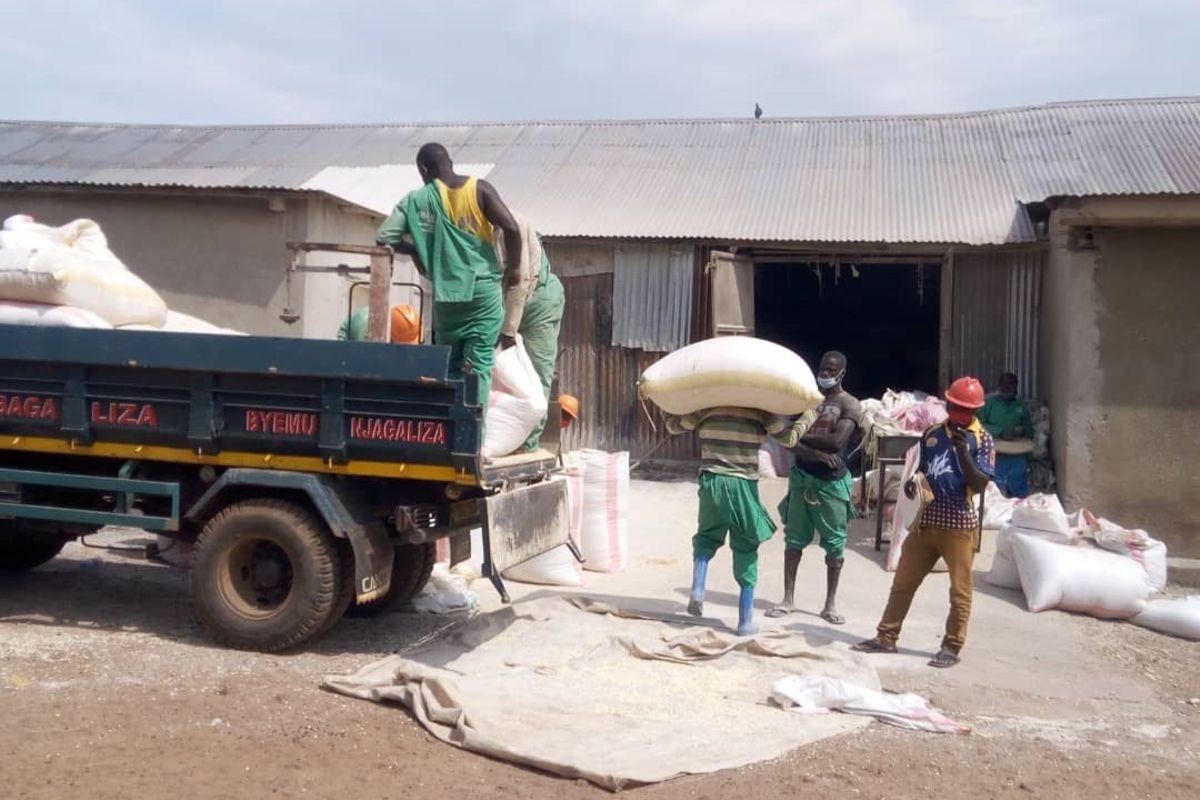
Africa-Press – Uganda. Maize traders and millers at Busia border have resorted to importing the cereal from Kenya due to shortage in Uganda.
The shortage is attributed to poor harvest in the last season and lack of grain storage policy in the country.
Mr Frank Kasumba, the manager of Busia market, told Daily Monitor at the weekend that scarcity of maize hit the area about two months ago.
Mr Kasumba said the situation has worsened to the extent that on some days, no tonne of maize is delivered, forcing traders and millers to turn to Kenya.
Kenya’s maize production is low, averaging below 40 million bags annually, while the demand for the cereal is above 50 million bags per year.
The low maize production in Kenya is compounded by the increase in population (which has reduced the land for cultivation), increase in urbanisation, falling soil fertility and high cost of production.
Over the years, Kenya has been a leading importer of maize with about 95 percent of it coming from Uganda and Tanzania.
“It is now baffling that Kenya, which produces hardly enough maize for her more than 53 million people, is exporting the cereal to Uganda, a puzzle,” Mr Kasumba explains.
“Kenya operates an organised grain storage policy where maize is bought, stored in silos and later sold at a good price when there is scarcity, unlike in Uganda, where the farmers sell the grain shortly after harvest to minimise the post-harvest losses due to poor storage,” he said.
He added: “The maize which is coming from Kenya should be our grain which we sold cheaply to them last March and they were cleaned, stored in silos and are now shipping back at improved prices.”
Following the shortage of maize, the price has shot from Shs650 per kilogramme in early March this year to now more than Shs1,000.
Mr Alamanzani Kamba, a trader in Busia Market, said previously they had between 300 and 500 trucks bringing maize into the market but currently there is none.
Mr Kamba revealed that he has switched from selling maize to beans.
Mr Robert Kasaija, who carries out maize processing and storage, said he has started importing maize from Kenya to cover the huge gaps in the supply chain in Uganda.
“We have been getting our maize from Mubende, Kayunga, Busoga, Hoima and Lira, but because of the drought that hit the country, most of the farmers lost their crop, meaning we now have to import from Kenya,” he explained.
Mr Kasaija said because of shortage of maize the production of flour at his milling plant has reduced from 10 tonnes of flour to three tonnes per day.
Mr Andrew Walube, a mill operator at Busia, said although they have a few tonnes of maize, it will get finished in the coming days.
Mr Walube said they have increased the price of flour from Shs1,200 to Shs1,700 per kilogramme depending on the quality.
“We have been selling a kilogramme of low quality flour at Shs1,200 but the price has shot up to Shs1,500. Fine posho is selling at Shs1,800 per kilogramme up from Shs1,600,” he said.
Ms Rehema Nakintu, who operates a shop on Tororo Road in Busia Town, said she used to sell low-grade flour at Shs1,300 but it’s now at Shs1,700 per kilogramme.
Ms Swabura Nakintu, a restaurant owner on Majanji Road, said: “I have been trying to explain to my customers who keep complaining that I’m serving them little posho. It’s not because we want huge profit margins but because the price of flour is very high.”
Mr Ibrahim Bogere, a maize farmer in Namayingo District, said all his five acres of maize were scotched by the sun last season.
“We expect the worst this season because all what we had planted is fast-withering due to lack of rains,” he said.
Mr Aggrey Mirembe, an agriculture officer in-charge of crop production in Busia District, said the low rainfall is a reality to the effects of climate change and Busia, like many other parts of the country, suffered massive deforestation and degradation of wetlands which were responsible for rain.
“So what we are beginning to witness is increasing temperatures and reduced rainfall which has affected the crop production and reduced the amount of water available for human and animal consumption,” he said.
Mr Mirembe warned that unless residents, especially in Busia District, adopt environmental conservation, the situation may get worse in the coming seasons.
Issue
Mr Aggrey Mirembe, an agriculture officer in-charge of crop production in Busia District, said the low rainfall is a reality to the effects of climate change and Busia, like many other parts of the country, suffered massive deforestation and degradation of wetlands which were responsible for rain.
For More News And Analysis About Uganda Follow Africa-Press