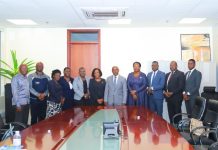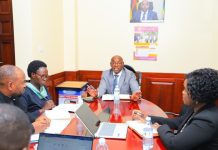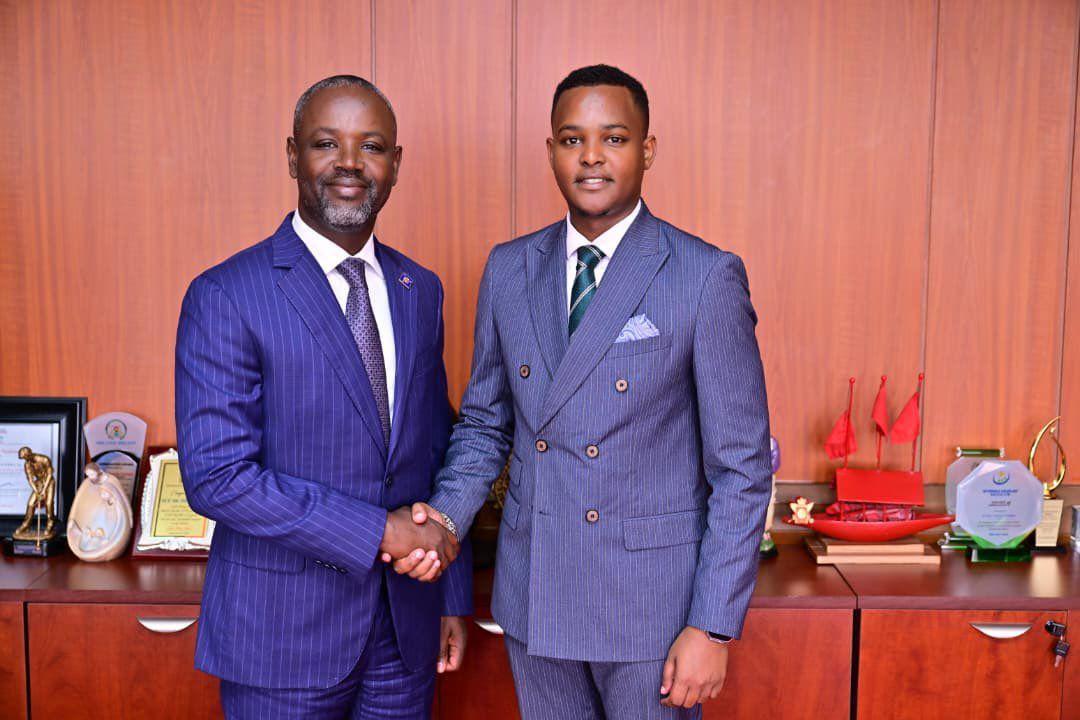
Africa-Press – Uganda. NBS Television’s Senior News Anchor and Investigative Journalist Canary Mugume has called for strengthened national and community action in the fight against malaria following a closed-door meeting with Deputy Speaker of Parliament Thomas Tayebwa.
Taking to his official X (formerly Twitter) account on Thursday, the face of Next Big Talk and NBS Face Off revealed that his meeting with Tayebwa was to discuss the “burden of malaria in Uganda”.
Tayebwa, who is also the patron of the Uganda Parliamentary Forum on Malaria, emphasised the importance of addressing the disease as a national responsibility.
“Tayebwa has consistently emphasised over time that the fight against malaria is a critical national responsibility,” he wrote.
“Today’s conversation also revolved around the Parliamentary Malaria Walk scheduled for 26 April 2026 at the Parliament of Uganda. The event aims to raise awareness, inspire collective action, and advance toward zero malaria deaths.”
Mugume further highlighted his personal commitment to the fight against malaria, drawing from his years-long experience as a multimedia journalist covering its devastating impact on communities.
“As a champion in the fight against malaria, drawing from my work as a media personality who has long covered stories on the negative impact of malaria on communities, I strongly believe that no one should die from a preventable and treatable disease like malaria,” he said.
Uganda’s malaria burden remains among the highest in the world.
As of 2023, the country ranked third globally in malaria cases, accounting for 4.8 per cent of all cases, and eighth in malaria-related deaths at 2.7 per cent.
Uganda also had the highest proportion of malaria cases in East and Southern Africa, accounting for 20 per cent as of 2023.
The highest transmission rates are recorded in northern Uganda—in the Acholi, Karamoja, Lango, and West Nile regions—as well as in eastern Uganda’s Busoga region.
Transmission peaks typically coincide with the country’s two rainy seasons, from March to May and September to November.
Health officials warn that marginalised and underserved populations face additional barriers to prevention and treatment.
These include children under five, pregnant women, people living with HIV, persons with disabilities, inmates, refugees, internally displaced persons, older persons, migrant and mobile populations, and communities affected by ethnic, geographical, or cultural barriers.
Plasmodium falciparum remains the dominant malaria parasite in Uganda, accounting for 97 per cent of infections, while Plasmodium vivax and Plasmodium ovale are rare, making up less than two per cent of cases.
In spite of this, Mugume argued that ending malaria is achievable through collective effort such as “community involvement and initiatives such as malaria-free schools.”
“It was a pleasure hosting you bro,” Tayebwa wrote on his X (formerly Twitter) account shortly after the meeting.