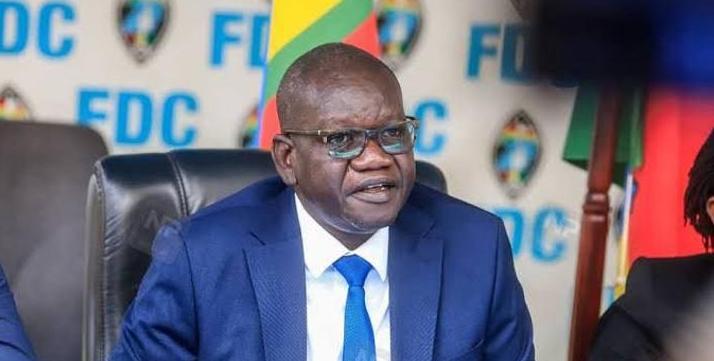
Africa-Press – Uganda. The resident of the Forum for Democratic Change, Patrick Oboi Amuriat, has announced the party’s rejection of the proposed Sovereignty Bill, warning that it could criminalise opposition politics, restrict civil liberties and undermine constitutional rights.
The bill, tabled in Parliament on April 15, 2026 by the State Minister for Internal Affairs, has drawn sharp criticism from the opposition, with Amuriat accusing the ruling National Resistance Movement of introducing legislation aimed at limiting freedoms.
“This bill… is designed to do one thing to silence, imprison and destroy Ugandans’ ability to speak, assemble, challenge power and live in freedom,” Amuriat said.
He warned that the proposed law could have wide-ranging effects on ordinary citizens, including families that depend on financial support from relatives abroad.
According to Amuriat, provisions in the bill could classify Ugandans in the diaspora as foreigners, potentially subjecting remittances to government approval.
“To the Ugandan mother… whose son sends money from London every month, under this bill, your son is a foreigner,” he said while addressing the media in Kampala.
Amuriat also raised concerns about the potential impact on public services supported by foreign funding, including health facilities, warning that such funding could be restricted or subjected to ministerial approval.
The FDC leader further criticised clauses he said could affect journalists, arguing that media practitioners risk severe penalties for publishing information deemed harmful to the country’s economic interests.
“You can be jailed for reporting the truth,” he said, warning of possible prison sentences of up to 20 years.
He compared the bill to the Computer Misuse Act, which has previously been used in cases involving online expression, but described the proposed legislation as “a bigger” threat.
Amuriat said the party’s legal team had reviewed the bill and identified several provisions they believe contravene Uganda’s 1995 Constitution, particularly on citizenship, equality and political participation.
He cited concerns that the bill could effectively criminalise opposition activities by imposing penalties on individuals engaged in political mobilisation with foreign-linked support.
“This makes opposition politics a criminal enterprise,” he said.
Amuriat called for a united response from political actors, civil society organisations, journalists and citizens, warning that the law’s impact would extend beyond politics.
“To every opposition politician, civil society worker, trade unionist and human rights defender, this bill is aimed directly at you,” he said.
For More News And Analysis About Uganda Follow Africa-Press