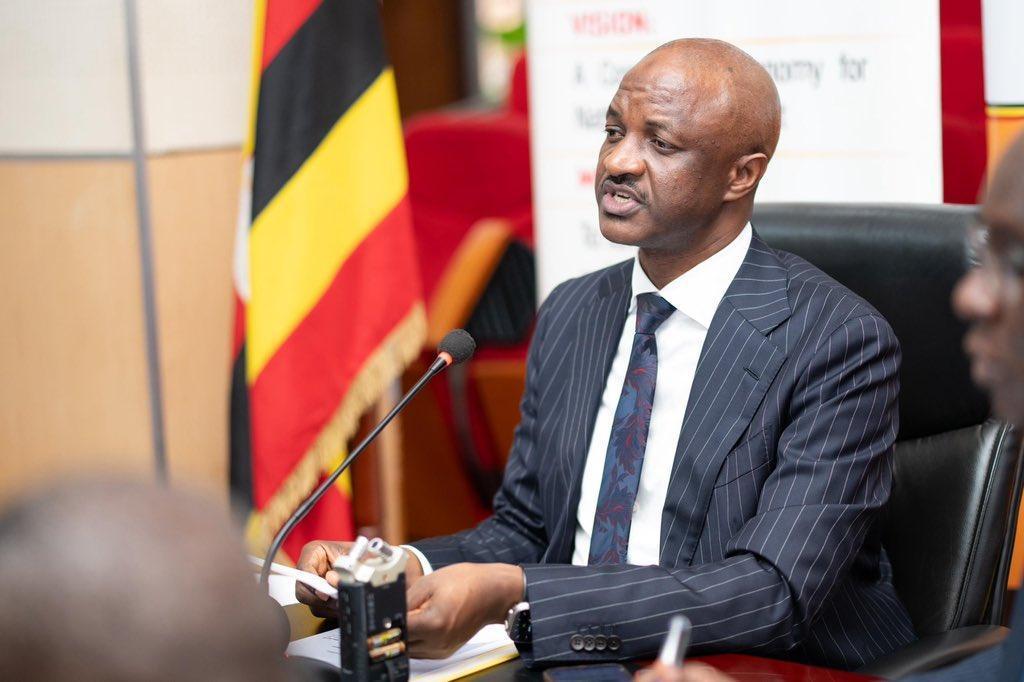
Africa-Press – Uganda. The Permanent Secretary and Secretary to the Treasury (PSST), Ramathan Ggoobi, has urged political leaders to take a more deliberate role in steering Uganda’s socio-economic transformation by focusing on accountability, infrastructure development, and household wealth creation, while warning against what he termed “budget games.”
Speaking during the ongoing Leaders’ Retreat for current and incoming NRM Parliamentary Caucuses at the National Leadership Institute in Kyankwanzi, Ggoobi cautioned legislators against distorting budget priorities and instead called for strengthening existing legal and institutional frameworks to ensure efficiency in public spending.
He particularly stressed the need to reinforce public procurement systems to guarantee value for money in government projects.
“Prioritise, consolidate, or even enhance infrastructure development as well as other enablers of the tenfold growth strategy. Enhance public scrutiny over development projects and set an example of incorruptibility to other Ugandans,” Ggoobi said.
The retreat, held under the theme “The Political Economy of Musevenomics, Infrastructure as the Strategic Enabler and the Role of Parliament,” brought together lawmakers to align political oversight with Uganda’s long-term economic transformation agenda.
Ggoobi described infrastructure as the “bone marrow of the economy,” underscoring its central role in driving growth.
He noted that since 2015, Uganda has borrowed approximately USD 20.07 billion (about Shs75 trillion) from external lenders, with about 80 percent directed toward infrastructure projects such as roads, bridges, energy facilities, railways, airports, and water transport systems.
He further revealed that the government has invested an additional Shs 31.54 trillion (approximately USD 8.52 billion) from domestic revenue into infrastructure over the past decade.
According to Ggoobi, these investments have produced significant gains. The share of paved national roads has more than doubled from 3,121 kilometres in the 2012/13 financial year to 6,850 kilometres in 2024/25, while electricity generation capacity has risen from 595 megawatts in 2010/11 to 2,050 megawatts.
Looking ahead, he said government has increased allocations in the 2026/27 financial year, with Shs 8.8 trillion earmarked for roads and Shs 2.1 trillion for the energy sector.
Beyond macroeconomic indicators, Ggoobi challenged Members of Parliament to ensure that national development programmes translate into tangible improvements in household incomes and livelihoods.
“All political leaders must ensure that every homestead in their constituency engages in a wealth creation venture,” he said, emphasising the importance of grassroots economic participation in achieving inclusive growth.
He also noted that Uganda’s economy has expanded sevenfold over the past two decades, growing from USD 9.8 billion in 2005/06 to USD 68.4 billion today, largely driven by sustained infrastructure investment and structural reforms.
His remarks come amid ongoing public debate on debt sustainability, fiscal discipline, and Parliament’s oversight role in national budgeting and expenditure.
For More News And Analysis About Uganda Follow Africa-Press