Africa-Press – Uganda. Government has launched the National Ethical Values Policy, a new framework aimed at strengthening moral standards across the country amid growing concern over the spread of obscene and sexually explicit content.
The policy, which will be implemented under the Office of Ethics and Integrity, is expected to guide behaviour in schools, communities, and digital spaces, with officials warning that rising exposure to explicit material is already affecting young people and social norms.
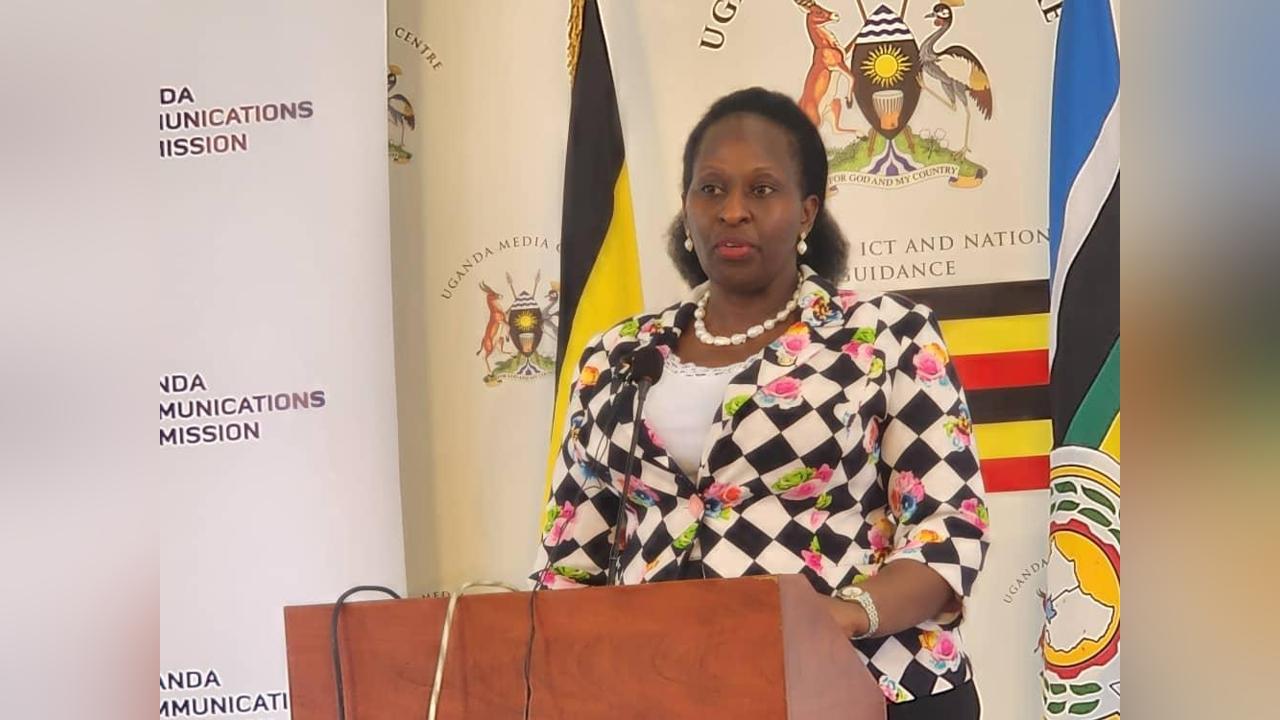
Addressing the media, Ethics and Integrity officials said the increase in circulation of indecent content—particularly on social media—has become a major concern.
Joel Wanjala, Under Secretary in the Directorate of Ethics and Integrity in the President’s Office, noted that the trend is contributing to indiscipline in schools, rising teenage pregnancies, and a broader erosion of respect within society.
“We have seen a worrying increase in the spread of obscene content, especially on social media platforms, and this is negatively influencing young people and society at large,” he said.
The rollout of the policy comes as government steps up enforcement through existing legal and institutional frameworks, including the Pornography Control Committee (PCC), which operates under the Ministry of Ethics and Integrity.
The committee, chaired by Annette Kezaabu, was established under the Anti-Pornography Act 2014 with the mandate to regulate and curb pornography in Uganda.
Since its creation, the porn committee has been at the centre of government efforts to control explicit content, both online and in physical spaces, often working with agencies such as the Uganda Communications Commission to monitor and restrict distribution channels.
During the tenure of former Ethics Minister Simon Lokodo, the committee was strongly projected as a key enforcement arm in the fight against immorality, although much of its work has largely taken the form of periodic crackdowns and public awareness campaigns.
Its membership has over time included figures such as Martin Ssempa, reflecting the blend of state and moral advocacy voices that shape Uganda’s approach to regulating sexuality and public conduct.
Even so, operational challenges have persisted. In his 2025 report to Parliament, Auditor General Edward Akol noted that the committee had not submitted its annual performance report within the required timeframe, and that its activities had not been adequately budgeted for—raising questions about capacity as enforcement expectations grow.
The new policy is therefore expected to provide a broader framework within which such institutions operate, shifting the focus beyond enforcement to prevention, education, and value formation.
Officials say the approach recognises that controlling explicit content cannot rely on policing alone, but requires coordinated action across government, schools, families, and digital platforms.
As implementation begins, authorities have signalled that enforcement will continue alongside sensitisation, with a renewed emphasis on protecting young people and restoring what they describe as Uganda’s core moral and cultural values.
For More News And Analysis About Uganda Follow Africa-Press