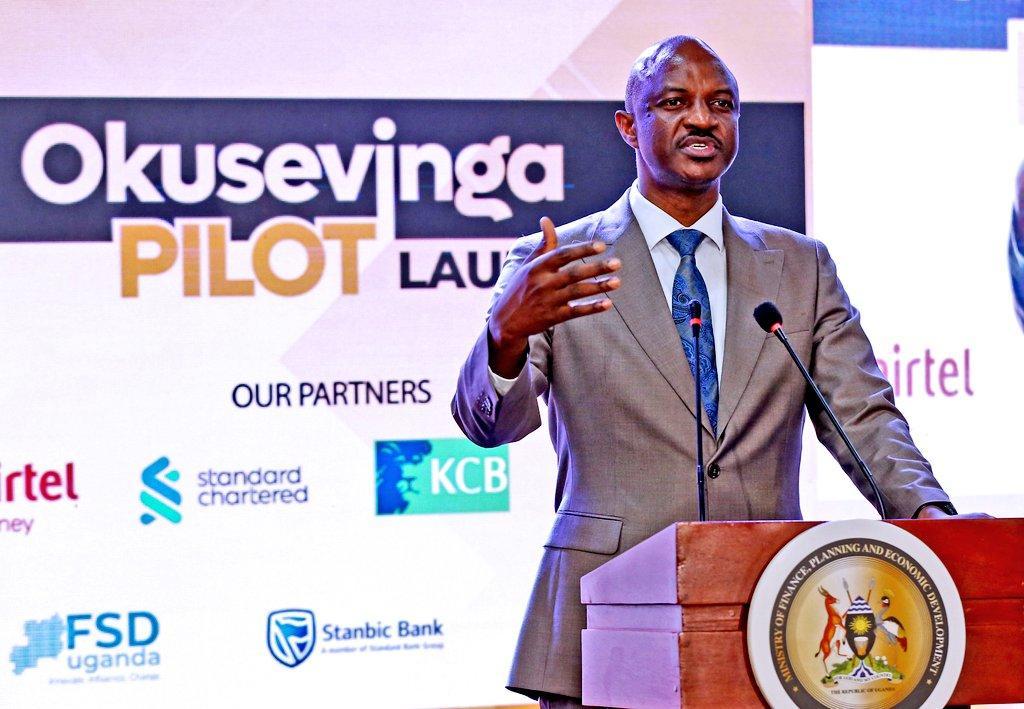
Africa-Press – Uganda. The Ministry of Finance, Planning and Economic Development, together with the Bank of Uganda, has rolled out the pilot phase of the Okusevinga Money Market Unit Trust Scheme, a new initiative aimed at expanding access to safe, affordable and regulated investment opportunities for Ugandans.
Okusevinga is Africa’s first government-owned unit trust scheme and represents a shift in Uganda’s financial inclusion strategy from simply widening access to financial services to enabling active participation in savings and investment.
The initiative builds on Uganda’s strong financial inclusion performance, with 81 percent of adults now having access to financial services, according to the FinScope Uganda 2023 Survey, largely driven by the growth of mobile money platforms.
Despite this progress, authorities say many Ugandans continue to save informally, limiting their ability to earn returns on savings and build long-term financial resilience.
Okusevinga is intended to address this gap by allowing individuals to invest small amounts directly into professionally managed and regulated money market and bond funds through a mobile-based platform.
The pilot phase will involve a limited group of participants testing the platform’s full functionality, including customer registration, investment transactions and balance inquiries.
The Ministry of Finance and the Bank of Uganda said the controlled rollout will help assess system performance, strengthen consumer protection measures and refine the user experience ahead of a wider public launch planned for early 2026.
The Permanent Secretary and Secretary to the Treasury at the Ministry of Finance, Ramathan Ggoobi, said digital platforms such as Okusevinga will enable government to reach population groups that are not easily accessed through traditional financial channels, including rural communities and Ugandans living abroad.
“In addition to securities, government will leverage this infrastructure to mobilise retail pensions, contributions towards insurance products and other mass resource mobilisation initiatives,” Ggoobi said.
He added that the scheme is expected to promote a stronger savings culture and increase domestic savings volumes, which are critical for sustaining economic growth.
“As our economy grows and as we pursue our tenfold growth agenda, we must identify alternative sources of financing, particularly from the domestic financial market,” Ggoobi said, noting that Okusevinga could help lower government borrowing costs over time.
By linking small savers to low-risk, professionally managed investment instruments, the scheme is expected to improve household financial health while deepening domestic capital markets and supporting sustainable economic development.
The pilot is being implemented with support from several partners, including the Capital Markets Authority, Uganda Communications Commission, National Information Technology Authority–Uganda, Financial Sector Deepening Uganda, Uganda Investment Authority and Airtel Uganda.
As implementation continues, the Ministry of Finance and the Bank of Uganda said they will intensify stakeholder engagement and financial literacy efforts, with further guidance to be issued ahead of the full public rollout of the Okusevinga Unit Trust Scheme.
For More News And Analysis About Uganda Follow Africa-Press