Africa-Press – Uganda. Results from the 2020 Uganda Advanced Certificate of Education (UACE) examinations released on Friday have once again brought to the fore serious shortcomings in the way we are going about the teaching of science subjects in our schools.
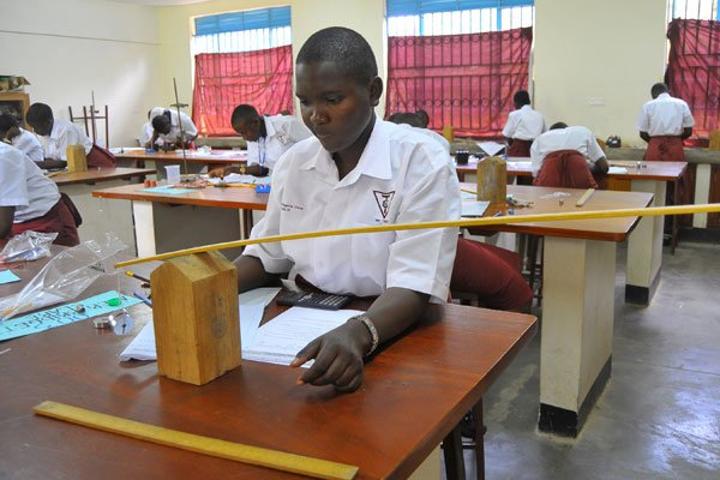
Mr Dan Nokrach Odongo, the executive director of the Uganda National Examinations Board (Uneb) told the nation that candidates who performed poorly had exhibited an inability to follow instructions and procedures in practical examinations, and in other cases failed to record data, make meaningful use of recorded data and experienced difficulties in writing correct chemical symbols and balanced equations in Chemistry.
Many candidates were unable to dissect Biology specimens that were provided and instead made drawings of the specimen!
This surely cannot be happening more than a decade after government, driven by the thinking that development of science and technology and the growth of industries are linked to Mathematics and science subjects, made science subjects compulsory for students at lower secondary school level.
Mr Odongo argued that the results point to a failure on the part of the teachers to expose the candidates to essential skills.
The minister for Higher Education, Mr John Chrysostom Muyingo, blamed the pathetic state of affairs on some schools, especially the private ones, which he accused of neglecting the teaching of sciences on grounds that they are expensive to teach, but this surely cannot be about what the private schools are not doing. It is about what is going on in the entire education sector.
A decade ago the NRM government promised to construct and equip 475 laboratories and 639 libraries for purposes of enhancing the teaching of sciences.
That has, of course, never been achieved. But how much ground has been covered? Has there been a genuine effort to achieve on this? This calls for an urgent evaluation.
In 2005, the ministry of Education introduced the Secondary Science and Mathematics (SESEMAT) programme, through which thousands of primary and secondary school teachers and lecturers from teacher training colleges underwent training that was aimed at improving their abilities in the teaching of Mathematics and sciences.
Now if science subjects continue to remain an Achilles heel for many a student, it means that we have serious gaps in the initiatives that were put in place to redirect and promote the teaching of science subjects.
That calls for a serious review of what we have in place, not laying the blame at the doors of the private schools.
[email protected]