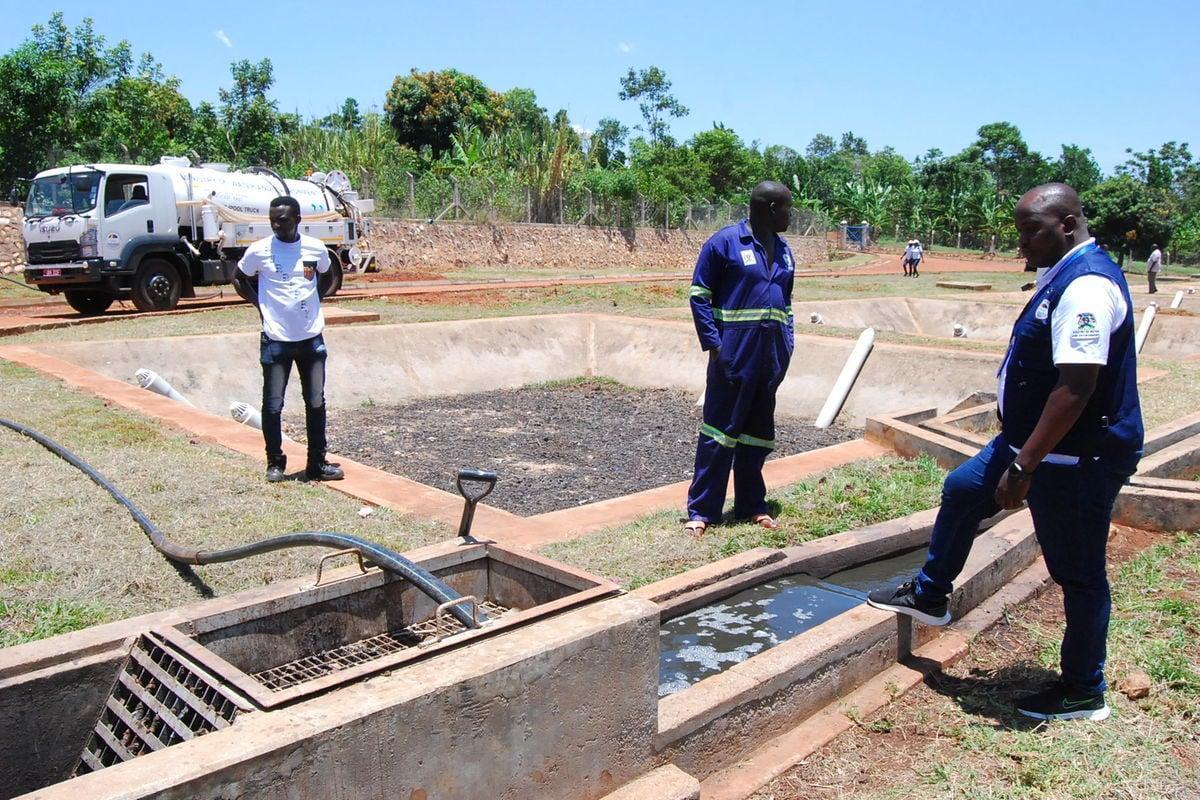
Africa-Press – Uganda. The government has ramped up efforts to manage sewage and faecal matter in Kamuli, Luuka, Kaliro and Buyende districts, by providing two cesspool trucks acquired with support from the African Development Bank (AfDB).
The regional manager of Eastern Umbrella of Water and Sanitation in the Ministry of Water and Environment, Eng Deneth Ngabirano, says they chose Kamuli town because of the presence of a faecal sludge management facility, and also as a donation to the sub-region as part of their pre-water week activities.
“People have been digging so many pit latrines, which is not sustainable; the land is becoming limited and people carry and dump sewage in our wetlands, polluting the environment,” he said in an interview on March 12.
“So, we acquired the two cesspool emptiers for the eastern region to help in carrying faecal matter from homes in Kamuli and surrounding areas like Luuka, and other districts to ensure that we manage the faecal sludge here.”
Eng Ngabirano further explained that after managing the faecal sludge, they shall be able to generate manure, which they shall dry and sell to the community as a source of income.
Faecal sludge is simple and easy to manage, mostly in towns where they cannot have central systems.
Eng Ngabirano noted the trucks are big enough to carry up to 8,000 litres of faecal matter compared to private trucks, which he said charge Shs200,000 and carry only 3,000 litres of faecal matter.
The Principal Engineer in the Ministry of Water and Environment, who also manages the rural water supply and sanitation department in Mbale region, Ms Catherine Orishaba, said Kamuli was picked because of its sanitation status.
“We have visited a faecal sludge treatment plant and are also making sure that as school children grow, they learn how to take care of the water resources as well as the environment,” she said.
The Kamuli municipality Principal Health Inspector, Mr Robert Kunya, said they approached the Ministry of Water and Environment after enduring sewage system-related challenges for a long time.
“We lacked a sewage system and reached out to the Ministry, which constructed for us a faecal dry sludge. But we had spent a long time without a cesspool emptier until January,” he said.
Previously, Mr Kunya said they were emptying pit latrines crudely using manual emptiers who dug a pit behind, scooped the faeces and buried them in the pit; however, those with money hired cesspool emptiers.
“But what if someone had four trips and the emptier is coming from Jinja? Transporting those four trips from Kamuli to Jinja has been very expensive, with each trip costing about Shs500,000,” he said.
For More News And Analysis About Uganda Follow Africa-Press