By Faridah N Kulumba
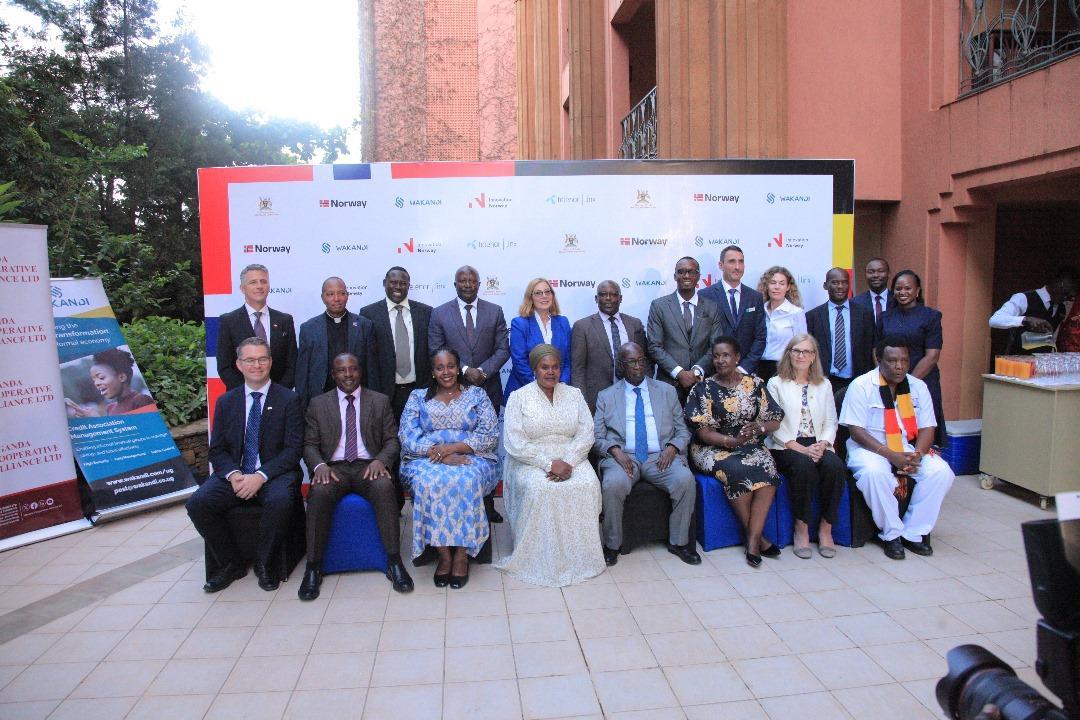
Africa-Press – Uganda. The government of the Republic of Uganda and Norway recently reinforced their longstanding partnership by signing a Memorandum of Understanding (MoU) to strengthen ties to boost economic growth. The signing of the MoU between Uganda’s Ministry of Trade, Industry, and Cooperatives and Innovation Norway, was witnessed by Uganda’s Prime Minister (PM) Robinah Nabbanja who hailed the working relations between the two nations. Acknowledging Norway’s steadfast partnership in Uganda’s development journey. In July 2024, the Norwegian government announced the closure of its Mission in Uganda but promised that the development cooperation and engagement with Uganda will continue. Norway assured Uganda that the closure of the Embassy in Kampala does not mean that Norwegian aid to the country will be discontinued, or that there will be less focus on the rights of women and minorities. The decision was taken based on an assessment of the Foreign Service’s overall resources.
Signed MoU aims
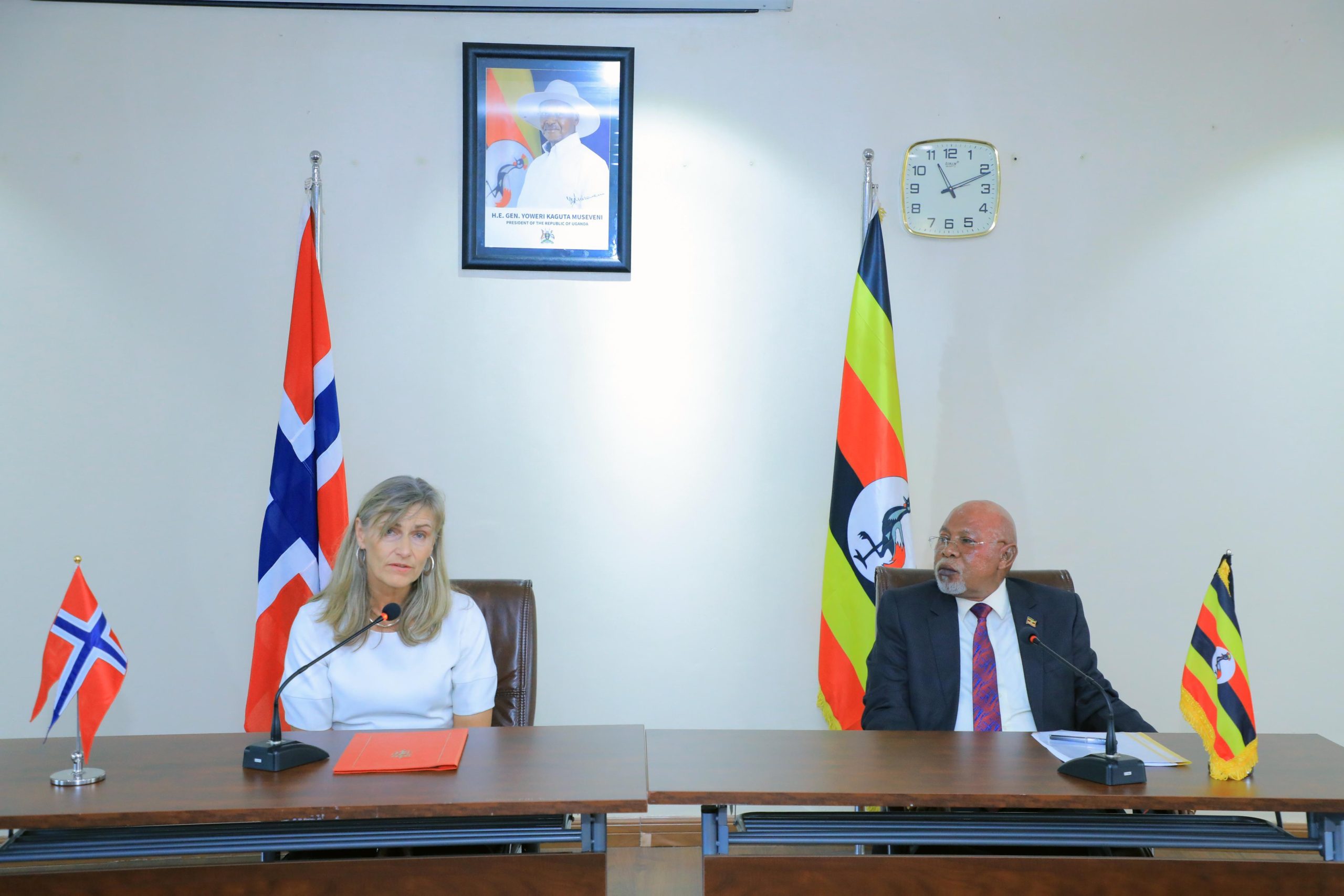
The recently signed MoU between Uganda and Norway is aimed at fostering trade, innovation, and economic development. The agreement marked a significant step in Uganda’s efforts to attract investment and drive sustainable economic growth. Innovation Norway will introduce and support Norwegian technology companies, engage in marketing and workshop activities, and contribute financially to joint initiatives. According to Uganda’s PM Nabbanja, the partnership will drive economic growth and development between the two countries.“Our focus on data innovation will enhance-data driven decision making for cooperative societies, improving their efficiency and competitiveness,” Nabbanja said.
Benefits
Uganda’s cooperative sector contributes approximately 33 percent to the country’s GDP and employs around 1.5 million people, Uganda’s PM highlighted the anticipated benefits of introducing Norwegian technology. The introduction of Norwegian technology will boost Uganda’s industrialization, job creation, and economic diversification. Every dollar invested in technology can generate a return of USD 2.50 in economic growth. We expect this partnership to create over 10,000 jobs in the next three years and increase Uganda’s export earnings by 20 percent. The Uganda and Norway agreement will cover various areas, including data innovation to digitalize Savings and Credit Cooperative Organizations (SACCOs), technology exchange for enhanced knowledge management, workshops, research, and capacity building to equip cooperative members with critical skills. Innovation Norway will play a central role in introducing Norwegian technology companies to Uganda, facilitating workshops, and financially supporting joint initiatives. Uganda’s Ministry of Trade will work closely with Innovation Norway to drive data-driven innovation and build capacity within cooperative societies. Recognizing that Uganda’s informal sector accounts for 70% of the economy, Nabbanja underscored the importance of research and development in improving this sector. “To ensure the success of this partnership, we will engage all stakeholders, especially cooperative societies, entrepreneurs, and small-scale enterprises. Together, we will harness the potential of our cooperative sector to drive economic growth and development.”
Uganda and Norway’s cooperation
Norway and Uganda: development partners since the 1960s. Norway maintained a presence in Uganda from 1994 to July 2024, , with the embassy in Kampala. It was feared that Norway could have closed the Kampala mission over Uganda’s recently enacted Anti-Homosexuality Law. In May 2023, the parliament of Uganda passed a law prescribing life and death sentences for certain acts of homosexuality, a move strongly criticized by some Western countries, including Britain, Norway, and the United States (U.S). The Western countries said the law violated the rights of homosexuals. Norway’s Mission in Kampala had taken a strong stand on the human rights of minority groups. Uganda maintained the law was meant to protect the African traditional marriage system. Fundings- Norway provides substantial aid to Uganda. In 2022, Uganda received NOK 382 million in earmarked funds from Norway for efforts in priority areas such as civil society, education, energy, refugees, and women’s rights. Norway wishes to maintain the strong ties that exist between the two countries. “A substantial portion of today’s aid is already administered by the Norwegian development agency, Norad. Future cooperation will be managed by Norad and another mission in the region, yet to be determined,” the embassy explained. Norway supports a variety of projects in Uganda, spanning education, health, agriculture, and assistance to refugees.
Political and economic – This year, Uganda and Norway have signed MoU on Political Consultations to ensure continued diplomatic engagement and collaboration between the two countries, despite the closure of the Norwegian embassy in Kampala. This agreement establishes a formal framework for ongoing political dialogue, allowing both nations to address bilateral issues, discuss political and economic matters, and explore new areas of cooperation. The signed MoU focuses on key areas of cooperation, including regular political dialogue on regional and international issues of mutual interest. This platform aims to enhance collaboration on global affairs and facilitate discussions on economic and development cooperation. Building on a history of partnership in areas such as development aid, trade, and investment, the MoU may also include provisions for dialogue on human rights and governance, reflecting Norway’s commitment to supporting democracy and governance initiatives in Uganda.
Norway has been involved in the development of the Ugandan electricity sector since the mid-1990s, beginning with support for hydropower generation along the Nile. 2016 marks the milestone of 25 years of Norwegian development assistance in clean energy development. Over this period, our engagement with the Ugandan government, companies, NGOs, and the Ugandan people has deepened across the key areas of power generation, transmission, and technical capacity building. In the same period, Uganda’s power sector has moved from being in stasis to being one of Africa’s most rapidly developing and promising markets. Today the sector is in the midst of an unprecedented boom in the construction of new generation and transmission infrastructure. Development cooperation between Norway and Uganda began in the mid-1960s with the arrival of Norwegian forestry experts. Cooperation was suspended in 1973 after the establishment of Idi Amin’s brutal dictatorship but resumed after his removal in the late 1980s. In 1996 Norway established a permanent embassy in Kampala and Uganda was accorded the status of a “major development partner”.
Total Norwegian development assistance to Uganda in
the period 1990–2015 amounts to more than NOK 7000 million (approximately USD 900 million in absolute dollar terms). Energy sector development has been one of the most important focus areas, comprising a quarter of the total amount spent. After the closure of the Norwegian embassy in Kampala, diplomatic relations with Uganda are now managed by the Norwegian Embassy in Dar es Salaam. The MoU outlines how these interactions will be conducted without a physical embassy presence, including the coordination of visits, meetings, and diplomatic exchanges to maintain seamless relations. It also ensures regular contact through scheduled consultations and established diplomatic channels.
For More News And Analysis About Uganda Follow Africa-Press