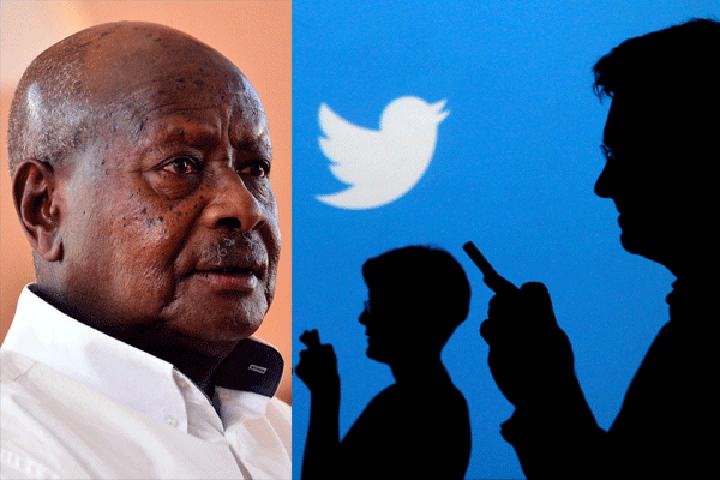
Africa-Press – Uganda. On December 2, the US microblogging company Twitter announced it was banning handles or accounts of users in six countries – Mexico, China, Uganda, Russia, Venezuela, and Tanzania – over what the company termed “state-linked information operations.”
In plain English, the Twitter accounts were removed because they were deemed to be engaging in disinformation.
“In most instances, accounts were suspended for various violations of our platform manipulation and spam policies,” Twitter added. More than 3,400 accounts were removed.
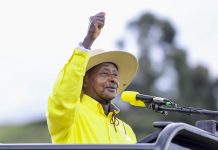
In Uganda, Twitter stated: “We removed a network of 418 accounts engaged in coordinated inauthentic activity in support of Ugandan presidential incumbent Museveni and his party, National Resistance Movement (NRM).”
Under its corporate policy, Twitter explains the reasons for discontinuing certain accounts: “We believe Twitter has a responsibility to protect the integrity of the public conversation — including through the timely disclosure of information about attempts to manipulate Twitter to influence elections and other civic conversations by foreign or domestic state-linked entities.”
Social media presence
Over the past two or so years, there has been a noticeable presence on social media and on platforms such as Twitter by State House and NRM supporters.
The owners of the accounts are usually enthusiastic supporters of President Museveni, who post comments about various new government projects and proudly state: “That’s why I voted for President Museveni.”
Other accounts gushed praise at Mr Museveni’s son and commander of the army’s Land Forces, Lt Gen Muhoozi Kainerugaba, often declaring him as “My next president”.
It would seem, going by Twitter’s inspection of the accounts, that they were, in fact, part of a coordinated operation to project an image of popular support among the public for the President and were likely fake accounts.
For those unfamiliar with the Internet and the world of social media, this sort of clampdown happens all the time across various platforms and the action taken against Uganda is hardly newsworthy.
Politically, it is an embarrassment to the NRM State House as it is never a nice feeling to get caught in a lie or fraud.
Beyond the embarrassment, however, this suspension of more than 400 fake accounts raises a further set of questions, such as: How many more such accounts exist that have not yet been found out?
And if such a secret campaign can be conducted via social media to foster the impression of widespread support for President Museveni, in which other areas has this been going on over the decades?
However, the more important message is that the ruling NRM government is now aware that there are ways for external agencies to watch what goes on in a country.
If a social media company such as Twitter can keep a close eye on specific accounts amid the tens of missions on its platform, chances are high that it is possible to track secret communications between individuals via their direct messaging accounts.
Taste of own medicine
For the last two decades, it has been the norm for the government to strike fear in the media, human rights groups and Opposition political parties.
The banning of the 400 accounts now brings this fear to the NRM, who get their first taste of what it feels like to have one’s fate and message in the hands of another entity that has power over one and against which one is helpless to appeal or reverse the decision.
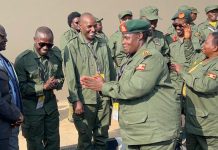
Meanwhile, on December 7, the US government announced a series of sanctions on Maj Gen Abel Kandiho, Uganda’s Chief of Military Intelligence (CMI) over a reported number of human rights violations that in recent months have been perpetuated by military intelligence operatives.
In a statement issued the following day, December 8, the Opposition National Unity Platform (NUP), said: “The sanctions by the US imposed against CMI Abel Kandiho come as good news to all those who have suffered untold human rights violations at his hands [and] the brutal officers he commands.”
Maj Gen Kandiho responded in a statement: “I am not bothered by the so-called sanctions. I have no business with the US. It is political. They should just be careful not to create unnecessary enemies and losing allies.”
A week later, on Monday December 13, a small group of protesters reportedly from Makerere University, marched to the US embassy in Kampala to voice their displeasure at the sanctions on Maj Gen Kandiho, in a move many observers said might have been staged as a show of force and solidarity.
In any case, the US Embassy, in a press briefing, explained and stuck by the decision made by Washington.
According to some sources, Gen Kandiho was the official who provided the intelligence that led the US to blacklist the ADF as a terrorist group in December 2019.
A Kampala newspaper on December 15 mentioned a “waiting list” of other top military officers.
Pressure, clearly, is building up in some Western countries over the gross and public violation of the rights of Opposition politicians, activists, and their supporters.
Why now, though?
It would seem that the tipping point might have come in December 2020 when lawyer and human rights activist Nicholas Opiyo was arrested.
Mr Opiyo is one of the most prominent human rights defenders in the country, and appears to have the full sympathy of the Western diplomatic community in Uganda, and what he says carries weight among these diplomats.
His arrest might have provided the focus and clarity for the Western diplomats and their governments to suddenly see what they seem unable to see on the front pages of the newspapers on an almost daily basis.
Information
Also, the extended visit to the United States earlier this by NUP leader Robert Kyagulanyi, also known as Bobi Wine, the official runner-up in the January presidential election, might have given Washington’s political hands sufficient background information on the situation in Kampala for them to start taking the human rights situation in Uganda seriously.
However, caution is in order lest too much is read into this new pressure on the NRM government.
The United States and other Western countries are known to act expediently in their policy formulations, one moment condemning a government or leader over human rights violations, and another moment signing bilateral agreements with the same government when this is thought to advance Western interests.
In mid-2005, there was a flurry of aid cuts to Uganda by Western nations over growing concerns over rampant corruption. Before that had taken effect, aid and grants were back and corruption has increased many times over since then.
The West, since 1986, continues to view the Museveni government as a generally acceptable regime with which to work.
Other interests Vs human rights
It might have its many flaws, but over the past three decades, the interests of the West and those of President Museveni have overlapped enough times in enough matters for the West to use a mostly carrot and, occasionally, mild stick approach in the way they deal with the NRM government.
The sanctions on Maj Gen Kandiho are unlikely to be any different.
It takes only one major terrorist attack in the Somali capital Mogadishu in which American or European citizens are harmed or killed or for South Sudan to degenerate into all-out civil war, for the United States to re-engage with the
Uganda government as a proxy for maintaining peace – and turn a quiet blind eye to the new role played in intelligence-gathering by the same Maj Gen Kandiho.
Impact
For the last two decades, it has been the norm for the government to strike fear in the media, human rights groups and Opposition political parties.
The banning of the 400 accounts now brings this fear to the NRM, who get their first taste of what it feels like to have one’s fate and message in the hands of another entity that has power over one and against which one is helpless to appeal or reverse the decision.
For More News And Analysis About Uganda Follow Africa-Press