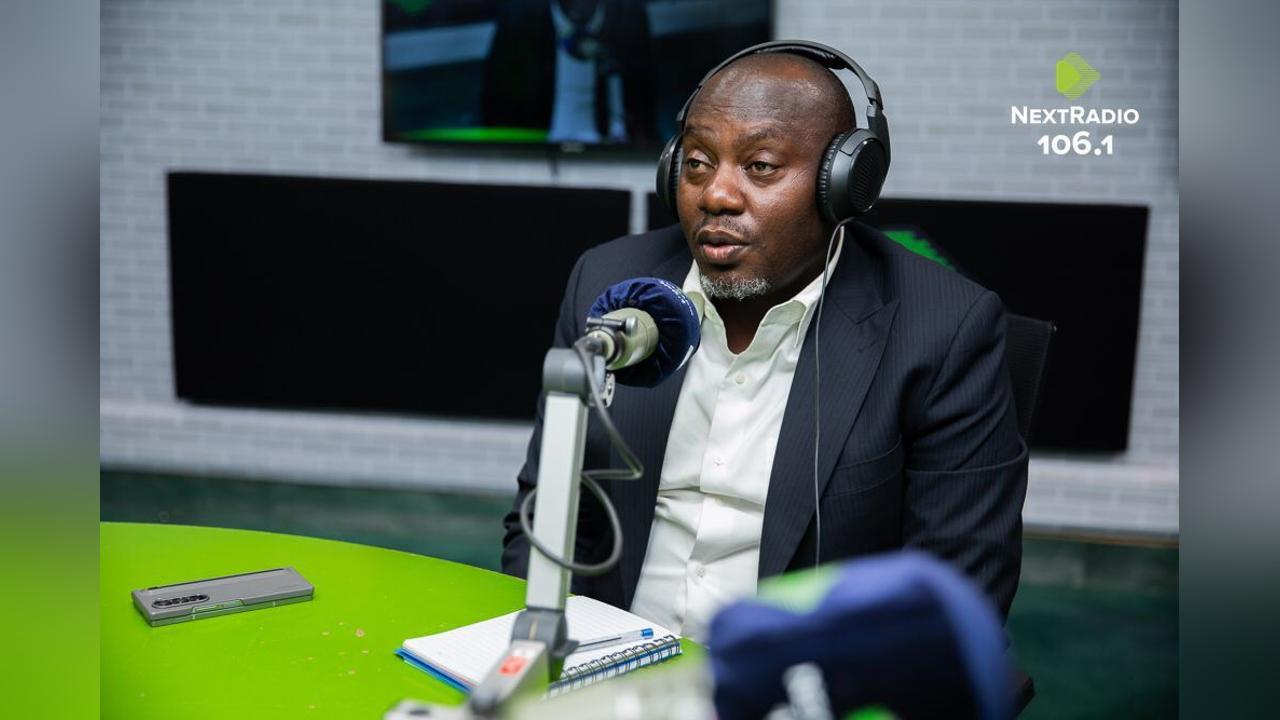
Africa-Press – Uganda. Rubaga North Member of Parliament Abubakar Kawalya has strongly criticized the government and the Electoral Commission (EC) over what he described as poor planning, inadequate training, and costly failures surrounding the use of Biometric Voter Verification Kits (BVVKs) during the recently concluded general elections.
While appearing during The Big Talk hosted by Next Radio on Wednesday, Kawalya said the promise of biometric verification had raised public expectations but ultimately fell short due to technical breakdowns and operational gaps.“It is quite unfortunate that the government had to spend a lot of money buying those BVVK machines. Some of us were excited because of what we observed in the Kenya elections, where similar machines were used. We thought that if we used them this time, vote rigging would be minimal,” he said.
President and parliamentary elections were heldnationwide on Thursday, 15 January 2026 although the polls were marred by widespread technical failures of BVVKs in several parts of the country. At many polling stations, the machines reportedly failed to power on or function as intended, forcing election officials to abandon biometric voter verification.
In response to the disruptions, the Electoral Commission issued directives to all returning officers to revert to the manual voters’ register wherever BVVKs failed, citing existing electoral guidelines. The EC maintained that the move was necessary to prevent voter disenfranchisement and ensure continuity of the voting process.
Critics, however, including opposition leaders, argued that the reliance on manual systems undermined the transparency and integrity that biometric verification was intended to guarantee. The ruling National Resistance Movement (NRM) had previously promoted biometric voter verification as a safeguard against electoral fraud, particularly in urban opposition strongholds where past election outcomes had raised questions about the party’s level of popular support.Kawalya attributed the BVVK challenges not only to technical issues but also to insufficient preparation by the EC.
“I advise the Electoral Commission to sufficiently train the officials who are to operate the BVVK machines,” he said, emphasizing that technology without proper human capacity can easily fail in critical moments.
Turning to Kampala politics, Kawalya expressed confidence in the opposition’s prospects in the capital, particularly in the closely watched Lord Mayor race.
“I want to assure all that this time around, we are going to have an engineer as the Kampala Lord Mayor. We are going to have NUP councillors at City Hall. We have had smooth campaigns when it comes to the position of Lord Mayor,” he said, backing National Unity Platform Candidate, Eng. Ronald Balimwezo.
The Kampala Lord Mayor contest has attracted a crowded field. Incumbent Lord Mayor Erias Lukwago of the People’s Front for Freedom (PFF) is seeking a fourth consecutive term, having first assumed office in 2011. Other contenders include Eng. Ronald Balimwezo (NUP), Ibrahim Kasozi (FDC), Beatrice Mao (DP), former Kampala Woman MP Nabilah Naggayi Sempala (Independent), and Moses Kizito Nsubuga (NRM), among others.
In the 2021 election, Lukwago won decisively with 194,592 votes, far ahead of his closest challenger, Naggayi Sempala, who garnered 60,082 votes.
As Kampala voters head to the polls, Thursday, 22 January, attention remains firmly fixed on the integrity of the electoral process and the outcome of the Lord Mayor race, which is widely seen as a key barometer of political sentiment in the capital.
For More News And Analysis About Uganda Follow Africa-Press