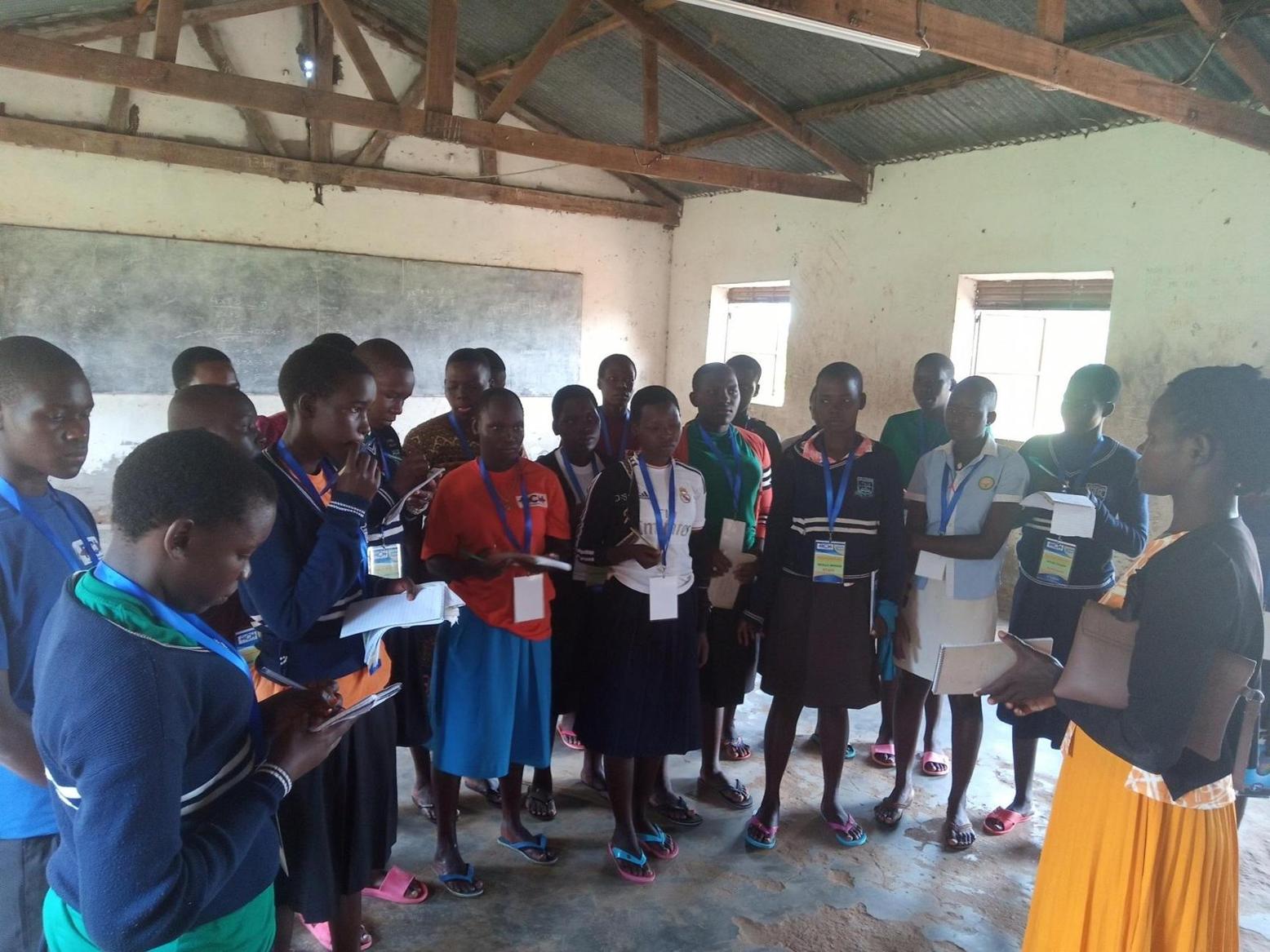
Africa-Press – Uganda. Children in many rural schools in the Lango Sub-region, northern Uganda, are illiterate despite high school enrollment.
The sub region comprises nine districts, including Alebtong, Amolatar, Apac, Dokolo, Oyam, Kole, Lira and Kwania.
During a recent meeting held at Oyam District headquarters, educationists, government officials and leaders discussed low learning outcomes in the sub-region.
They were concerned that children attend school but can hardly read or write in English and also Leb Lango, the predominant language.
In Kole, Lira, and Oyam districts, for instance, children who enrolled and remained in school have shown little or no improvement in the area of literacy, with 69 percent of Primary Three pupils unable to recognise alphabetical letters.
Even if one spent more than 30 minutes on a letter, more than half of the students in Primary Three would not recognise it.
Challenges
According to the Oyam District Education Officer (DEO), Mr Francis Oleke Ocero, there are 109 government-aided primary schools, but these schools barely have any facilities or teaching staff for effective learning.
Mr Ocero stated that due to a lack of adequate teachers, classrooms, textbooks, and desks, many students have resorted to join schools in neighboring towns or districts.
He said the district had at least 162,615 learners in primary and secondary schools last year.
The dropout rate was at 20.1 percent, which Mr Ocero attributed to poverty, peer pressure among other factors.
But even those in school are not learning much. Mr Ocero said schools had a teacher to pupil ratio of 1:97, latrine to pupil ratio; 1:68, desk to pupil ratio 1:6 and the classroom to pupil ratio stood at 1:121.
He added, “Oyam District has a staff sealing of 2,100 teachers but the wage bill supports only 1,740. So we need more funds to recruit.”
Mr Ocero acknowledged that there is still an education crisis in the area, and that the government needs to fix the issues urgently.
Mr James Alam, the chairperson of School Management Committee (SMC) for Olaka Annex Primary School in Lira District, says the challenges affecting education cut across the Sub-region.
“The challenge we have now is inadequate teaching staff. For instance, at Olaka Annex, we have more than 1,200 pupils but there are only 13 teachers on the government payroll against the staff sealing of 18 teachers,” Mr Alam says.
Mr Sam Opira, the Apac secretary for health and education, cited inadequate scholastic materials, late reporting of learners to school, low morale of teachers, and the parents’ negative attitudes towards financial contributions to incentivise teachers.
Mr David Adea, the Oyam District inspector of schools, said the above challenges impact on the performance of learners in the final exams.
He cited Ototong Primary School, Abok Sub-county in Oyam District. He said the school, established 37 years ago, has never had a single first grade in Primary Leaving Examinations (PLE).
Nancy Ayaa, a 17-year-old Senior Two student of Atapara Secondary School in Oyam, says some of the teachers are unqualified.“We lack computers and science equipment for science education and we are aware that some teachers are not qualified to teach because they have forged academic papers,” she says.
Mr Ocero confirmed that the government recruited some teachers who forged academic documents. “It is true there are forgeries in secondary schools. In Oyam here, we realised two people who forged documents and we took them back to the Education ministry, where they came from,” he said.
Leaders in Oyam District attributed the low learning outcomes to the absence of meals, inadequate classrooms, textbooks and desks, limited funding, and inadequate manpower.
Ms Joyce Ajok, the parish chief of Olarokwon Parish in Adwari Sub-county, Otuke District, also cited absenteeism by pupils and teachers, and poor management systems at schools.
According to Oyam District Speaker, Mr Nommy Otyeno, teacher absenteeism and staff shortages are the biggest challenges. “I went to a school with a total enrollment of 1,600 pupils, and they had only 13 teachers. But on that day, two teachers were sick. So, how can 11 teachers teach 1,600 students? he asked.
Mr Otyeno added: “The policy is more like keeping a child at school for years. Maybe we make it a policy that a child stays for seven years at school before they can get married. So that by the time they are getting married, they are no longer teenagers – they’re like 18 years and above. I think that would make sense.”
Unbothered parents
He castigated parents who hardly participate or contribute to the learning process. “In 1996, when the government introduced the Universal Primary Education (UPE) programme, People in Lango misunderstood that it was universal free education. “In our own understanding, when something is free, you don’t pay anything,” he said.
The executive director of Arua Youth Development Initiative (AYDI), Mr Moses Ricky Ojok, agreed. He said: “The biggest challenge is the unwillingness of the parents to support their children because you find that a child is at the learning centre without scholastic materials.”
Mr Moses Okello, the executive director of Growth Care Uganda, an NGO operating in Lango, says some children are not performing well because the parents are just sending children to either make bricks or dig in the gardens.
NGOs and leaders have come up with ways to improve learning outcomes of disadvantaged learners in rural areas of Lira, Kole, Arua and Oyam.
For instance, under their parental engagement programme, Foundation for Inclusive Community Help (FICH), a youth-led Non-Governmental Organisation, formed and strengthened community structures to ensure that parents take responsibility for their children’s learning.
“We have the community structure within the villages, which is the secretary for education in the office of the LC1 and also we have formed groups within the community that promote education of children in their villages, ““Victoria Harriet Anyango, the programme officer in charge of education, said.
She added: “We task each group to elect two members from within them so that these two members can join the secretary for education and form what we are calling the village education committee,”
The village education committee helps in the implementation of the parental engagement the programme through doing door-to-door household visits and sensitisation.
Local leaders and members of the community acknowledge that the community engagement that they always have through the education forum has helped so much to uplift the attitude of the parents towards education.
“When you come to the education forum with your negative attitude towards education, you will find fellow parents who are supporting education and they will talk you out of your negative attitude,” Mr Daniel Ojok, a parent at Alidi Parish, Loro Sub-county in Oyam District, said.
Mr Ojok added:”You will send your child back to school with books and other requirements.
For More News And Analysis About Uganda Follow Africa-Press