Africa-Press – Uganda. The newly elected Youth Member of Parliament, Mercy Kanyesigye, has said one of her first tasks after taking the oath of office will be to push the government to prioritise young people in the award of public contracts.
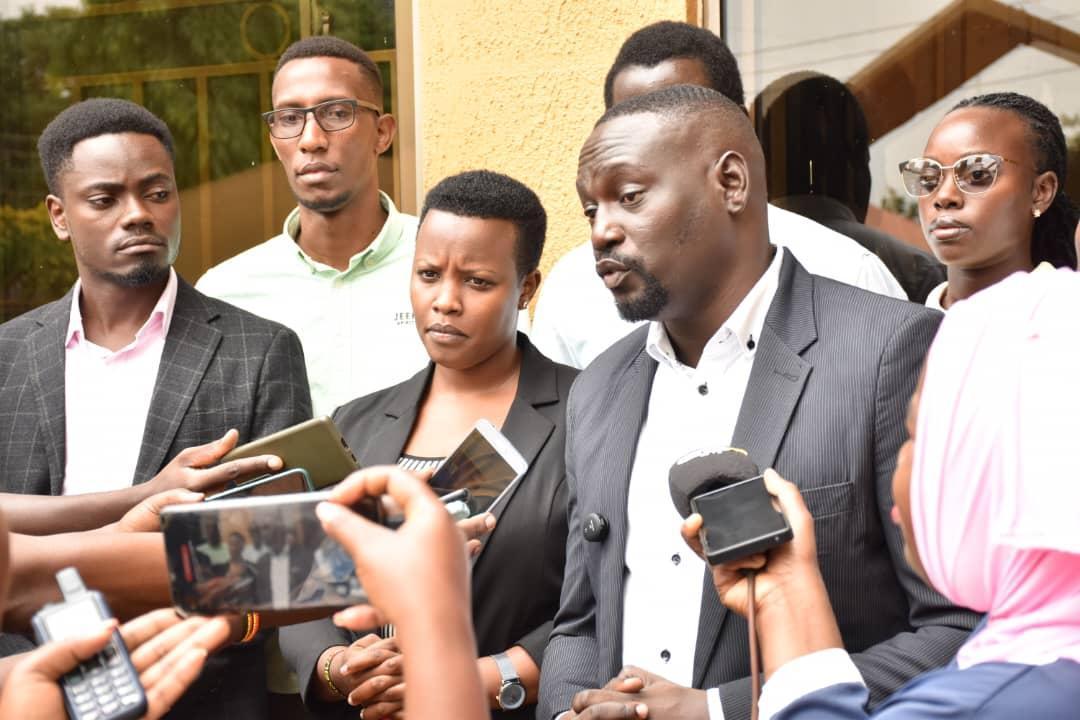
Speaking after a meeting with the National Executive Committee of the National Youth Council in Kampala on Thursday, Kanyesigye said the meeting resolved to push for the operationalisation of Section 59B of the PPDA Act, which promotes the participation of marginalised groups in public procurement.
She said she would advocate for strict implementation of the provision requiring government bodies to award certain contracts to youth.
“For example, contracts below Shs30 million at the central government level, and those below Shs10 million at the local government level, should be awarded to youth- or women-owned companies. However, many young people are unaware of this provision. We will therefore disseminate this information so that young people can form companies, compete for these contracts, and benefit from them. We will also monitor local governments to ensure compliance,” Kanyesigye said.
In 2024, the Public Procurement and Disposal of Public Assets Authority (PPDA) issued reservation guidelines aimed at creating avenues for the participation of previously marginalised groups, including youth, in public procurement.
The main thrust of the guidelines requires accounting officers across government entities to facilitate the participation of marginalised groups in procurement proceedings and contract award decisions.
According to the guidelines, government entities are expected to reserve at least 15 percent of their annual procurement plan budgets for registered associations of women, youth and persons with disabilities (PWDs).
In terms of value thresholds, all central government procurements not exceeding Shs30 million are to be reserved for registered associations of women, youth and PWDs. Similarly, local governments are required to reserve procurements not exceeding Shs10 million for the same groups.
Speaking on Thursday, the Youth MP said popularising these provisions among young people would enhance their participation in public procurement and increase their access to government contracts.
Kanyesigye also revealed that the meeting resolved to push for legislation to support funding of youth-led businesses and start-ups.
She noted that while programmes such as GROW exist, they have not sufficiently addressed the need for dedicated start-up capital for youth projects.
“Young people—who face significant challenges such as unemployment, drug abuse and school dropout—do not have a dedicated funding mechanism. I will therefore push for start-up capital specifically for youth,” she said.
The meeting further agreed to advocate for an increase in funding for the National Youth Council. Currently, the Council receives Shs4 billion annually, which Kanyesigye described as insufficient.
She noted that many young people are unaware of the Council’s mandate, which includes engaging youth in government programmes and monitoring their implementation. Due to limited funding, she said, the Council has not been fully effective.
“We want to have the budget increased to at least Shs10 billion. With increased funding, the National Youth Council will be able to effectively monitor government programmes across the country using its established structures,” she said.
The National Youth Council Chairperson, Daniel Ongom, described the meeting as fruitful in identifying ways for the Council to collaborate with the Youth MP to advance the youth agenda.
“The Youth Council has viewpoints and ideas on how this country can move forward, especially regarding young people. However, we do not sit in the Parliament of Uganda. Therefore, it is important to have someone who can champion our voices in Parliament. We are glad that the National Female Youth MP-elect has availed herself to be that champion of young people’s ideas,” Ongom said.
He added that both parties agreed that unemployment remains the most critical issue affecting young people in Uganda and must be prioritised.