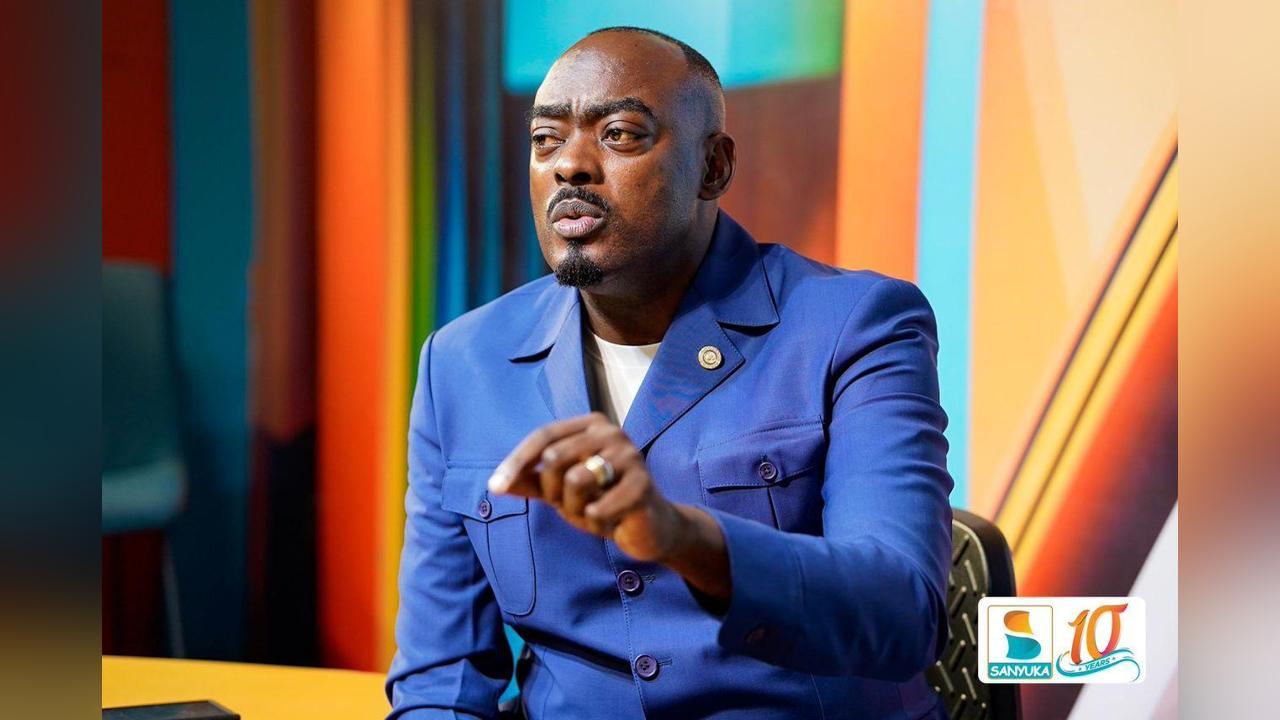
Africa-Press – Uganda. On Sanyuka Morning Xpress today, Hon Fred Mukasa Mbidde delivered a sharp critique of Uganda’s current political climate, questioning both the integrity of the presidential race and the approach taken towards social development in marginalised areas.
Mbidde, a seasoned politician, expressed concern over what he views as a shift in public perception about the presidency. According to him, many Ugandans now see the contest for the nation’s highest office as a game rather than a serious democratic exercise. He noted that there is a prevailing belief among citizens that, regardless of how people vote, the outcome of the election is already known.
“Many Ugandans believe contesting for the presidency has become a game, and that regardless of the votes cast, the winner is already predetermined,” Mbidde remarked, highlighting the growing mistrust between the electorate and the electoral process.
The legislator further emphasised the lack of substantive political debate in the run-up to elections. “No one is talking about what will be done. A presidential candidate should have clear policies outlining what they plan to achieve,” he said, urging political aspirants to focus on presenting detailed, actionable plans rather than relying solely on rhetoric or public appeal.
Mbidde also weighed in on the recent incident where students were seen picking presidential nomination forms, describing it as an example of misplaced priorities in the political space. “There’s a thin line between bravery and stupidity,” he cautioned. “Some things are happening in this country, but we must ask ourselves — are they acts of courage or acts of folly?”
Turning his attention to social development, Mbidde criticised the government’s approach to addressing challenges in Uganda’s ghettos. He argued that appointing leaders from within these communities often results in selecting individuals who are themselves victims of the same hardships they are meant to address. “When the government wants to help the ghettos, they often choose someone from the ghetto to lead. But that person is often a victim of the same challenges, and this approach is not right,” he stated.
Throughout the interview, Mbidde maintained that Uganda’s democracy can only be strengthened through transparency, clear policy proposals, and leadership that is chosen based on capability rather than symbolism. His remarks have sparked debate online, with some agreeing that his observations reflect the realities of Uganda’s political scene, while others feel his criticism fails to acknowledge the progress made in certain areas.
As the 2026 elections draw closer, such conversations are likely to intensify, with citizens and leaders alike grappling with questions about the future of governance in the country.
For More News And Analysis About Uganda Follow Africa-Press