Africa-Press – Uganda. Alliance for National Transformation presidential candidate Gen. Mugisha Muntu has cautioned that Uganda risks sliding into a serious political crisis unless voters take responsibility for change in the 2026 general elections, arguing that fear, manipulation of electoral processes and weakened institutions have left the country dangerously exposed to instability.
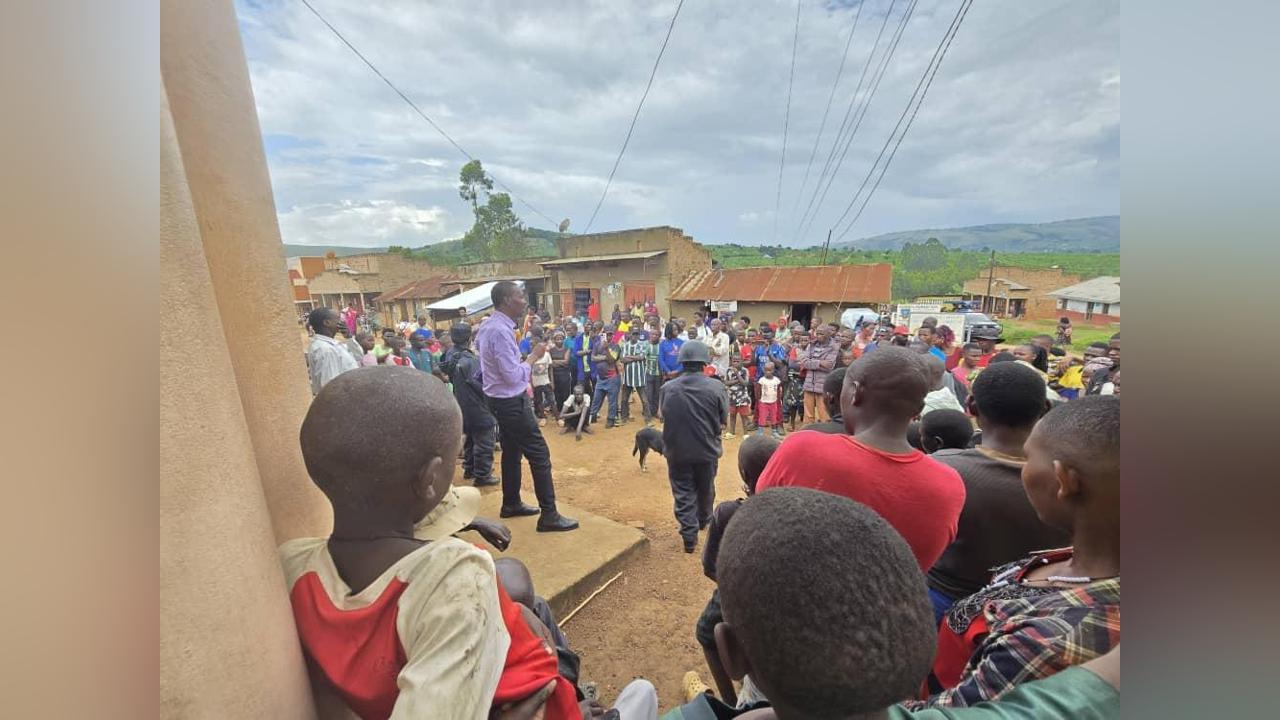
Campaigning in Ruhaama and Ruhaama East counties in Ntungamo District, Gen. Muntu told residents that Uganda’s political future now rests more with voters than with those currently in power, as long-standing governance failures and unfair political systems continue to erode public trust ahead of the 2026 polls.
Addressing supporters, Muntu said frustration among Ugandans is steadily growing as expectations for transparency, fairness and accountability remain unmet.
“People are tired. They want to see change but at the same time they have a sense that change can’t happen as long as there is a regime that is manipulating people using money and the use of national security services,” Muntu said.
He argued that Uganda’s challenges are sustained by weak institutions, lack of accountability and unjust political processes, warning that these conditions create fertile ground for a political crisis if citizens remain passive.
Muntu pointed to the ruling National Resistance Movement’s internal party primaries as a clear reflection of deeper national problems, saying the chaos witnessed within the party mirrors the broader failure to manage democracy at the national level.
“They had hopes that we could have a system where there is transparency in the management of the electoral systems. They have watched elections after election being manipulated, rigging taking place,” he said.
“Many are still reeling from the manipulation of their own internal election within NRM. It has caused NRM in this sub-region to be riddled with factions.”
According to the ANT flag bearer, a political organisation that cannot manage its own internal democracy cannot be trusted to provide effective and fair leadership for the country.
Muntu also warned communities against uncritical political loyalty, particularly in regions perceived to be strongly associated with sitting presidents. He said history shows that such regions often support power unquestioningly, only to face consequences when transitions of power are poorly handled.
“Those areas face the wrath of those who get into power if those who get into power are not balanced and disciplined,” Muntu said.
“We keep raising these issues with the people in this sub-region to learn from history and be able to intervene meaningfully to avoid a political crisis.”
He further argued that the removal of presidential term limits significantly weakened Uganda’s political stability and increased uncertainty around leadership transitions.
“It was a mistake in 2004 to amend the term limits. I believe, as a person, that it was a mistake to remove term limits,” Muntu said.
“Term limits are a critical safeguard for orderly and peaceful transitions of power. I am hoping that we don’t hit a political crisis.”
Muntu maintained that predictable leadership transitions are essential for national cohesion and long-term stability, warning that prolonged rule without clear succession mechanisms heightens tension whenever change becomes inevitable.
Local ANT leaders who accompanied Muntu echoed his concerns, saying Uganda’s greatest national achievement would be a peaceful transfer of power rather than physical infrastructure development alone.
Gerald Karakure Muchurezi, an ANT Member of Parliament aspirant for Ruhaama County, said citizens are increasingly disillusioned and hopeless due to poor leadership.
“If the country has the good leadership we are preaching to have as a country, people can be happy,” Muchurezi said. “But now people are hopeless.”
He argued that without disciplined and accountable leadership, development projects lose meaning as citizens continue to struggle under poor governance.
Muntu’s engagements in Ntungamo form part of his broader national campaign strategy aimed at encouraging voters to confront fear and take an active role in shaping Uganda’s political future.
He urged residents to reflect critically on the country’s political direction and to use the 2026 elections as an opportunity to restore accountability and fairness in governance.
After concluding his Ntungamo District engagements, Maj Gen Mugisha Muntu is expected to continue his 2026 presidential campaign in the Masaka region, where he will hold rallies and meetings with party supporters and local leaders.
For More News And Analysis About Uganda Follow Africa-Press