Africa-Press – Uganda. The start of August every year is a planting season in Nakasongola District as the month marks the onset of heavy rain following a dry spell that lasts from around May to the end of July.
But by September 2021, parts of Nakasongola were already experiencing severe drought while many parts of Uganda were registering heavy rain and occasional flooding.
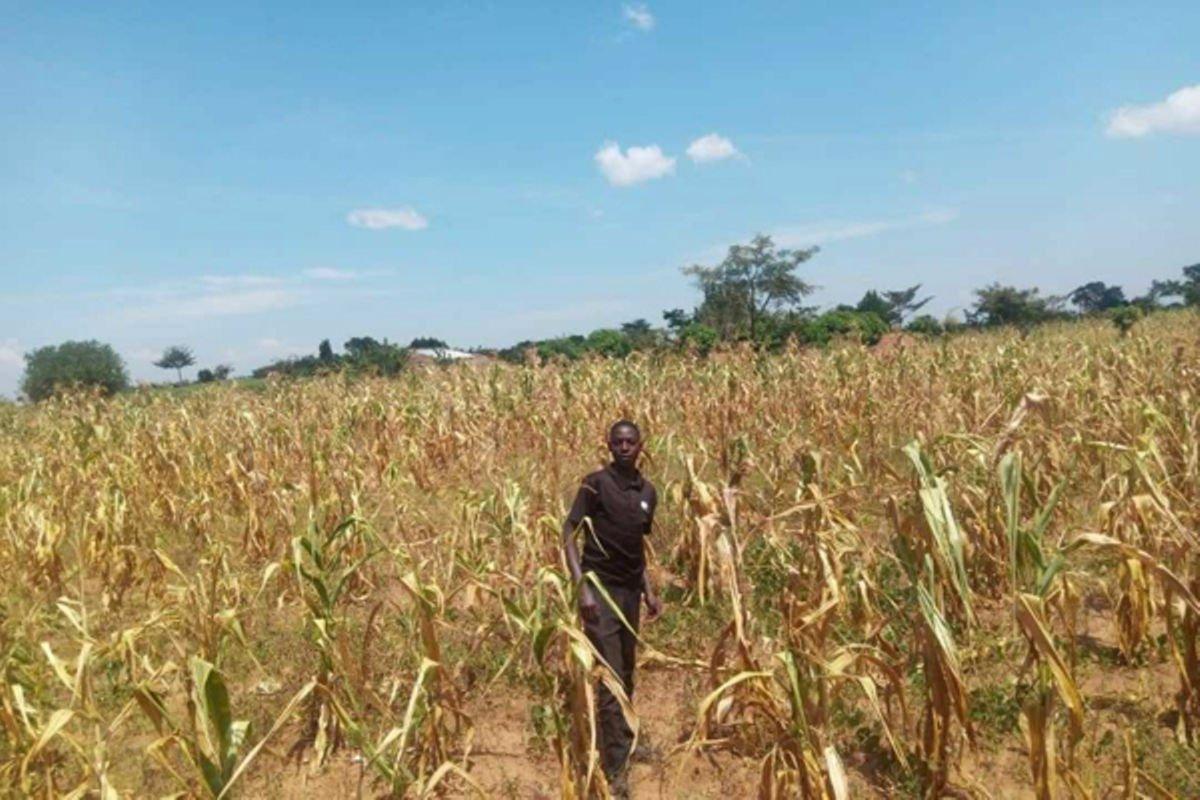
In Budyebo County, for instance, many crops planted at the onset of the August rains had dried up.
Since then, many parts of the district have not received rain, leaving cattle on the verge of starvation with residents wary of food insecurity.
Mr Samuel Ssendege, a farmer in Kazwama Village, Kalungi Sub-county in Nakasongola Sub-county, says he has lost seven acres of maize as a result of the prolonged dry spell.
He says his family may not survive through the long dry spell season that begins in December unless they get some food aid.
“I lost seven acres of maize and two acres of the beans. We appeal to both the district and the aid agencies to plan a possible rescue when we finally get to them. We still have some food but we are likely to face early hunger between the months of December and January,” he says. Ms Irene Nabiryo, a resident of Nakitoma Sub-county, says her five-acre maize garden and one acre of sorghum dried up in October.
“The maize was almost at the flowering stage when the hot sun intensified. We had anticipated some rains just like the other normal season where we have rains through the months of August, September, October and November. This season is very strange and disappointing to many farmers. We do not expect any other rains since we are approaching the dry spell months of December and January,” she says.
This comes on the backdrop of deadly flooding that hit the district from Lake Kyoga, displacing more than 5,000 families.
The district council speaker, Mr Rogers Sande Bwanga, says the early drought conditions have exposed the residents to potential hunger while the animals could die yet the known dry months start from December up to January.
“The early drought condition that began in Mid-September 2021 is unusual and a big worry for both the residents and the district officials. We have now alerted the ministry of Disaster Preparedness for help,” he says.
Mr Jonathan Akweteireho, the deputy resident commissioner, warns of looming disaster caused by the prolonged dry spell.
“As the district security committee, we sought it wiser to alert the government of the looming disaster. We don’t want the government to be taken unawares unless a miracle happens one of these days. Gardens have been wiped out by the hot sun,” he says.
What leaders say
The district environment officer, Mr Charles Andama, explains that the severe dry spell is affecting some areas but others such as Nakasongola Town Council are experiencing some rain.
Nakasongola is one of the cattle corridor districts in the country but faces challenge of water and pasture leading to the collapse of thousands of animals every year.
The district has also suffered severe environmental degradation.
Ms Victoria Zawedde, the Nakasongola District Woman MP, says they are seeking for logistical support from the ministries of Disaster Preparedness and Water and Environment to have a sustainable disaster management plan.
“This may not be the right time to condemn the residents for possibly thinking less about the environment. We are working on a plan to prepare the concerned government departments for what we believe is in the pipeline,” she says.
“The cattle corridor areas were severely affected by the human activity that saw a lot of vegetation cover cleared for farm establishment and charcoal burning but we want to rescue the population from possible starvation as we boost the vegetation rejuvenation campaign,” she adds.
History of disaster
Between January and March 2018, Nakasongola lost an estimated 500 heads of cattle as a result of the long dry spell that affected the district.
In 2020, flood waters from Lake Kyoga displaced more than 5,000 households from the sub-counties of Lwampaga, Nakitoma and Nabiswera. Several facilities, including schools and health units, were submerged. The district is yet to relocate more than 1,500 households from areas where the water has permanently stagnated.
National outlook
Many parts of the country are experiencing crop failure precipitated by a prolonged dry spell. Daily Monitor mini-surveys show that most districts in Teso sub-region and northern Uganda have experienced low rainfall this year, which has prevented farmers from growing crops such as cassava, maize and groundnuts.
This has resulted in low yields and hence increased prices. Findings of an assessment of Uganda’s vulnerability to climate change indicate that Ugandan farmers will continue to face significant challenges, including a deteriorating natural resource base and ecosystem, reduced access to land due to a rising population in addition to threats of conflict and economic crisis
[email protected]
For More News And Analysis About Uganda Follow Africa-Press