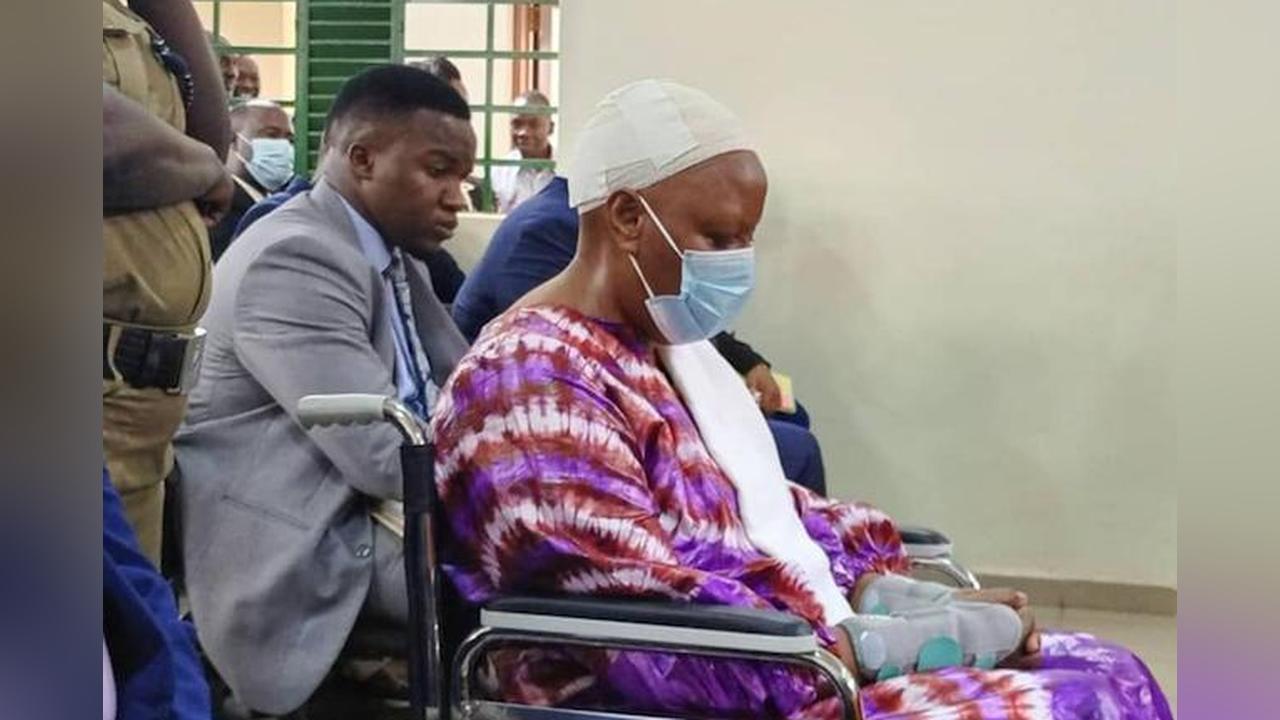
Africa-Press – Uganda. Where is Molly Katanga? Yes, she remains locked up at Luzira Prison. And her trial? Just there-there, in Ugandan speak, nearly two years after a judge promised a speedy trial.
Ms Katanga, accused of murdering her husband, businessman Henry Katanga, has seen her murder trial become an unwitting case study in the challenges confronting Uganda’s criminal justice system — a slow march rather than a “speedy trial” once promised on the public record.
Katanga was committed to the High Court on January 24, 2024 after the prosecution concluded investigations into the death of her husband following a November 2, 2023 incident at their Mbuya home.
The Nakawa Chief Magistrate’s Court ordered her and four co‐accused — including her daughters and two others — to stand trial at the High Court.
When the trial formally began on July 2, 2024, presided over by Justice Isaac Muwata, hopes of a swift resolution were underscored by the judge’s remarks in related bail rulings that the case would proceed with an eye toward expedition, notably when addressing Katanga’s deteriorating health.
Katanga’s health has been a persistent subplot throughout the proceedings. Medical reporting from earlier in the case detailed severe injuries she sustained at the time of her husband’s death — including deep head wounds, multiple fractures to her arms requiring surgical pins, vertigo, hypertension and other complications — prompting public concern and repeated bail applications on medical grounds.
Despite this, bail has been denied repeatedly, with judges citing the advanced stage of the trial as justification, even as court dates repeatedly faltered.
But the fact that her medical condition has not been reported in the reverse over the last few months is a relief for the Judiciary whose promise has been anything but hot air.
Instead of rapid progress, the trial has been beset by repeated adjournments. By March 2025, media reports tallied 18 adjournments since the trial began, with delays attributed to reasons from the absence of assessors and key witnesses to administrative glitches and scheduling conflicts.
In late 2024 and through 2025, the case also underwent a change of presiding judge. Justice Muwata’s health issues saw the matter transferred to Justice Rosette Comfort Kania, whose own appointment as Acting High Court judge briefly lapsed mid‐trial, contributing to further postponements.
At times even the mechanics of remote participation faltered: in August 2024, the court failed to connect with Katanga via Zoom from Luzira Prison, forcing yet another adjournment.
By December 2025, after nearly a year and a half of proceedings, the prosecution had presented its 25th and final witness, signalling an end to the State’s evidence.
Written submissions were set for late December 2025 into January 2026, with a critical ruling scheduled for February 19, 2026 on whether the defence must present its case.
Yet even as the trial edges toward this decisive phase, legal observers and rights advocates question whether the oft‐cited constitutional right to a speedy trial has been honoured in practice.
Delays have not only postponed justice but have intensified scrutiny over the treatment of accused persons with significant medical needs, particularly those who, like Katanga, remain in remand custody throughout prolonged proceedings.
In the court of public opinion, the Katanga murder trial — originally framed as a straightforward, if high‐profile homicide prosecution — has morphed into a broader reflection on systemic constraints, the balance between thorough process and judicial urgency, and the lived reality of defendants awaiting closure.