Africa-Press – Uganda. The Mbale Resident District Commissioner Stanley Bayole has raised concern over what he described as a growing pattern of intimidation and systemic interference by powerful actors, leaving RDCs caught between enforcing accountability and safeguarding their positions.
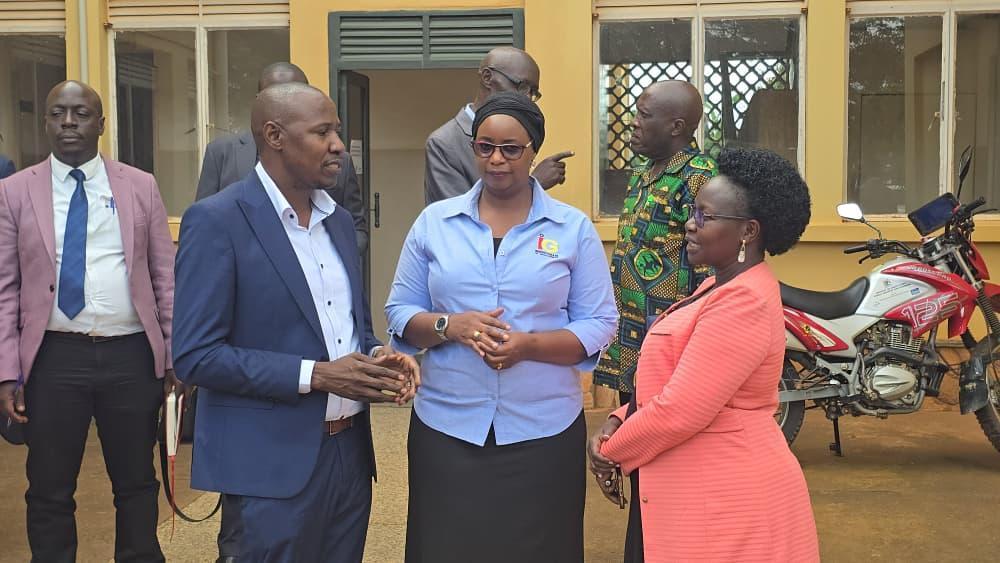
Speaking during an engagement with the Inspectorate of Government, Bayole said RDCs across the country are increasingly operating under pressure from “power brokers” who frustrate anti-corruption efforts and influence administrative decisions, including transfers.
He said the situation has created a climate of fear, where some RDCs opt to remain silent rather than risk backlash for confronting wrongdoing.
“Many of my colleagues are quiet, not because there is no corruption, but because they fear what will happen to them if they act,” he said.
Bayole noted that those who take action often face immediate resistance, including political interference and threats of removal from their stations.
He said this reflects a deeper challenge of systemic corruption, where individuals implicated in malpractice are shielded by networks of influence that extend beyond local jurisdictions.
He cited a case at Bunageni Primary School in Mbale, where he intervened following allegations of financial irregularities involving tree cutting and illegal charges imposed on pupils despite the government’s Universal Primary Education policy.
After visiting the school with district officials, he ordered the interdiction of the headteacher, a move he said triggered backlash and attempts to politicise the matter.
“I was not even given a chance to explain my actions. I was simply told I was being transferred,” he said.
In another case, Bayole pointed to alleged misuse of public funds at Bulambuli Health Centre IV, where 45 million shillings was reportedly spent on constructing a toilet facility without a functional pit.
“A toilet without a pit worth 45 million shillings — it is there. You can go and see it,” he said.
He warned that such cases are not isolated but part of a broader system where corruption is entrenched and often protected.
Bayole said RDCs, who are mandated to oversee government programmes and enforce accountability at the grassroots, are increasingly finding themselves “trapped between doing their job and protecting their positions.”
“If we act, we are targeted. If we keep quiet, then we are failing the country,” he said.
He added that the lack of clear protection mechanisms for officers who expose wrongdoing is weakening enforcement efforts and emboldening those engaged in corrupt practices.
Bayole called on government and oversight bodies to strengthen safeguards for RDCs and ensure due process is followed when allegations arise, rather than resorting to abrupt administrative actions.
Analysts say the concerns point to a broader governance challenge, where anti-corruption efforts are undermined by competing interests and weak institutional backing at the implementation level.
Former Mbale City Resident District Commissioner Rex Achila said some individuals within the National Resistance Movement structures use their positions to shield corrupt officials and intimidate RDCs who take action.
“I was accused of fighting the NRM in Mbale City after going hard on corrupt officials. The very people we sit with and make resolutions in boardrooms are the same people involved in corruption,” Achila said.
Bayole urged closer collaboration between RDCs, local leaders and central government to address the systemic nature of corruption, warning that failure to act could erode public trust in state institutions.
“We are the eyes of government on the ground. If we are not supported, then accountability itself is at risk,” he said.
Resident District Commissioners are presidential appointees, designated under Constitution of the Republic of Uganda 1995 and guided by the Local Governments Act (Cap 243), to represent central government at the district level, oversee service delivery, coordinate security and monitor implementation of public programmes.
However, their lack of direct executive authority over local governments often places them in tension when enforcing accountability and investigating alleged wrongdoing.
The developments highlight the delicate balance faced by enforcement officers in Uganda’s decentralised governance system, where the fight against corruption frequently collides with entrenched power structures.
For More News And Analysis About Uganda Follow Africa-Press