Africa-Press – Uganda. The Economic Policy Research Centre (EPRC) has launched the 2024 edition of the Agricultural Finance Yearbook, renewing calls for evidence-based scrutiny of government initiatives such as the Parish Development Model (PDM) to drive meaningful transformation in Uganda’s agricultural sector.
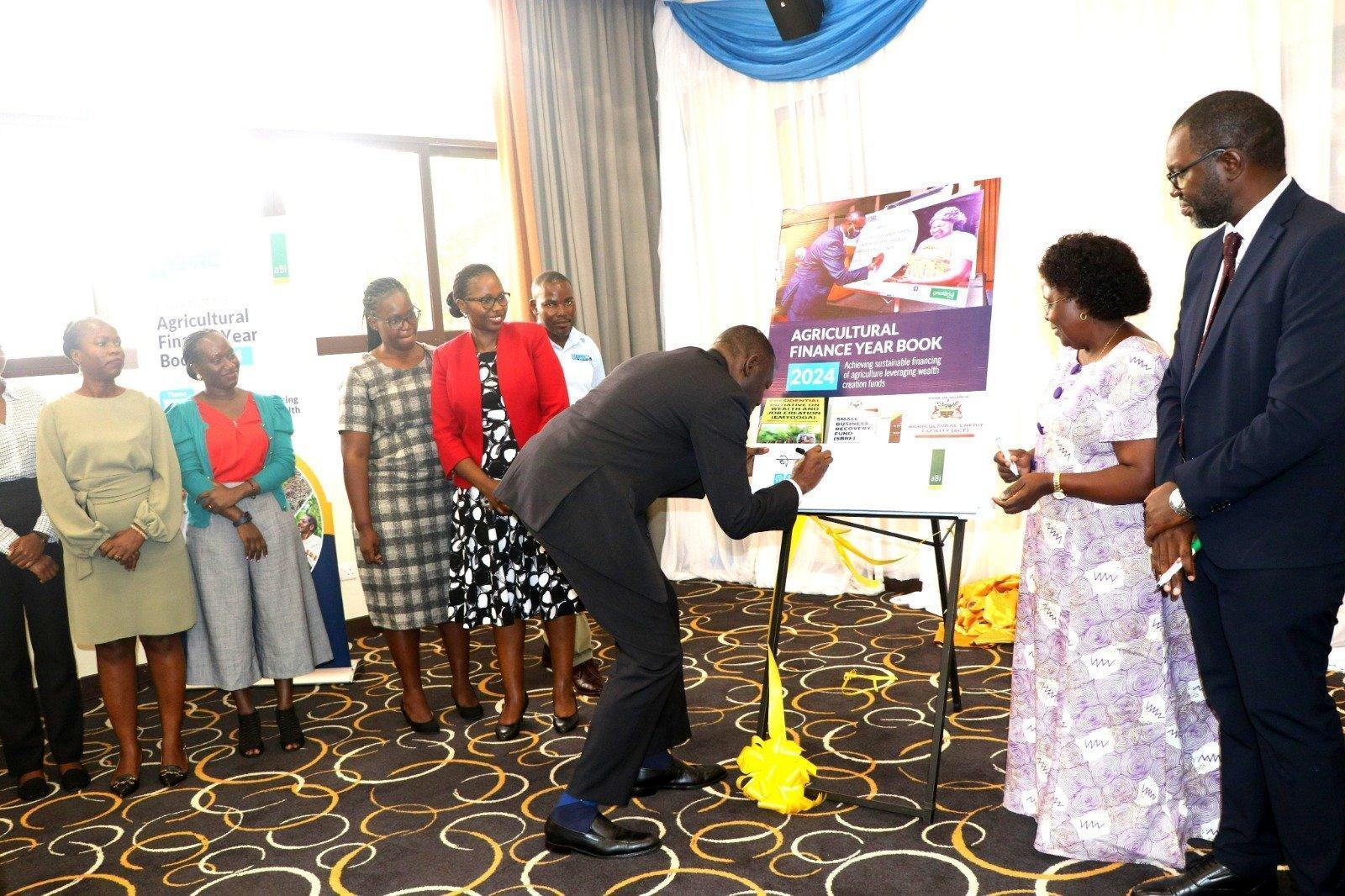
The yearbook, unveiled in Kampala, was launched by Bank of Uganda Governor Michael Atingi-Ego, who commended the EPRC for its commitment to generating rigorous research to inform policy direction.
“The insights contained within this yearbook will undoubtedly shape policy and investment decisions in the months ahead,” Dr Atingi-Ego said.
“Agriculture is not just another sector—it is the home upon which our nation’s prosperity is built.”
He noted that agriculture remains a cornerstone of Uganda’s economy, employing nearly 70 percent of the workforce, contributing approximately 24 percent of the gross domestic product, and accounting for close to half of the country’s export earnings.
Dr Atingi-Ego stressed the need to empower farmers’ organisations, which he said still face challenges in governance and financial management.
“Your empowerment begins with strengthened governance and financial management. To become more bankable, you must build credibility. You are the bedrock of our food security,” he urged.
The 2024 edition of the yearbook offers comprehensive analysis on agricultural financing tools and programmes, including Emyooga, the Small Business Recovery Fund, and the PDM.
These schemes are designed to support inclusive growth and reduce the vulnerability of rural livelihoods in a largely informal agricultural economy.
Concerns were raised during the launch over the misuse of funds and poor financial literacy among PDM beneficiaries, with calls for tighter oversight and targeted training.
Dr Atingi-Ego tasked EPRC with conducting a robust evaluation of the model’s implementation to guide policy correction and enhance effectiveness.
“We must expand successful models like the PDM while addressing gaps in regional and gender inclusion in agriculture,” he said.
“If we increased agricultural production through PDM, what do we do with it? That is where the private sector must step in with value addition.”
The Governor warned that without industrial linkages and market-oriented reforms, even the most well-funded agricultural programmes would fail to achieve economic transformation.
EPRC Executive Director, Dr Sarah Ssewanyana, echoed the Governor’s sentiments and encouraged government officials to do more than endorse the publication.
“This yearbook contains evidence-based guidance on improving access to finance and building a more resilient agricultural sector. It must be used to inform real change,” she said.
“Let us not stop at launching reports—we must translate knowledge into impact.”
Dr Ssewanyana emphasised the need to bridge persistent gaps in access to credit, particularly for rural women and youth, and urged banks to adopt more inclusive approaches to financing agriculture.
The yearbook outlines a number of challenges in the agri-financing landscape, including high interest rates, low credit penetration, weak financial linkages between farmers and lenders, and limited uptake of digital financial services.
It also offers policy recommendations for integrating climate resilience into agricultural lending, strengthening the credit-worthiness of farmer groups, and supporting value chains to ensure that increased productivity yields economic returns.
As the PDM continues to roll out nationally, the government has pledged to double annual funding to parishes—from Shs100 million to Shs200 million—with the goal of reaching the 39 percent of Ugandans still dependent on subsistence farming.
Stakeholders at the launch agreed that while financial investments are crucial, they must be matched with effective monitoring, capacity building, and institutional accountability to drive sustainable rural transformation.
The EPRC’s 2024 yearbook serves as both a mirror and a roadmap, reflecting the gaps in current policy and pointing toward solutions that can anchor Uganda’s agricultural future in inclusive growth and resilience.
For More News And Analysis About Uganda Follow Africa-Press