Africa-Press – Uganda. As the banner marking the 16 Days of Activism Against Gender-Based Violence was lowered, another was raised to commemorate the 75th International Human Rights Day on December 10. Between these symbolic milestones, Uganda was once again confronted with grim reminders of how fragile human dignity remains in practice.
In Gulu City, 16-year-old Leon Joshua Otim died after allegedly suffering brutal treatment by security personnel, an incident that violated Article 3 of the Universal Declaration of Human Rights, which guarantees the right to life, liberty and security of person. His death came only days after Meshach Okello, 33, was shot dead by the Uganda Police Force while reportedly dispersing a lawful assembly in Iganga District.
These killings represent not isolated incidents but a disturbing pattern. They violate not only Article 3 but also Article 1 of the Universal Declaration of Human Rights, which affirms that all human beings are born free and equal in dignity and rights.
The list of victims continues to grow. Daniel Brenny Oyerwot, popularly known as Sir Dan Magic, is still nursing serious head injuries sustained during the violent arrest of a presidential candidate in Gulu City. Earlier this year, Edward Ssebuwufu, commonly known as Eddy Mutwe, a close associate of opposition leader Robert Kyagulanyi, was reportedly tortured and left traumatised in a basement detention facility.
These acts amount to cruel, inhuman and degrading treatment, in clear violation of Article 5 of the Universal Declaration of Human Rights. Enforced disappearances have also become disturbingly common. A Roman Catholic priest, Fr. Deusdedit Ssekabira, and political activist Sam Mugumya remain unaccounted for, part of a growing catalogue of unresolved cases.
Yet amid these grave violations, there has been little accountability. No institution within Uganda has demonstrated the independence or resolve necessary to hold security agencies answerable to human rights standards. Even more troubling was the public admission by Mariam Wangadya, chairperson of the Uganda Human Rights Commission, who conceded that the commission does not investigate abuses deeply enough, citing fear.
Such a confession signals a dangerous erosion of institutional capacity. Appointments to the commission, like many other public offices, are sanctioned by the executive, undermining independence and entrenching political loyalty over constitutional duty. The result is a weakened national human rights watchdog and a glaring accountability vacuum, worsened by the forced closure of the Office of the United Nations High Commissioner for Human Rights in Uganda nearly three years ago.
Despite its exit, the UN human rights office has continued to caution Uganda. On December 3, UN High Commissioner for Human Rights Volker Türk warned of escalating violations and a harsh crackdown on freedoms as the country prepares for presidential and parliamentary elections in January.
Türk noted with concern that election campaigns have once again been marked by arbitrary arrests, detentions, excessive use of force against the opposition, and undue restrictions on press freedom. His assessment reflects realities on the ground.
Since the beginning of 2025, more than 550 individuals, many linked to the National Unity Platform, have reportedly been arrested or detained. Campaign rallies have been met with heavily armed security deployments, tear gas, batons, water cannons, dogs and chemical irritants, leaving civilians injured or dead for exercising their constitutional rights.
These actions directly contravene Articles 29 and 38 of Uganda’s 1995 Constitution, which guarantee freedoms of expression, assembly and participation in public affairs. They also violate Uganda’s obligations under the African Charter on Human and Peoples’ Rights and the African Charter on Democracy, Elections and Governance.
Failure to honour these commitments inevitably attracts international scrutiny. This is not foreign interference, but accountability. Uganda voluntarily acceded to international human rights treaties over six decades ago and is bound by their principles.
The UN Human Rights Chief was therefore correct to insist that Ugandan authorities must halt violence against the media and opposition and act in accordance with international human rights obligations. Such interventions are rooted in the UN’s core mandate to protect and monitor human rights worldwide.
I welcome Volker Türk’s remarks because they serve as a necessary reminder that human dignity must be protected at all times. Democracy and human rights are inseparable, a principle firmly embedded in the Universal Declaration of Human Rights.
However, words alone are not enough. The UN Human Rights system must go beyond routine condemnations and explore stronger measures, including engagement with the UN Security Council, when member states persistently and systematically violate human rights.
As Wangari Maathai once observed, human rights are not gifts placed on a table for people to enjoy. They are fought for, defended and protected. It is therefore incumbent upon the United Nations, and all custodians of global human rights, to act decisively in defence of human dignity everywhere.
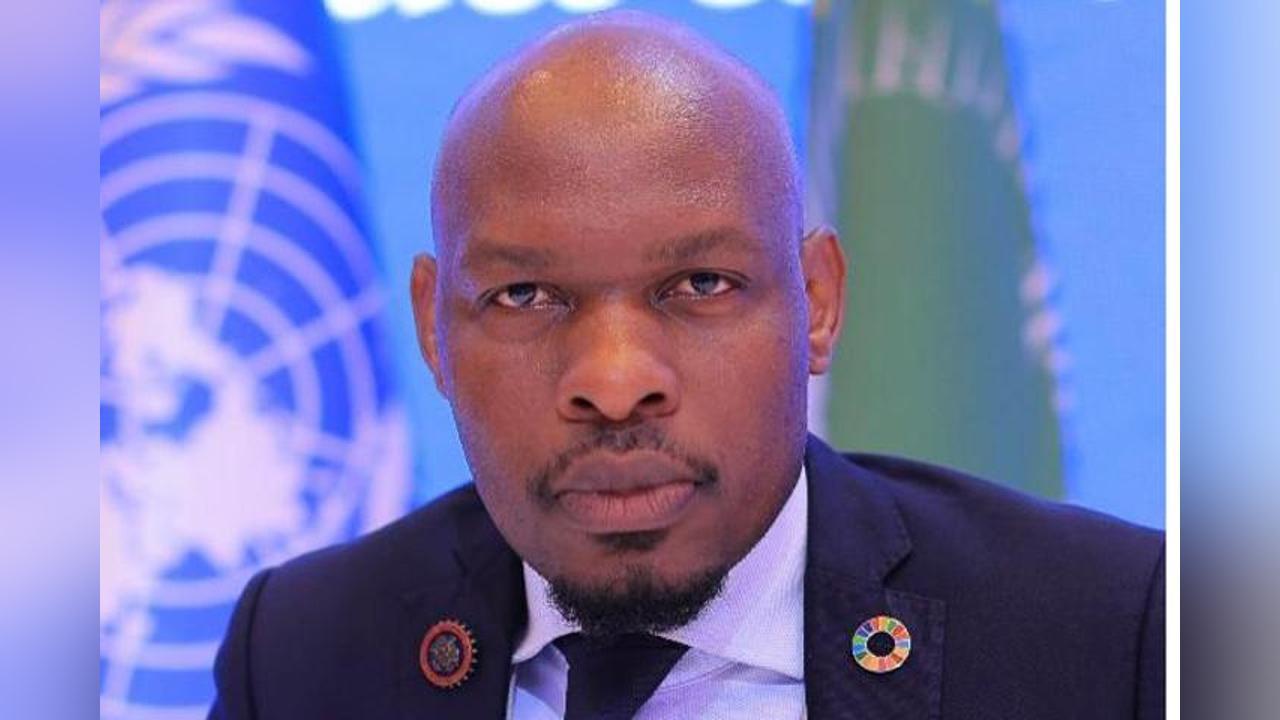
Robert Kigongo is a sustainable development analyst and human rights advocate.
Source: Nilepost News
For More News And Analysis About Uganda Follow Africa-Press